 Bug FAQ
American Giant Millipede Complex
Narceus americanus · Order: Spirobolida · Family: Spirobolidae
Also called: American giant millipede, iron worm, worm millipede
Source: Wikipedia
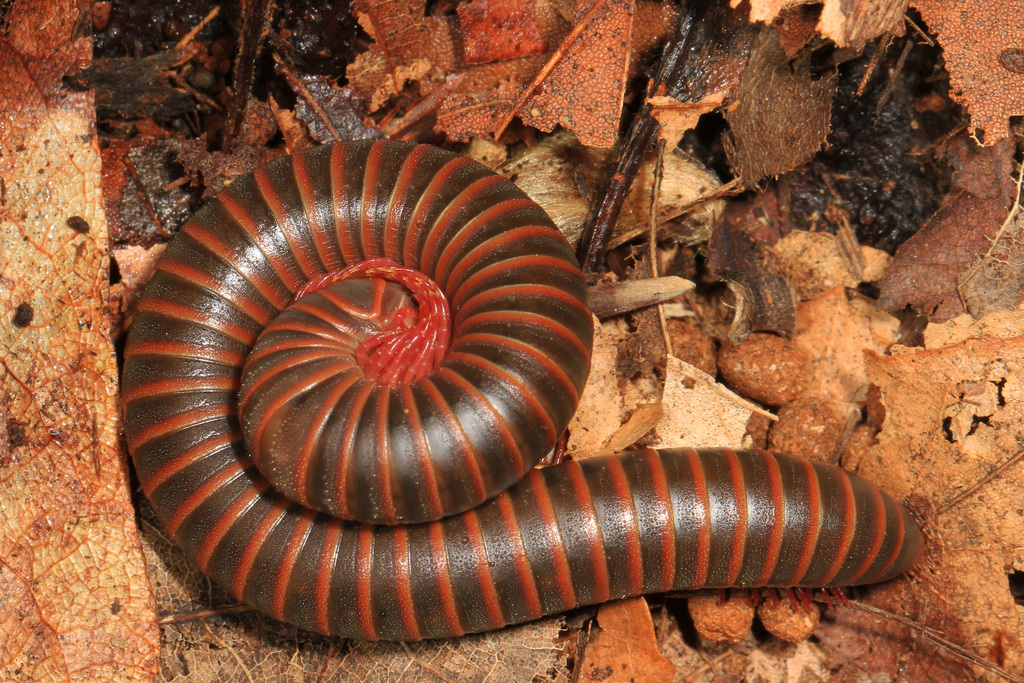
The American Giant Millipede is a dark brown, cylindrical arthropod about 4 inches long and lives in the eastern United States, often under decaying logs from March to October. It feeds on decaying wood, leaf litter, and occasionally deer scat or fruit, and can live up to eleven years, reaching sexual maturity after 1 to 2 years. When threatened it may curl up or release a benzoquinone-rich liquid that can cause dermatological burns.
Source: Wikipedia
How to recognize it
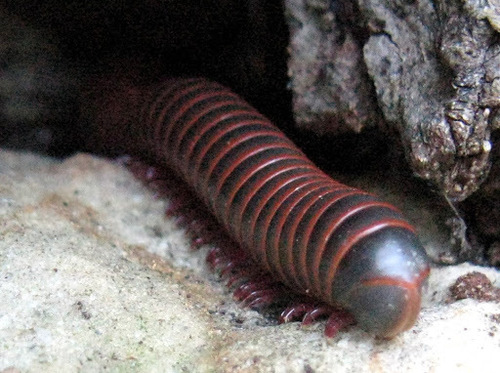
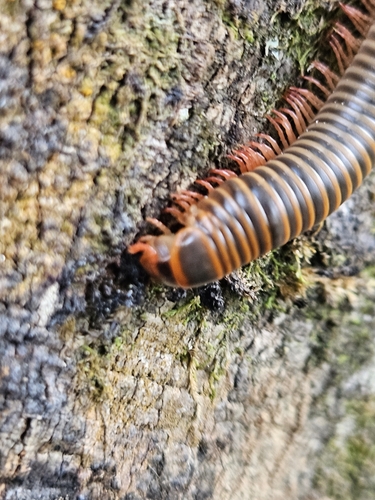
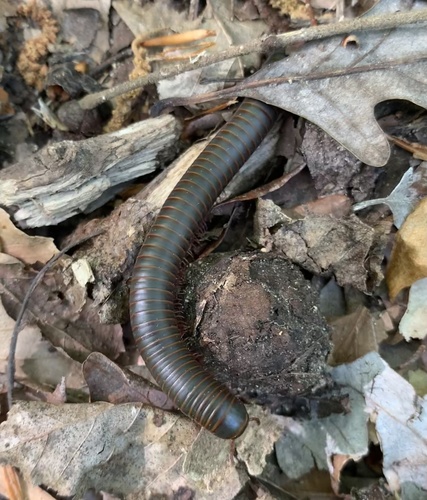
It is usually dark brown with reddish rings but can appear in various colors.
Source: Wikipedia
Size
It grows to about 4 inches (100 mm) long.
Source: Wikipedia
Does it bite or sting?
When disturbed it may curl up or secrete a noxious liquid containing benzoquinones that can cause skin burns.
Source: Wikipedia
Where it lives
You’ll often see it in or under decaying logs from March through October.
Source: Wikipedia
What it eats
It is a detritivore that eats rotting wood and leaf litter. It will also eat deer scat and fresh fruit when offered, though these are less nutritious.
Source: Wikipedia
Life cycle
Lifespan can reach up to eleven years in captivity or the wild. It becomes sexually mature after one to two years.
Source: Wikipedia
When you see it
Active and visible from March to October, especially in decaying logs.
Source: Wikipedia
Where it comes from
Its native range covers the eastern United States to western Texas.
Source: Wikipedia
Where it is found in the US
Recorded in 20 of 51 states and DC. Most records: Illinois, New York, Louisiana, North Carolina, Texas, Mississippi, West Virginia, Kentucky.
Darker = more records. Counts are museum and citizen-science records, not population size.
Source: GBIF
Status: native in North America; native in Canada; native in United States. Source: iNaturalist
Months it is reported in the US
Source: GBIF
More photos

Questions people ask
Where might I find this millipede in my yard?
Look under decaying logs from spring through fall in the eastern U.S. region.
Source: Wikipedia
Sources
- Wikipedia: https://en.wikipedia.org/wiki/Narceus_americanus
Look it up elsewhere: GBIF · iNaturalist · BugGuide · ITIS · Wikipedia
Text written 2026-10-22 from the sources above and checked sentence by sentence against them. Data fetched 2026-10-22.