 Bug FAQ
Smeared Dagger
Acronicta oblinita · Order: Lepidoptera · Family: Noctuidae
Also called: Smartweed Caterpillar, Smeared Dagger Moth
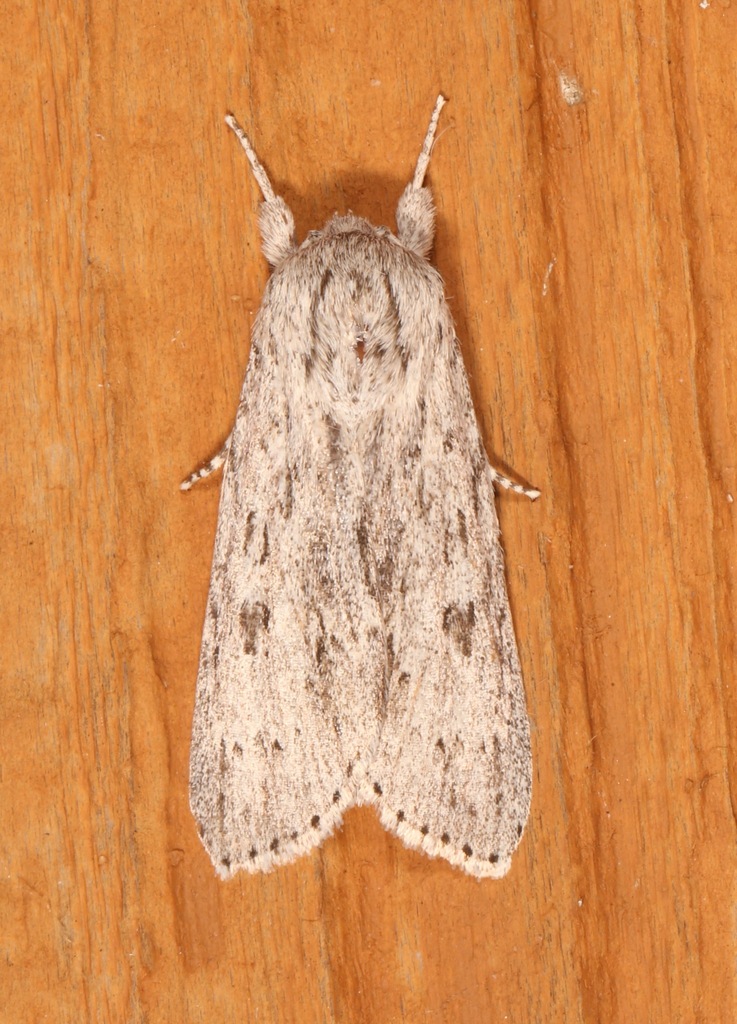
The adult has a wingspan of about 3.6 to 5.4 cm. Its forewings are mottled gray with faint, partially outlined spots and dark wedge markings along the post-medial line. It lives in wetlands such as bogs and coastal marshes, as well as forests, meadows, and boreal woodlands across much of Canada and the United States.
Source: Wikipedia
How to recognize it
The forewings show a mottled gray color with indistinct orbicular and reniform spots. Dark wedge-shaped spots line the postmedial line, pointing inward.
Source: Wikipedia
Size
Adults measure 3.6 to 5.4 cm from wing tip to wing tip.
Source: Wikipedia
Where it lives
Typical habitats include bogs, coastal marshes, wetlands, forests, and meadows. Specimens have also been collected in boreal forests of Canada.
Source: Wikipedia
What it eats
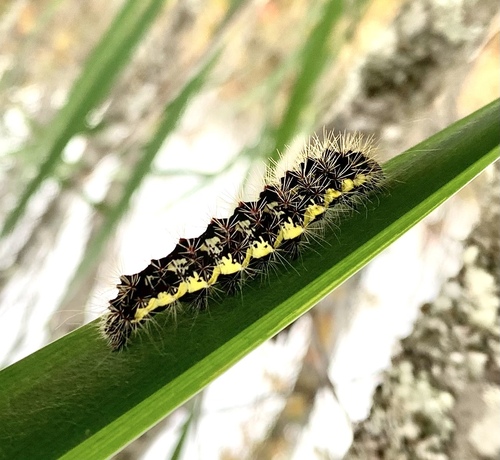
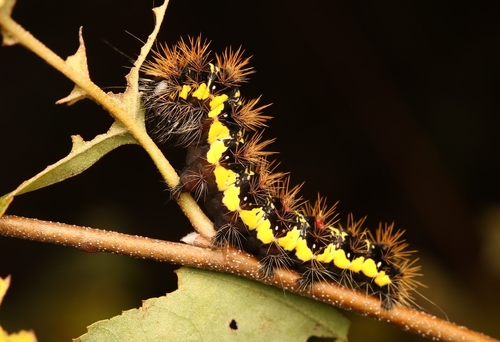
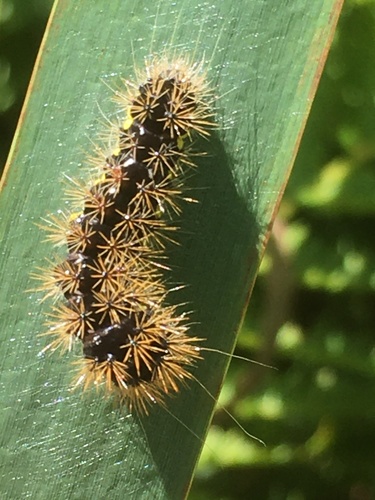
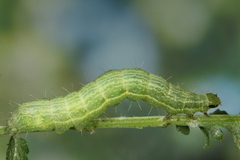
Caterpillars feed on willow, alder, strawberry, cattail, fireweed, and various knotweed species.
Source: Wikipedia
Life cycle
The species produces one or two generations each year. It overwinters in the pupal stage.
Source: Wikipedia
When you see it
In North Carolina adults appear from early March to late June and again from mid-August to early October.
Source: Wikipedia
Where it comes from
In Canada it occurs as far north as Lake Athabasca. In the United States it is found in the Pacific Northwest, east of the Rockies down to Florida and Texas.
Source: Wikipedia
Where it is found in the US
Recorded in 41 of 51 states and DC. Most records: Ohio, Virginia, Michigan, Pennsylvania, New York, Maryland, New Jersey, Florida.
Darker = more records. Counts are museum and citizen-science records, not population size.
Source: GBIF
Status: native in North America; native in Canada; native in United States. Source: iNaturalist
Months it is reported in the US
Source: GBIF
More photos

Same family (Noctuidae)
 Ipsilon Dart MothAgrotis ipsilonDamages trees, gardens or crops
 Fall Armyworm MothSpodoptera frugiperdaDamages trees, gardens or crops
 Army Cutworm MothEuxoa auxiliarisDamages trees, gardens or crops
 Large Yellow UnderwingNoctua pronubaDamages trees, gardens or crops
 Silver ΥAutographa gamma
 American DaggerAcronicta americanaCan irritate skin
Sources
- Wikipedia: https://en.wikipedia.org/wiki/Acronicta_oblinita
Look it up elsewhere: GBIF · iNaturalist · BugGuide · ITIS · Wikipedia
Text written 2026-10-23 from the sources above and checked sentence by sentence against them. Data fetched 2026-10-23.