 Bug FAQ
Small Square-spot
Diarsia rubi · Order: Lepidoptera · Family: Noctuidae
Source: Wikipedia
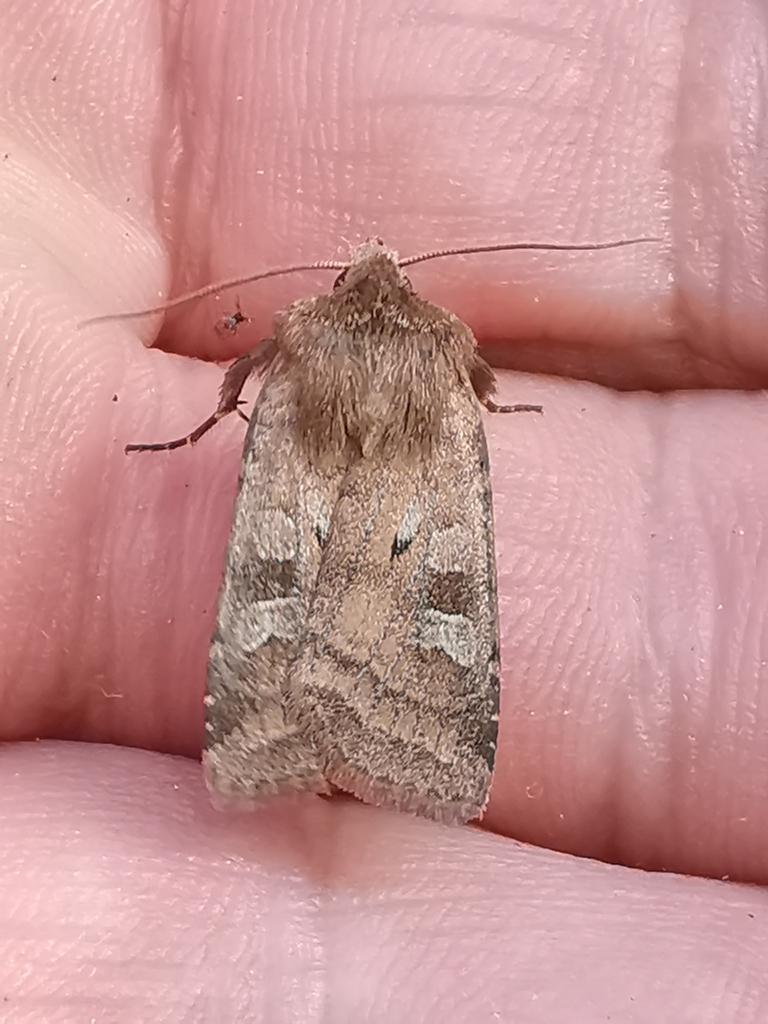
The small square-spot moth has a wingspan of about 30 to 38 mm and dull grey-pink forewings with a pale angular mark that gives it its name. It lives across most of Europe and extends east through the Caucasus to Siberia and Kamchatka, preferring habitats where its larval food plants grow. Two generations fly each year, first in May-June and again in August-September, while the species overwinters as a larva.
Source: Wikipedia
Size
Wingspan ranges from 30 to 38 mm, making it a relatively small moth.
Source: Wikipedia
What it eats
Caterpillars feed on a variety of plants, recorded on raspberry, Vaccinium species and willow. Adults may visit flowers such as heather and ragwort for nectar.
Source: Wikipedia
Life cycle
Two broods are produced each year; adults fly in May-June and again in August-September. The species overwinters in the larval stage.
Source: Wikipedia
When you see it
Adults are on the wing in late spring (May-June) and late summer (August-September).
Source: Wikipedia
Where it comes from
Its native range matches the habitat description, covering Europe to far eastern Russia.
Source: Wikipedia
Lookalikes
It is hard to separate from close relatives such as Protolampra sobrina and several Diarsia mendica subspecies.
Source: Wikipedia
Questions people ask
What plants do the caterpillars eat?
The larvae feed on raspberry, Vaccinium and willow.
Source: Wikipedia
When are the adult moths active?
Adults fly in two periods: May-June and August-September.
Source: Wikipedia
Same family (Noctuidae)
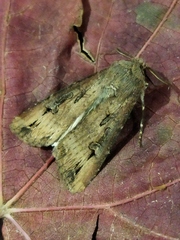 Ipsilon Dart MothAgrotis ipsilonDamages trees, gardens or crops
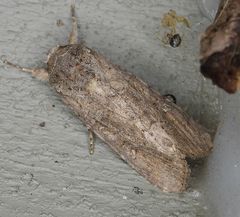 Fall Armyworm MothSpodoptera frugiperdaDamages trees, gardens or crops
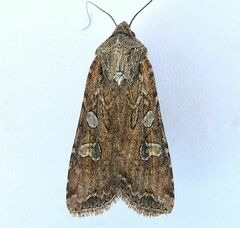 Army Cutworm MothEuxoa auxiliarisDamages trees, gardens or crops
 Large Yellow UnderwingNoctua pronubaDamages trees, gardens or crops
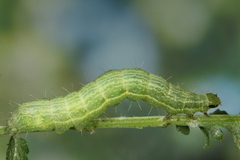 Silver ΥAutographa gamma
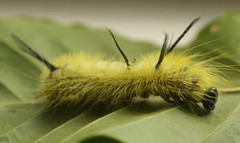 American DaggerAcronicta americanaCan irritate skin
Sources
- Wikipedia: https://en.wikipedia.org/wiki/Small_square-spot
Look it up elsewhere: GBIF · iNaturalist · BugGuide · Wikipedia
Text written 2026-10-22 from the sources above and checked sentence by sentence against them. Data fetched 2026-10-22.