 Bug FAQ
Small Quaker
Orthosia cruda · Order: Lepidoptera · Family: Noctuidae
Source: Wikipedia
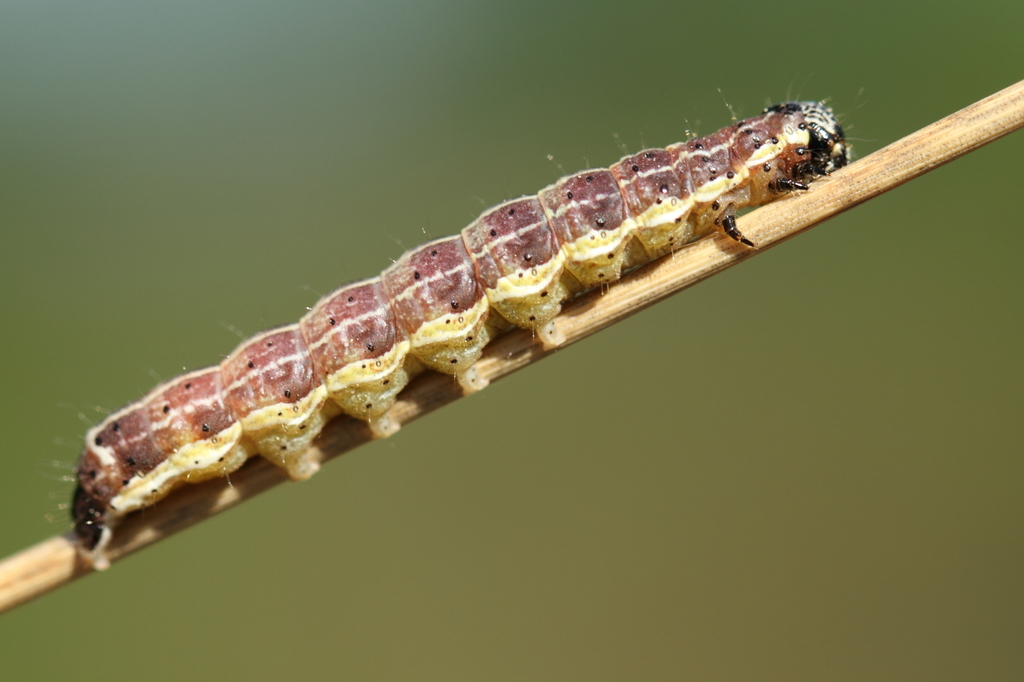
The Small Quaker moth has a wingspan of about 28 to 32 mm and grey-brown forewings with dark markings. It lives between leaves that it spins together and flies from late February to mid-May in one generation. Its caterpillars eat leaves of various deciduous trees, especially oak and willow, so it can be a garden pest.
Source: Wikipedia
How to recognize it
Forewings are grey-brown with dark grey and reddish speckles, black spots on the inner and outer lines, a pale submarginal line, and dark grey stigmata edged with pale and rufous; hindwings are dull grey.
Source: Wikipedia
Size
Wingspan ranges from 28 to 32 mm.
Source: Wikipedia
Where it lives
It lives between leaves that are spun together.
Source: Wikipedia
What it eats
Larvae feed on leaves of various deciduous trees, especially oak and willow.
Source: Wikipedia
When you see it
Flight period is from late February through mid-May.
Source: Wikipedia
Where it comes from
Found across Europe, North Africa (Morocco, Algeria, Tunisia), the Middle East (Turkey, Israel, Lebanon, Cyprus, Jordan), the Caucasus region, Kazakhstan, and Transcaucasia.
Source: Wikipedia
Lookalikes
It resembles Orthosia stabilis in colour, with variation depending on the amount of red present.
Source: Wikipedia
Where it is found in the US
Recorded in 1 of 51 states and DC. Most records: California.
Darker = more records. Counts are museum and citizen-science records, not population size.
Source: GBIF
Questions people ask
Do Small Quaker moths damage gardens?
Yes, their caterpillars eat the leaves of oak, willow and other deciduous trees, which can harm garden and shade trees.
Source: Wikipedia
When can I see Small Quaker moths?
Adults are on the wing from the end of February until about mid-May.
Source: Wikipedia
What do Small Quaker moths look like?
They have a wingspan of 28 to 32 mm, grey-brown forewings with dark speckles and black spots, and dull grey hindwings.
Source: Wikipedia
Same family (Noctuidae)
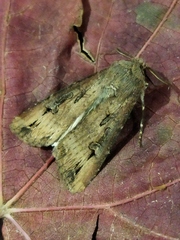 Ipsilon Dart MothAgrotis ipsilonDamages trees, gardens or crops
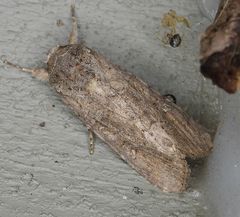 Fall Armyworm MothSpodoptera frugiperdaDamages trees, gardens or crops
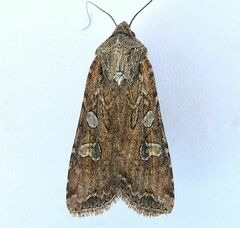 Army Cutworm MothEuxoa auxiliarisDamages trees, gardens or crops
 Large Yellow UnderwingNoctua pronubaDamages trees, gardens or crops
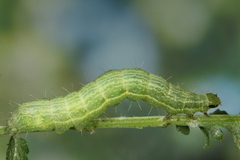 Silver ΥAutographa gamma
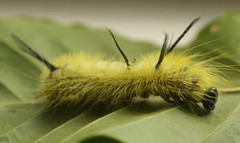 American DaggerAcronicta americanaCan irritate skin
Sources
- Wikipedia: https://en.wikipedia.org/wiki/Orthosia_cruda
Look it up elsewhere: GBIF · iNaturalist · BugGuide · Wikipedia
Text written 2026-10-22 from the sources above and checked sentence by sentence against them. Data fetched 2026-10-22.