 Bug FAQ
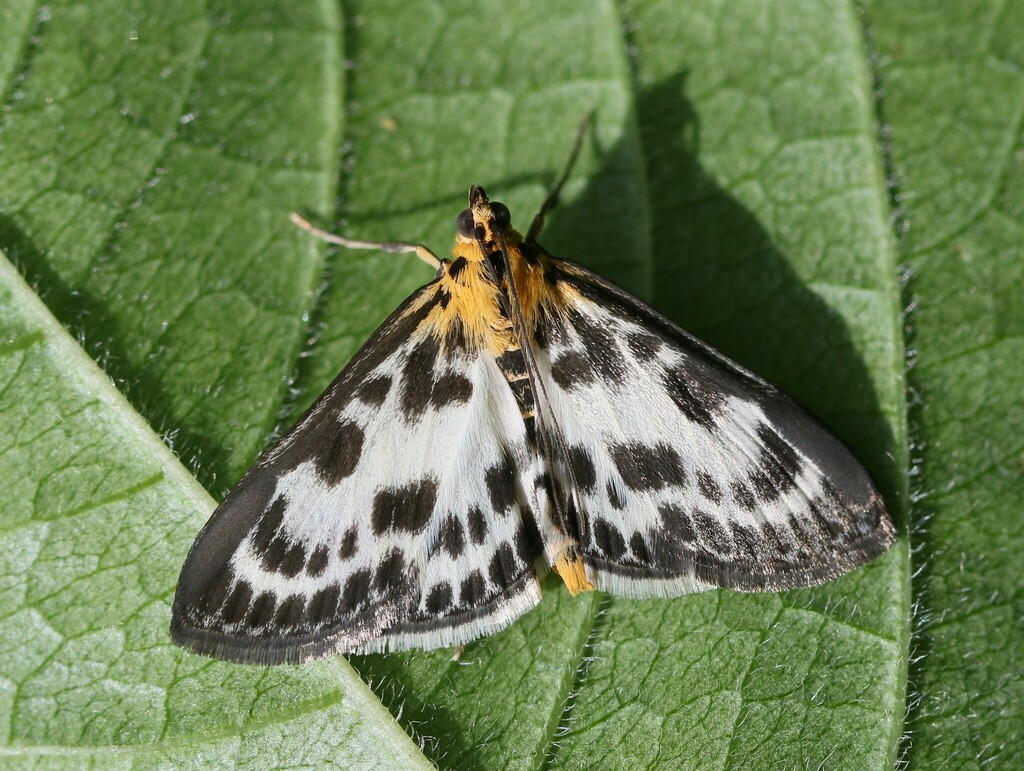
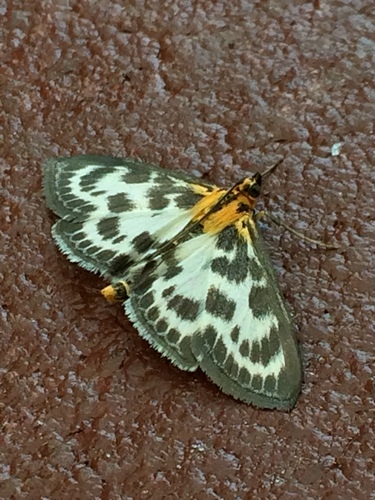
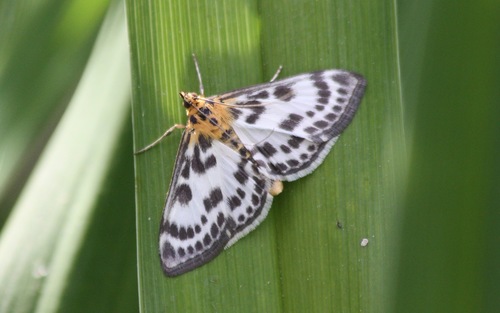
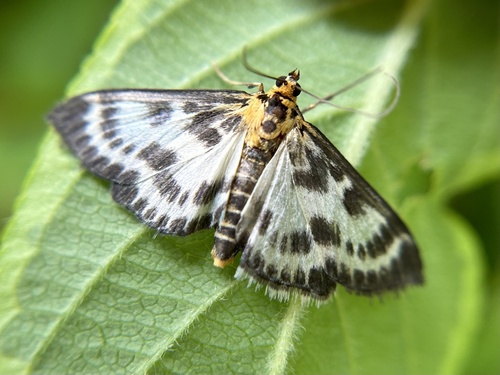
Small Magpie
Anania hortulata · Order: Lepidoptera · Family: Crambidae
Also called: Small Magpie Moth
Size
Wingspan ranges from 24 to 28 mm (0.94 to 1.10 in).
Source: Wikipedia
Where it lives
Larvae are found in August-September feeding inside rolled or spun leaves. They overwinter in a transparent cocoon under loose bark or in hollow stems of umbellifers such as hogweed.
Source: Wikipedia
What it eats
Eggs are laid mainly on stinging nettle and occasionally on herbs like white horehound, woundwort and mint.
Source: Wikipedia
Life cycle
Larvae feed in late summer, then pupate in spring at the overwintering site.
Source: Wikipedia
Where it comes from
First described by Carl Linnaeus in 1758, it occurs in Asia, Europe and North America.
Source: Wikipedia
Where it is found in the US
Recorded in 14 of 51 states and DC. Most records: Washington, Vermont, New York, Maine, Oregon, Michigan, New Hampshire, Wisconsin.
Darker = more records. Counts are museum and citizen-science records, not population size.
Source: GBIF
Status: introduced in Canada; introduced in United States. Source: iNaturalist
Months it is reported in the US
Source: GBIF
More photos

Same family (Crambidae)
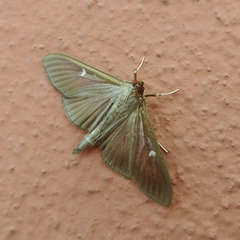 Box Tree MothCydalima perspectalisDamages trees, gardens or crops
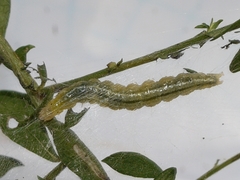 Celery Leaftier MothUdea rubigalisDamages trees, gardens or crops
 Elegant Grass-veneerMicrocrambus elegans
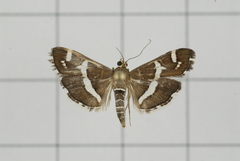 Hawaiian Beet Webworm MothSpoladea recurvalisDamages trees, gardens or crops
 Garden Grass-veneerChrysoteuchia culmellaDamages trees, gardens or crops
 Bluegrass Webworm MothParapediasia teterrellusDamages trees, gardens or crops
Sources
- Wikipedia: https://en.wikipedia.org/wiki/Anania_hortulata
Look it up elsewhere: GBIF · iNaturalist · BugGuide · Wikipedia
Text written 2026-10-22 from the sources above and checked sentence by sentence against them. Data fetched 2026-10-22.