 Bug FAQ
Small Hover Fly
Melanostoma fasciatum · Order: Diptera · Family: Syrphidae
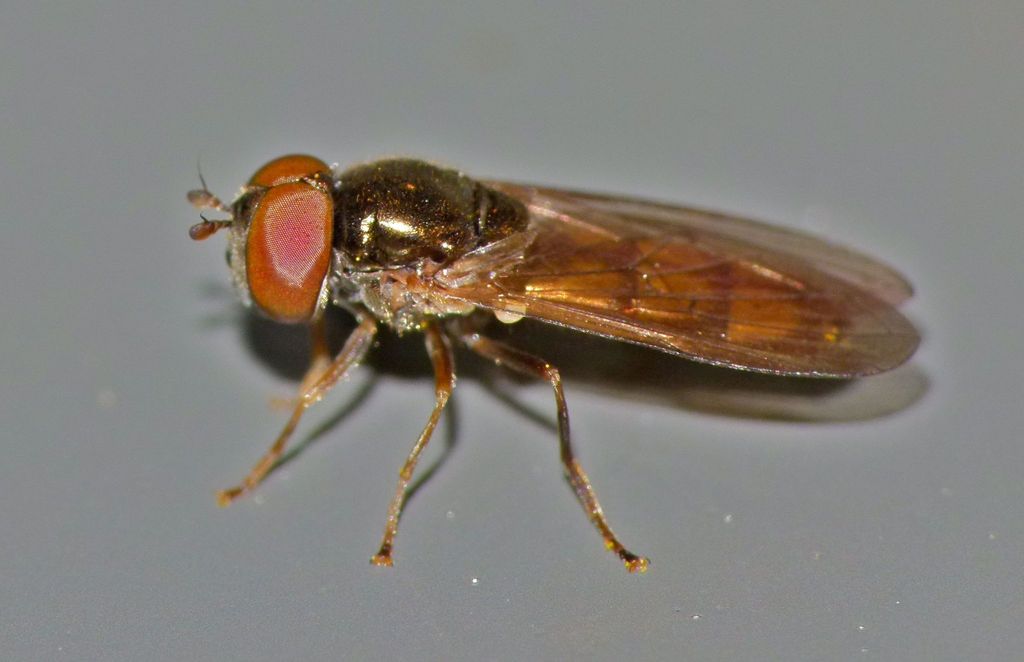
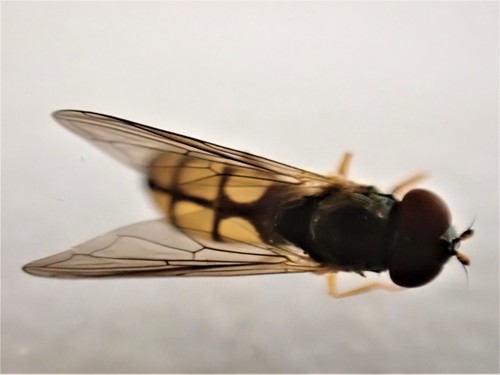
The adult has a glossy black body with three pairs of yellow patches on its abdomen and relatively large dark-red eyes. It lives in grasslands, gardens and other low-vegetation areas, especially on farms, and is found throughout New Zealand, more commonly on the North Island. Larvae are predators of aphids and small caterpillars, while adults feed on pollen from wind-pollinated plants.
Source: Wikipedia
How to recognize it
The compound eyes are relatively large and dark red in colour.
Source: Wikipedia
Where it lives
It occurs in grasslands, gardens and other habitats with low growing vegetation, especially in agricultural settings. The species is endemic to New Zealand and is widespread, being more abundant on the North Island.
Source: Wikipedia
What it eats
Larvae are predatory, feeding on aphids and small caterpillars. Adults feed on pollen grains from wind-pollinated (anemophilous) plants.
Source: Wikipedia
Life cycle
Newly hatched larvae are legless and pale, darkening as they molt.
Source: Wikipedia
Where it comes from
Melanostoma fasciatum is endemic to New Zealand.
Source: Wikipedia
Lookalikes
Adults look similar to the endemic hoverfly Melangyna novaezelandiae.
Source: Wikipedia
More photos
Questions people ask
Where is this hoverfly found?
It lives in grasslands, gardens and low-vegetation agricultural areas throughout New Zealand, especially on the North Island.
Source: Wikipedia
What do adult hoverflies feed on?
Adults feed on pollen from wind-pollinated plants.
Source: Wikipedia
Same family (Syrphidae)






Sources
- Wikipedia: https://en.wikipedia.org/wiki/Melanostoma_fasciatum
Look it up elsewhere: GBIF · iNaturalist · BugGuide · Wikipedia
Text written 2026-10-23 from the sources above and checked sentence by sentence against them. Data fetched 2026-10-23.