 Bug FAQ
Small hooked-tip looper moth
Homodotis megaspilata · Order: Lepidoptera · Family: Geometridae
Also called: Small Hook-Tip Looper
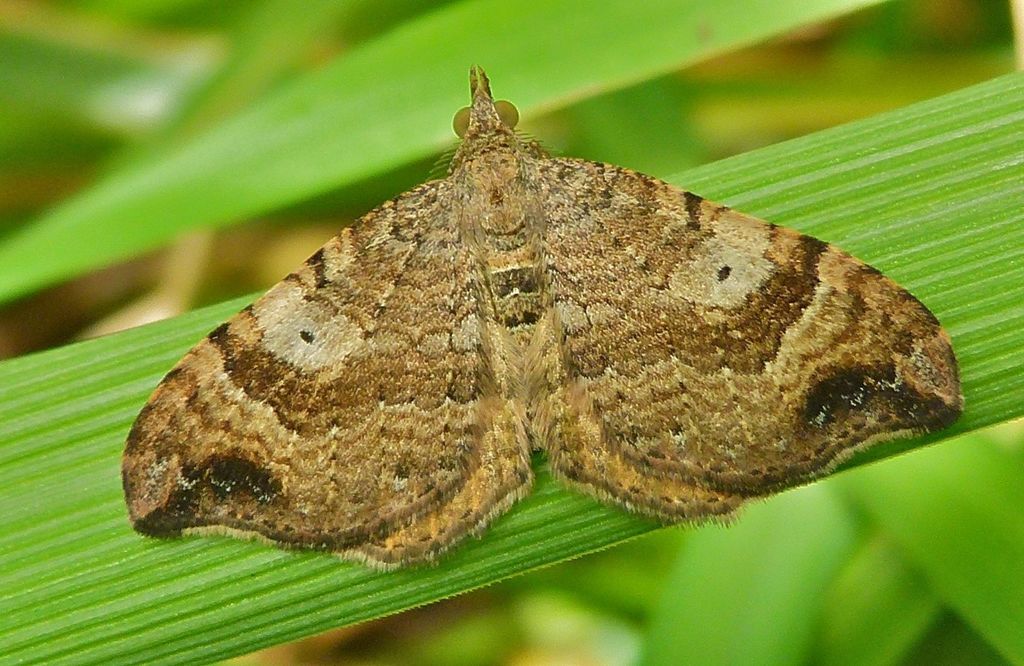
The small hooked-tip looper moth has a wingspan of about one inch and dull ochre forewings that end in blunt, hook-shaped tips. It lives in native forests, scrub, coastal areas and gardens throughout New Zealand, where its larvae feed on dead leaves of native plants and the adults pollinate native flowers.
Source: Wikipedia
How to recognize it
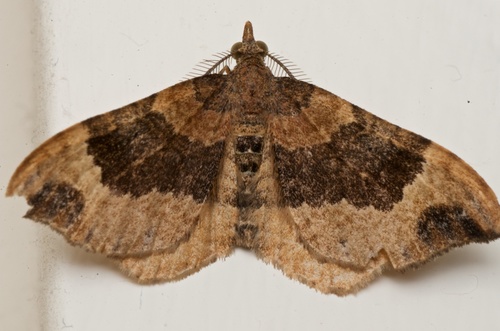
Forewings are dull ochre and end in blunt, hook-shaped tips.
Source: Wikipedia
Size
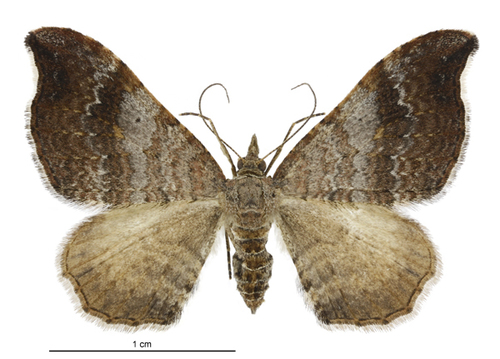
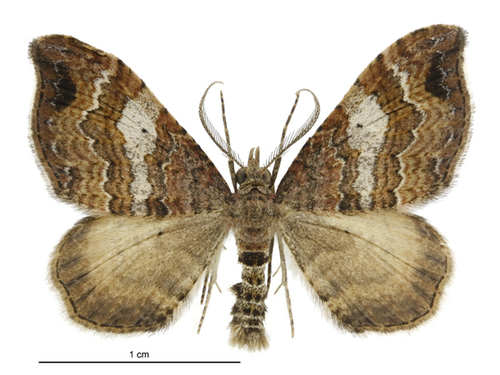
The wings expand to about one inch across.
Source: Wikipedia
Where it lives
It prefers native forest, scrub, coastal zones and domestic gardens.
Source: Wikipedia
What it eats
Larvae eat dead leaves of Geniostoma ligustrifolium and probably other native plants. Adults have been seen pollinating Olearia virgata and Leptospermum scoparium.
Source: Wikipedia
Life cycle
Mature larvae pupate on the ground in a silken cocoon hidden between two host leaves.
Source: Wikipedia
When you see it
Adults are on the wing from October through April.
Source: Wikipedia
Where it comes from
The species is endemic to New Zealand.
Source: Wikipedia
Lookalikes
It can be confused with Homodotis falcata where their ranges overlap south of Dunedin.
Source: Wikipedia
More photos
Questions people ask
When can I see adult hooked-tip looper moths?
Adults are active from October to April.
Source: Wikipedia
Do these moths pollinate any flowers?
Yes, adults have been recorded pollinating Olearia virgata and Leptospermum scoparium.
Source: Wikipedia
How can I tell this moth apart from similar species?
Look for the blunt, hook-shaped tips on the forewings; it may be confused with Homodotis falcata in the south.
Source: Wikipedia
Same family (Geometridae)
 Willow BeautyPeribatodes rhomboidaria
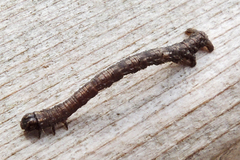 Pale BeautyCampaea perlataDamages trees, gardens or crops
 Large Lace-border MothScopula limboundataDamages trees, gardens or crops
 Riband WaveIdaea aversata
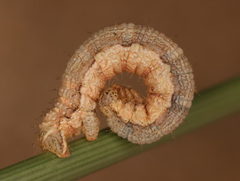 Yellow Shell MothCamptogramma bilineata
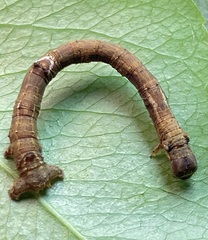 Large Maple Spanworm MothProchoerodes lineolaDamages trees, gardens or crops
Sources
- Wikipedia: https://en.wikipedia.org/wiki/Homodotis_megaspilata
Look it up elsewhere: GBIF · iNaturalist · BugGuide · Wikipedia
Text written 2026-10-23 from the sources above and checked sentence by sentence against them. Data fetched 2026-10-22.