 Bug FAQ
Sleepy Orange
Eurema nicippe · Order: Lepidoptera · Family: Pieridae
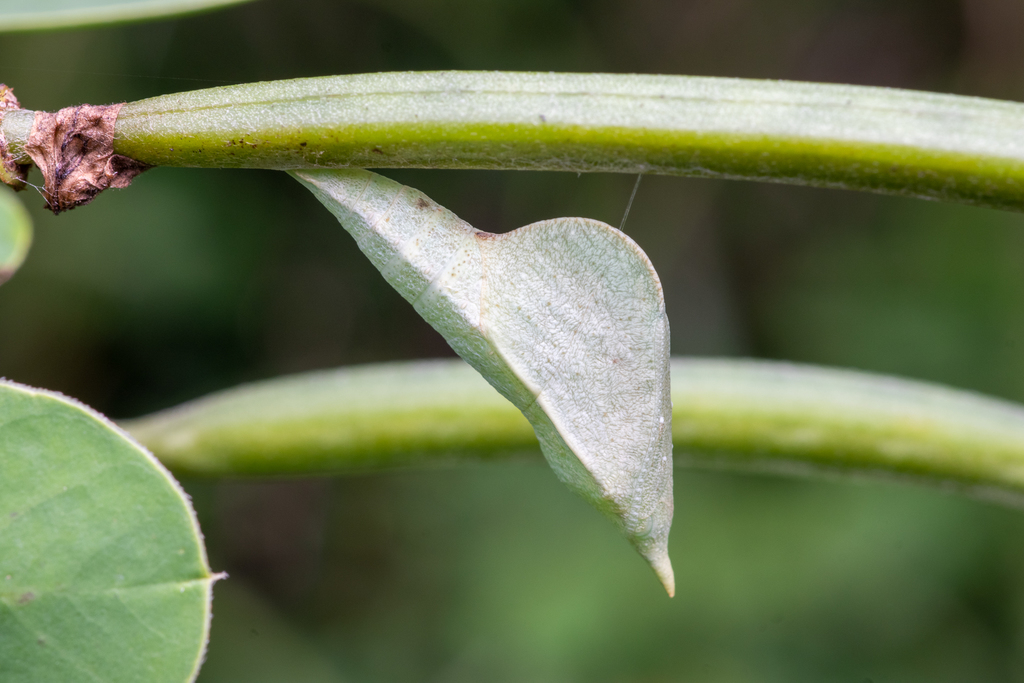
It lives in many open and disturbed places such as roadsides, fields, and wet meadows, mainly at low elevations in the southeastern United States. Adults feed on nectar from many flowers, while the green larvae eat only foliage and can have up to four generations per year.
Source: Wikipedia
How to recognize it
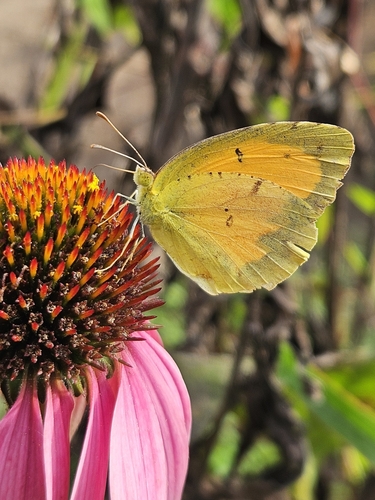
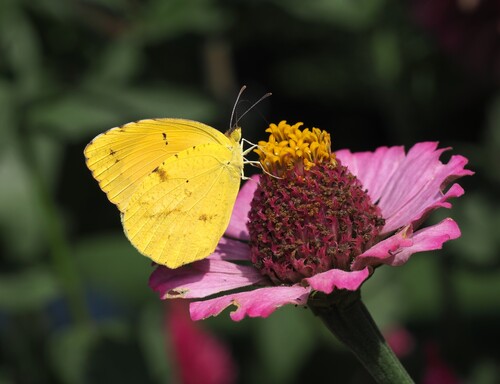
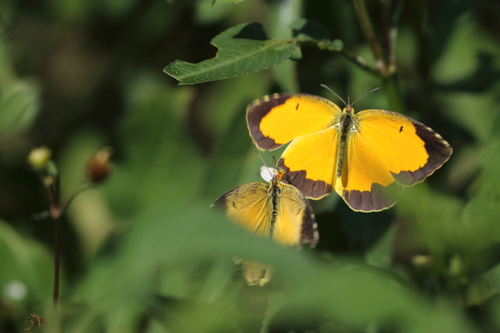
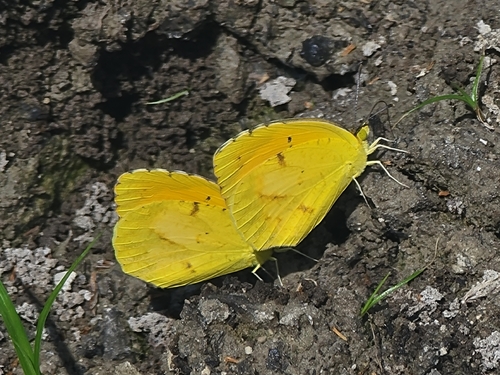
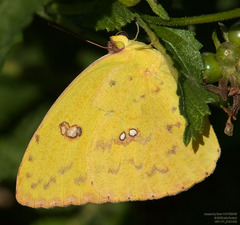
The upperside of the wings is bright orange with broad black borders, and the forewing’s leading edge has a narrow black spot that looks like a closed eye.
Source: Wikipedia
Size
Its wingspan ranges from about 35 to 50 mm (1⅜ to 2¼ inches).
Source: Wikipedia
Where it lives
It occupies open, disturbed habitats such as roadsides, agricultural fields, scrub, swamp edges, wet meadows, and pond margins.
Source: Wikipedia
What it eats
Adults sip nectar from many flowering plants. Larvae are pale green with a white side stripe, covered in short hairs, and they feed only on leaf tissue.
Source: Wikipedia
Life cycle
The butterfly can produce two to four broods each year. The chrysalis changes from pale green early on to darker brown-black or black later, matching the substrate where it pupates.
Source: Wikipedia
When you see it
In Florida and Texas adults are present year-round, while in the rest of its range it appears seasonally, sometimes as far north as Connecticut in summer.
Source: Wikipedia
Where it comes from
The species is native to North America, ranging from Central America up through the United States-Mexico border and into non-mountainous parts of the southeastern U.S..
Source: Wikipedia
Lookalikes
Females may mistakenly lay eggs on Phyllanthus tenellus because its leaves look like the primary host plant Chamaecrista fasciculata. In Florida they also lay eggs on Aeschynomene americana, a secondary host, due to similar leaf shape.
Source: Wikipedia
Where it is found in the US
Recorded in 40 of 51 states and DC. Most records: Texas, Arizona, South Carolina, North Carolina, Georgia, Virginia, Florida, Alabama.
Darker = more records. Counts are museum and citizen-science records, not population size.
Source: GBIF
Status: native in North America; native in United States. Source: iNaturalist
Months it is reported in the US
Source: GBIF
More photos
Questions people ask
Are sleepy oranges a garden pest?
The larvae feed only on foliage of specific host plants and are not reported to damage crops or ornamental plants.
Source: Wikipedia
Where can I see sleepy orange butterflies?
They are common in open, disturbed areas like fields and roadsides throughout the southeastern United States, especially in Florida and Texas year-round.
Source: Wikipedia
How big are sleepy orange butterflies?
Their wingspan measures roughly 35 to 50 mm (about 1⅜ to 2¼ inches).
Source: Wikipedia
Same family (Pieridae)


Sources
- Wikipedia: https://en.wikipedia.org/wiki/Eurema_nicippe
Look it up elsewhere: GBIF · iNaturalist · BugGuide · ITIS · Wikipedia
Text written 2026-10-22 from the sources above and checked sentence by sentence against them. Data fetched 2026-10-22.