 Bug FAQ
Skull-collecting Ant
Formica archboldi · Order: Hymenoptera · Family: Formicidae

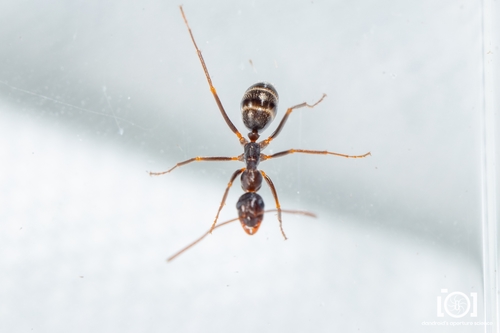
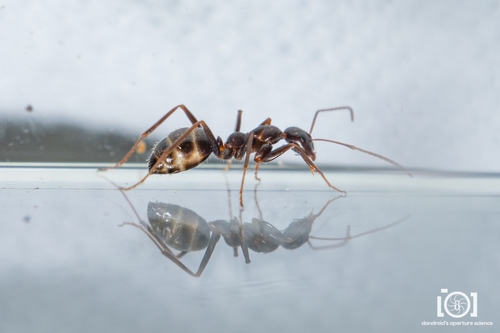
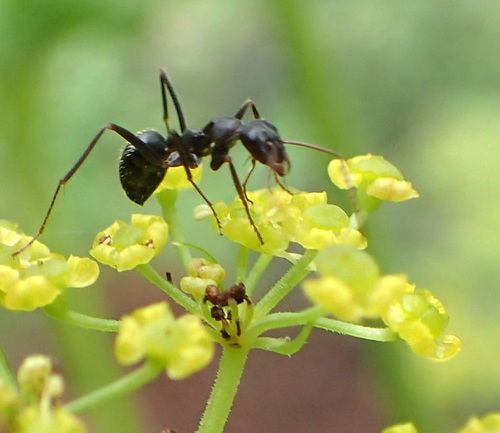
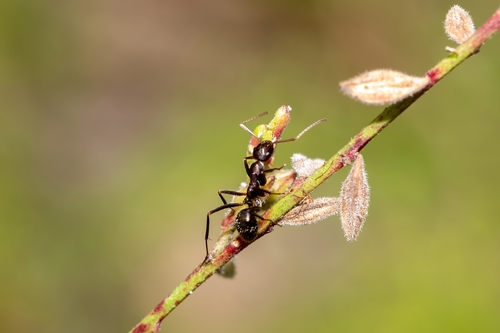
Skull-collecting ants store severed heads of other ants inside their nests. They can disguise themselves among trap-jaw ants by matching their chemical odors. The species belongs to the ant family Formicidae and is known as the skull-collecting ant.
Source: Wikipedia
How to recognize it
Their odor is chemically similar to that of trap-jaw ants, which may let them blend in with those ants.
Source: Wikipedia
Size
They keep severed ant heads in their nests, indicating they handle prey larger than themselves.
Source: Wikipedia
Where it lives
Severed ant heads are stored inside their nests.
Source: Wikipedia
What it eats
They immobilize trap-jaw ants with formic acid, drag them to the nest, and dismember them.
Source: Wikipedia
Lookalikes
Their chemical odor matches that of trap-jaw ants, which can cause them to be mistaken for those ants.
Source: Wikipedia
Where it is found in the US
Recorded in 5 of 51 states and DC. Most records: Florida, Georgia, Massachusetts, Arkansas, Delaware.
Darker = more records. Counts are museum and citizen-science records, not population size.
Source: GBIF
Status: endemic in United States; native in North America. Source: iNaturalist
Months it is reported in the US
Source: GBIF
More photos
Questions people ask
Why are they called skull-collecting ants?
Because they store the severed heads of other ants inside their nests.
Source: Wikipedia
Do they blend in with other ant species?
Their odor is chemically similar to trap-jaw ants, which may let them disguise themselves among those ants.
Source: Wikipedia
Same family (Formicidae)
 Eastern Black Carpenter AntCamponotus pennsylvanicusCan bite
 Red Imported Fire AntSolenopsis invictaCan sting
 American Winter AntPrenolepis imparis
 Argentine AntLinepithema humileNuisance, not dangerous
 Immigrant Pavement AntTetramorium immigransCan sting
 Odorous House AntTapinoma sessileCan damage your home
Sources
- Wikipedia: https://en.wikipedia.org/wiki/Formica_archboldi
Look it up elsewhere: GBIF · iNaturalist · BugGuide · ITIS · Wikipedia
Text written 2026-10-26 from the sources above and checked sentence by sentence against them. Data fetched 2026-10-26.