 Bug FAQ
Short-haired Leafwalker
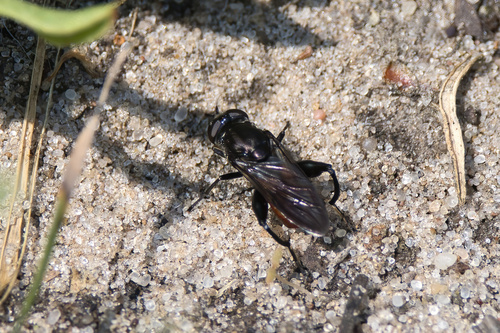
Chalcosyrphus piger · Order: Diptera · Family: Syrphidae
Also called: Red-tailed Leafwalker, Short-haired Forest Fly
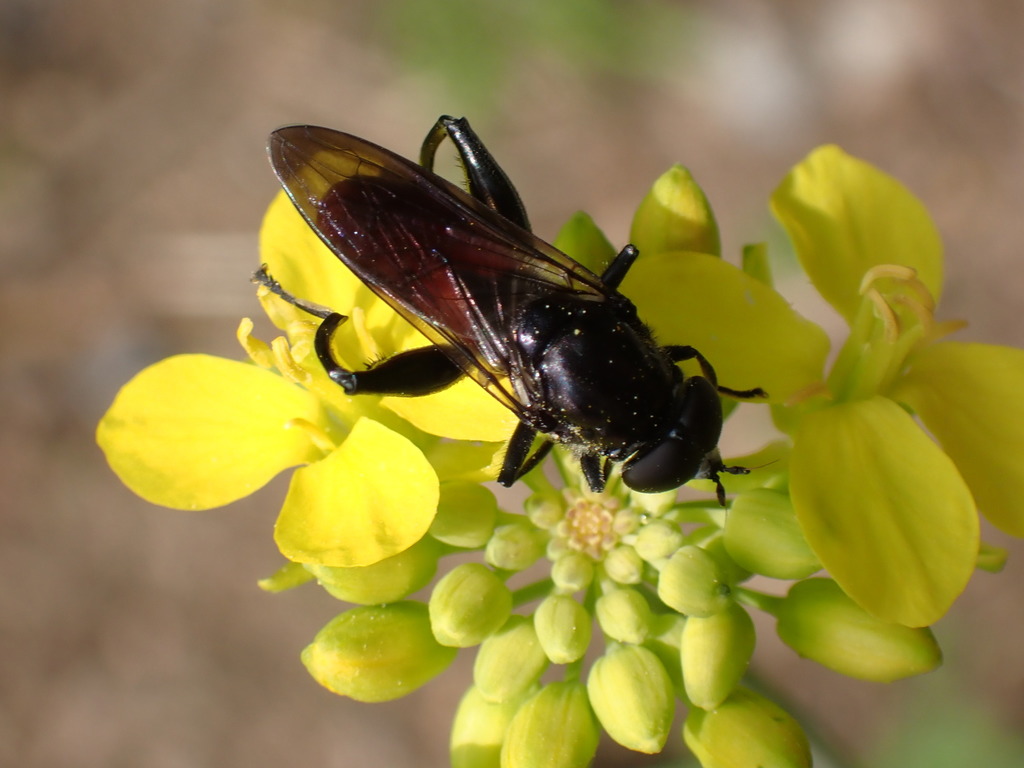
Adults feed on flower nectar and pollen, while larvae develop in the sap-filled hollows of fir and pine trees.
Source: Wikipedia
How to recognize it
Adults are called flower flies because they are frequently seen on flowers taking nectar and pollen.
Source: Wikipedia
Where it lives
These flies are commonly found around and on flowers where they obtain food.
Source: Wikipedia
What it eats
Adult leafwalkers obtain energy from nectar and protein from pollen on flowers. Larvae have been found living in the sap-filled hollows of fir (Larix) and pine (Pinus) trees.
Source: Wikipedia
Where it comes from
The species occurs across North America and Europe, recorded in the United States, Canada and various European countries.
Source: Wikipedia
Where it is found in the US
Recorded in 37 of 51 states and DC. Most records: Massachusetts, New York, California, New Jersey, North Carolina, Maine, Pennsylvania, Georgia.
Darker = more records. Counts are museum and citizen-science records, not population size.
Source: GBIF
Status: native in North America; native in Canada. Source: iNaturalist
Months it is reported in the US
Source: GBIF
More photos
Questions people ask
What do adult short-haired leafwalkers eat?
Adults feed on nectar for energy and pollen for protein from flowers.
Source: Wikipedia
Where can I find short-haired leafwalkers?
They are found throughout North America and Europe, including the United States and Canada.
Source: Wikipedia
What do the larvae of short-haired leafwalkers live in?
Larvae develop in the sap-filled hollows of fir and pine trees.
Source: Wikipedia
Same family (Syrphidae)






Sources
- Wikipedia: https://en.wikipedia.org/wiki/Chalcosyrphus_piger
Look it up elsewhere: GBIF · iNaturalist · BugGuide · ITIS · Wikipedia
Text written 2026-10-25 from the sources above and checked sentence by sentence against them. Data fetched 2026-10-25.