 Bug FAQ
Shining Scoparia
Eudonia diphtheralis · Order: Lepidoptera · Family: Crambidae
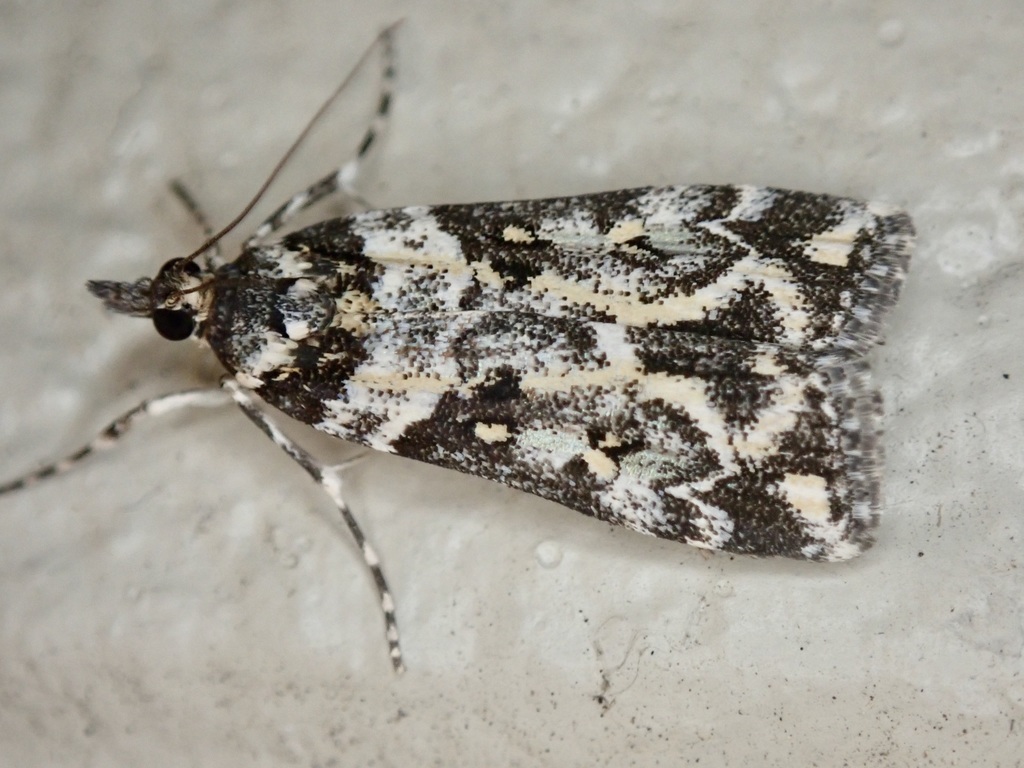
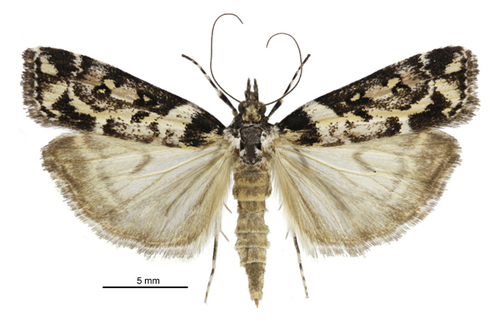
The Shining Scoparia has a wingspan of about 23 to 26 mm. Its forewings are triangular with distinctive white and black irrorations and unique prismatic scales around the reniform spot. It is endemic to New Zealand and flies from December to March, usually near forests.
Source: Wikipedia
How to recognize it
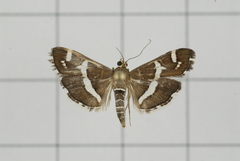
Forewings are elongate, triangular, white with irregular black and ochreous scales, and have a characteristic triangular blackish spot on the costa. The moth shows a unique pattern of brassy prismatic scales that look transparent around the reniform spot.
Source: Wikipedia
Size
Wingspan ranges from 23 to 26 mm for both males and females.
Source: Wikipedia
Where it lives
Found in several New Zealand locations such as Hamilton, Wellington and Otira Gorge, typically near forested areas. Adults are most often attracted to light traps and are observed from December through March.
Source: Wikipedia
What it eats
Larvae feed on grasses, herbs and bryophytes.
Source: Wikipedia
Life cycle
It is a fine species distinguished by its peculiar prismatic spots before and after the reniform mark.
Source: Wikipedia
When you see it
Adults are active from December to March.
Source: Wikipedia
Where it comes from
The species is endemic to New Zealand.
Source: Wikipedia
Lookalikes
It can be recognized by the unique prismatic spots surrounding the reniform spot, which set it apart from similar moths.
Source: Wikipedia
More photos

Questions people ask
When can I expect to see Shining Scoparia moths?
They are on the wing from December through March.
Source: Wikipedia
How can I tell this moth apart from similar species?
Look for the distinctive prismatic, almost transparent scales around the reniform spot on the forewings.
Source: Wikipedia
Same family (Crambidae)
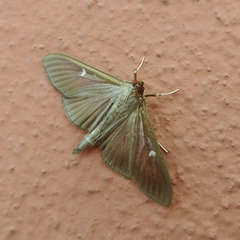 Box Tree MothCydalima perspectalisDamages trees, gardens or crops
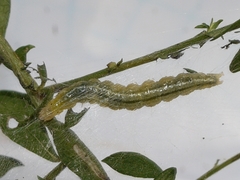 Celery Leaftier MothUdea rubigalisDamages trees, gardens or crops
 Elegant Grass-veneerMicrocrambus elegans
 Hawaiian Beet Webworm MothSpoladea recurvalisDamages trees, gardens or crops
 Garden Grass-veneerChrysoteuchia culmellaDamages trees, gardens or crops
 Bluegrass Webworm MothParapediasia teterrellusDamages trees, gardens or crops
Sources
- Wikipedia: https://en.wikipedia.org/wiki/Eudonia_diphtheralis
Look it up elsewhere: GBIF · iNaturalist · BugGuide · Wikipedia
Text written 2026-10-23 from the sources above and checked sentence by sentence against them. Data fetched 2026-10-23.