 Bug FAQ
Shining Amazon Ant
Polyergus lucidus · Order: Hymenoptera · Family: Formicidae
Also called: Slave-making ant, Shiny Polyergus
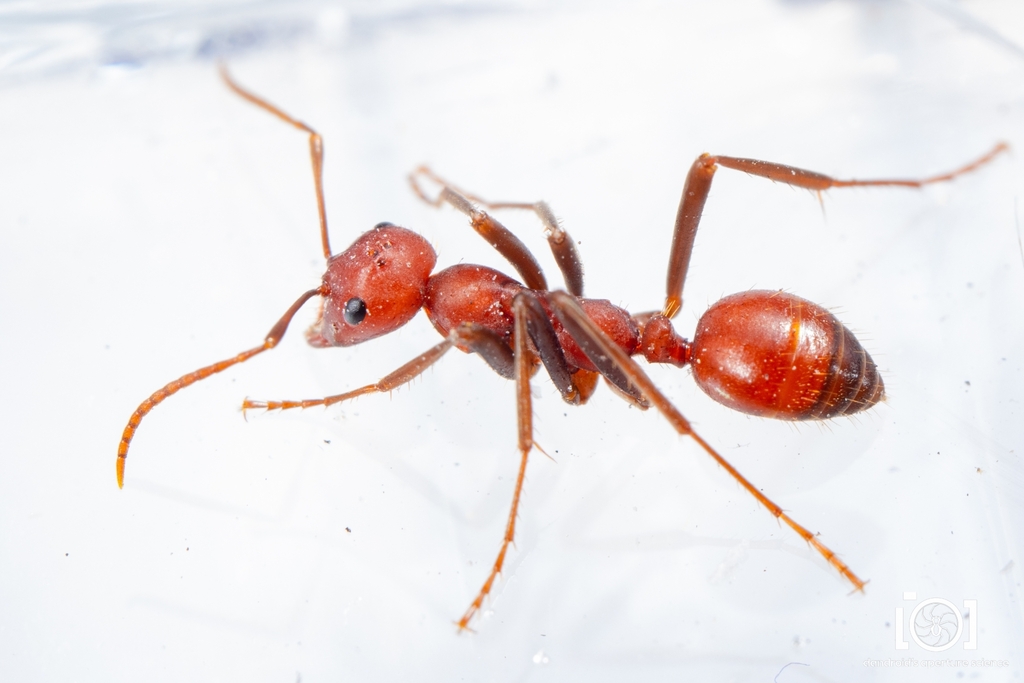
Workers measure about 6 to 7 mm long (roughly a quarter of an inch). They are red with brown-tinged legs and gaster tips, and their bodies have a glossy, shiny appearance. These ants cannot feed themselves; they raid other ant nests, steal pupae, and raise the captured ants as workers in their own colonies.
Source: Wikipedia
How to recognize it
The ant’s body is red, the legs and the end of the abdomen often show a brown tint, and the back of the thorax and abdomen are glossy.
Source: Wikipedia
Size
A worker ant is between 5.7 and 7.1 mm long.
Source: Wikipedia
Where it lives
It is typically encountered in prairies, pastures, and old fields.
Source: Wikipedia
What it eats
The ant cannot feed itself or rear its young without help from other ants. It raids the nests of other ant species, taking their pupae to be raised as workers in its own colony.
Source: Wikipedia
Life cycle
Like its diet, the ant relies on stealing pupae from other ant colonies to supply its workers.
Source: Wikipedia
Where it comes from
The species is native to the eastern United States.
Source: Wikipedia
Where it is found in the US
Recorded in 21 of 51 states and DC. Most records: Massachusetts, New York, Colorado, Illinois, Ohio, Connecticut, New Jersey, Florida.
Darker = more records. Counts are museum and citizen-science records, not population size.
Source: GBIF
Months it is reported in the US
Source: GBIF
More photos

Questions people ask
What does the Lucidus-group Amazon ant look like?
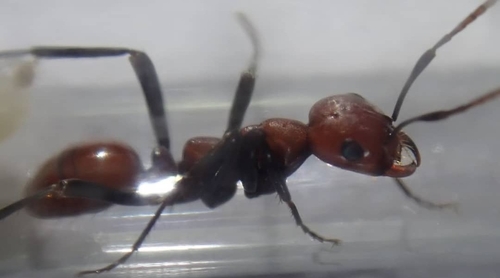
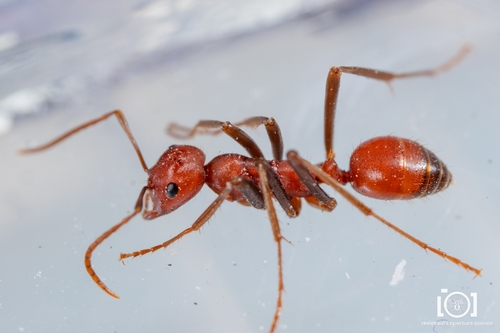
It is a red ant with brown-tinged legs and abdomen tips, and its thorax and abdomen have a shiny, glossy surface.
Source: Wikipedia
Where are they found?
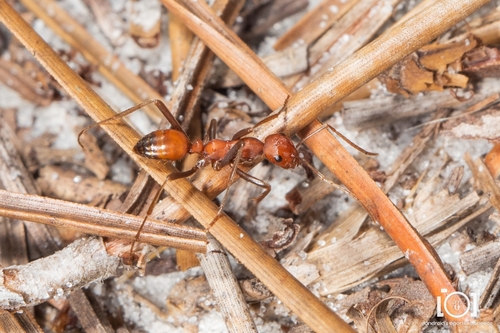
They live in prairies, pastures, and old fields and are native to the eastern United States.
Source: Wikipedia
What do they eat?
They cannot feed themselves; instead they raid other ant nests and steal pupae to raise as workers.
Source: Wikipedia
Same family (Formicidae)
 Eastern Black Carpenter AntCamponotus pennsylvanicusCan bite
 Red Imported Fire AntSolenopsis invictaCan sting
 American Winter AntPrenolepis imparis
 Argentine AntLinepithema humileNuisance, not dangerous
 Immigrant Pavement AntTetramorium immigransCan sting
 Odorous House AntTapinoma sessileCan damage your home
Sources
- Wikipedia: https://en.wikipedia.org/wiki/Polyergus_lucidus
Look it up elsewhere: GBIF · iNaturalist · BugGuide · ITIS · Wikipedia
Text written 2026-10-26 from the sources above and checked sentence by sentence against them. Data fetched 2026-10-26.