 Bug FAQ
Seedcorn Maggot
Delia platura · Order: Diptera · Family: Anthomyiidae
Also called: Bean Seed Fly, Onion Fly
Source: Wikipedia
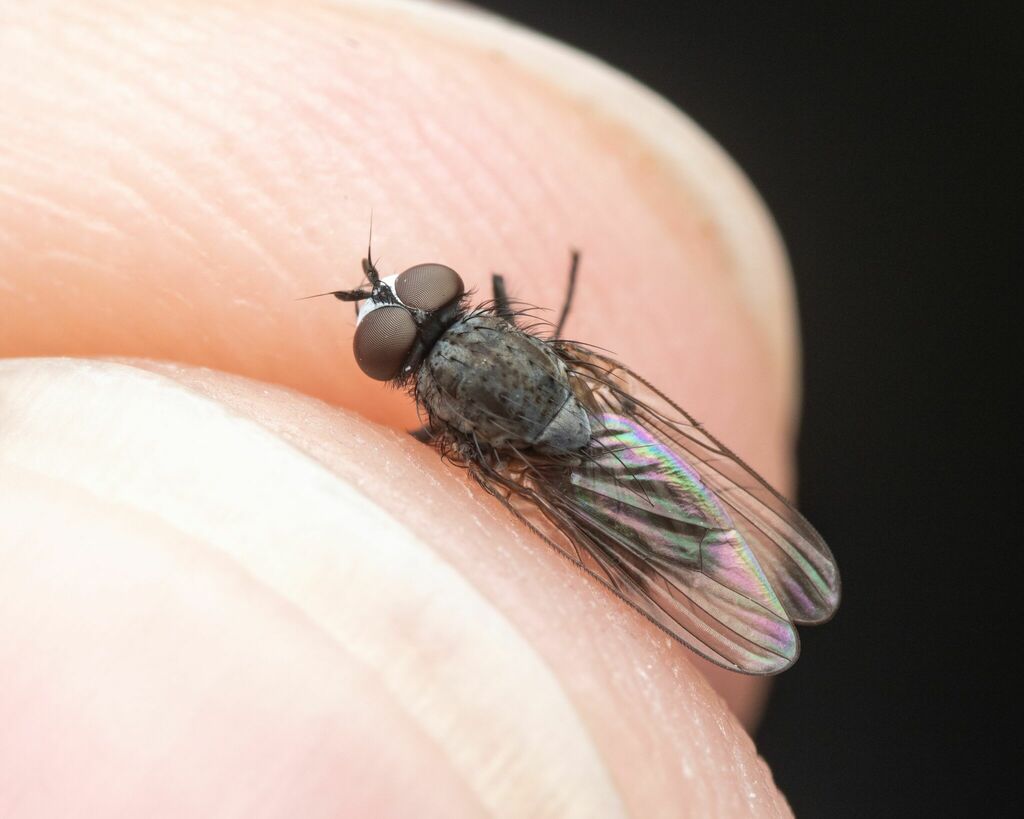
Adult seedcorn maggots have a thin body, long legs and clear wings, making them hard to tell apart from other flies. They can complete a life cycle in 15 to 77 days and produce 2 to 4 generations each year, depending on temperature.
Source: Wikipedia
How to recognize it
Adults are thin, have long legs and transparent wings, which makes them look like many other flies.
Source: Wikipedia
Size
The adult fly is slender with long legs and clear wings.
Source: Wikipedia
How to get rid of it
Chemical options include chlorpyrifos, clothianidin, imidacloprid and spinosad. Biological control methods have also been studied as a natural way to lower their numbers.
Source: Wikipedia
Where it lives
It lives in many parts of the world and is a well-known agricultural pest during its larval stage. It prefers mild climates where temperatures are moderate.
Source: Wikipedia
What it eats
The larvae eat plants that have already been damaged, classifying them as secondary pests. They attack seeds and seedlings, causing early-stage crop loss.
Source: Wikipedia
Life cycle
A full cycle from egg to adult can take from about two weeks to two and a half months. Depending on temperature, two to four generations are produced each year.
Source: Wikipedia
When you see it
New generations appear in the late spring and summer months of May through August. Extreme heat or severe cold can push the insect into dormancy.
Source: Wikipedia
Where it comes from
First described in Germany, it now occurs in many farming areas of North America, including the United States and Canada.
Source: Wikipedia
Lookalikes
Adults look similar to other flies because of their thin bodies, long legs and clear wings.
Source: Wikipedia
Where it is found in the US
Recorded in 24 of 51 states and DC. Most records: California, Hawaii, Montana, Alaska, District of Columbia, New York, New Hampshire, Virginia.
Darker = more records. Counts are museum and citizen-science records, not population size.
Source: GBIF
Status: introduced in Canada. Source: iNaturalist
Months it is reported in the US
Source: GBIF
More photos
Questions people ask
How can I identify a seedcorn maggot?
Look for a thin adult fly with long legs and clear wings, which can be hard to separate from other flies.
Source: Wikipedia
What damage does the seedcorn maggot cause?
Its larvae feed on already-injured plants, especially seeds and young seedlings, reducing crop yields.
Source: Wikipedia
How many generations does it produce each year?
Depending on temperature, it can have two to four generations annually.
Source: Wikipedia
How can I control seedcorn maggots?
Both chemical insecticides such as chlorpyrifos and biological control strategies are used to manage them.
Source: Wikipedia
Same family (Anthomyiidae)
Sources
- Wikipedia: https://en.wikipedia.org/wiki/Delia_platura
Look it up elsewhere: GBIF · iNaturalist · BugGuide · ITIS · Wikipedia
Text written 2026-10-23 from the sources above and checked sentence by sentence against them. Data fetched 2026-10-23.