 Bug FAQ
Anthomyia procellaris
Anthomyia procellaris · Order: Diptera · Family: Anthomyiidae
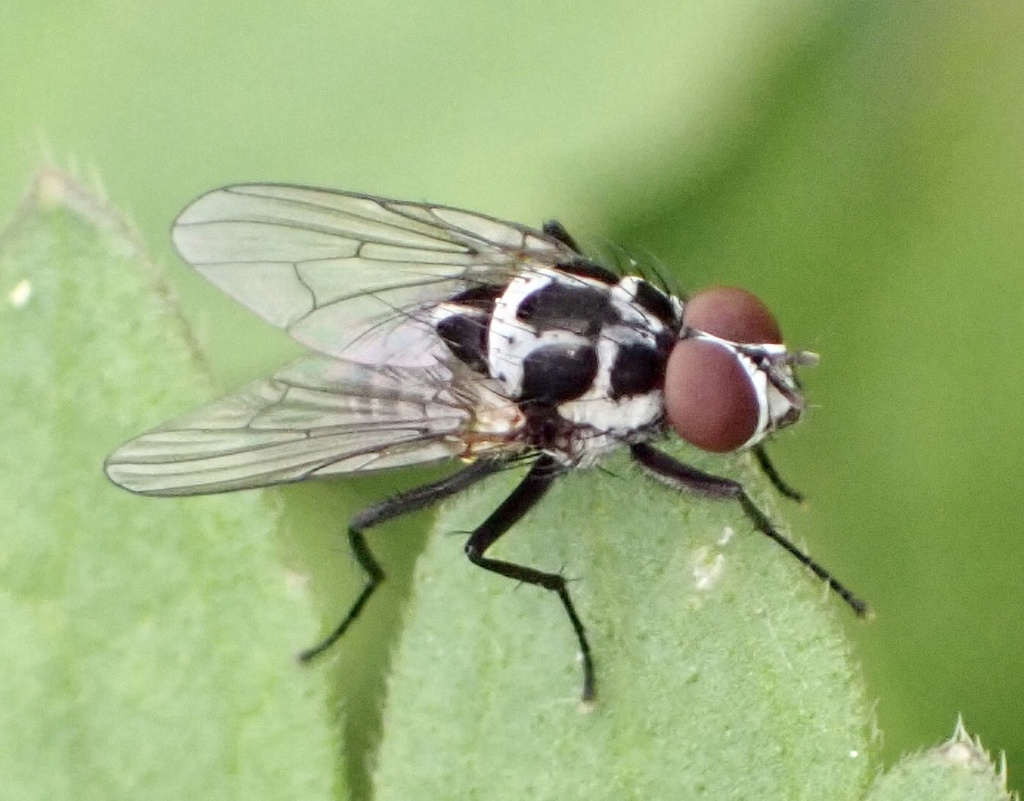
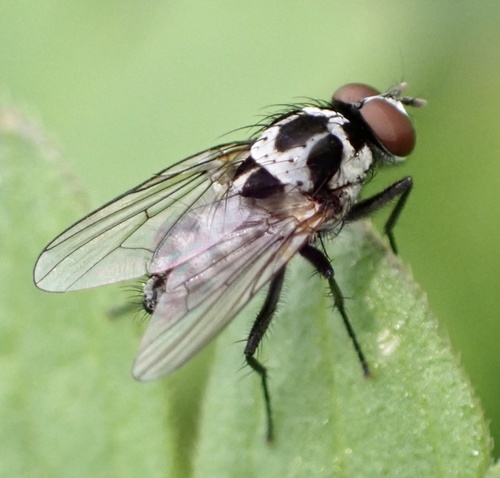
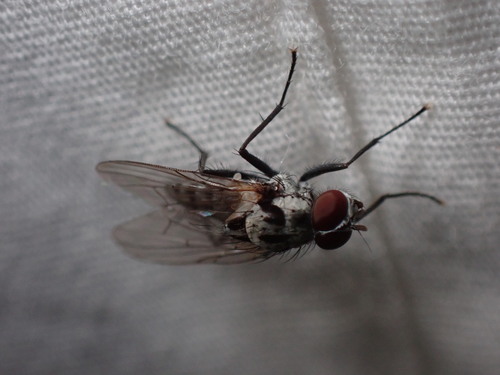
The fly is small, about 5 to 7 mm long (0.20 to 0.28 in). It has a velvety black pattern on a greyish body, three black spots on the thorax, and a mostly grey abdomen. It lives in wooded areas and hedge rows, flies from spring to autumn, and likes to sun-bathe.
Source: Wikipedia
How to recognize it
The black marking at the wing base is a single area with a straight rear edge, not split into two parts.
Source: Wikipedia
Size
Adults reach 5 to 7 mm in length (0.20 to 0.28 in).
Source: Wikipedia
Where it lives
They prefer wooded habitats and hedge rows. They are active from spring through autumn and enjoy sun-bathing.
Source: Wikipedia
What it eats
Adults feed on nectar, pollen and excrement. Larvae live in bird nests and eat bird droppings.
Source: Wikipedia
Life cycle
Adults fly from spring to autumn and like to sun-bathe. Larvae develop in bird nests where they feed on bird droppings.
Source: Wikipedia
When you see it
They are present from spring through autumn.
Source: Wikipedia
Where it comes from
They occur in Europe, the East Palearctic (China, Japan), the Near East, and the Nearctic (from Michigan south to North Carolina).
Source: Wikipedia
Lookalikes
A reliable clue is the undivided black wing-base marking with a straight rear boundary.
Source: Wikipedia
Where it is found in the US
Recorded in 31 of 51 states and DC. Most records: Washington, Oregon, Idaho, Utah, Colorado, Illinois, Maryland, Minnesota.
Darker = more records. Counts are museum and citizen-science records, not population size.
Source: GBIF
Status: native in North America; native in Canada. Source: iNaturalist
Months it is reported in the US
Source: GBIF
More photos
Questions people ask
How can I tell Anthomyia procellaris apart from similar flies?
Look for a single black marking at the wing base that ends in a straight rear edge; other species have the marking split into two parts.
Source: Wikipedia
When are these flies active?
They are active from spring through autumn and like to sun-bathe.
Source: Wikipedia
Where are Anthomyia procellaris found?
They inhabit wooded areas and hedge rows across Europe, parts of Asia, the Near East, and the eastern United States.
Source: Wikipedia
Same family (Anthomyiidae)
Sources
- Wikipedia: https://en.wikipedia.org/wiki/Anthomyia_procellaris
Look it up elsewhere: GBIF · iNaturalist · BugGuide · ITIS · Wikipedia
Text written 2026-10-22 from the sources above and checked sentence by sentence against them. Data fetched 2026-10-22.