 Bug FAQ
Schinia pulchripennis
Schinia pulchripennis · Order: Lepidoptera · Family: Noctuidae
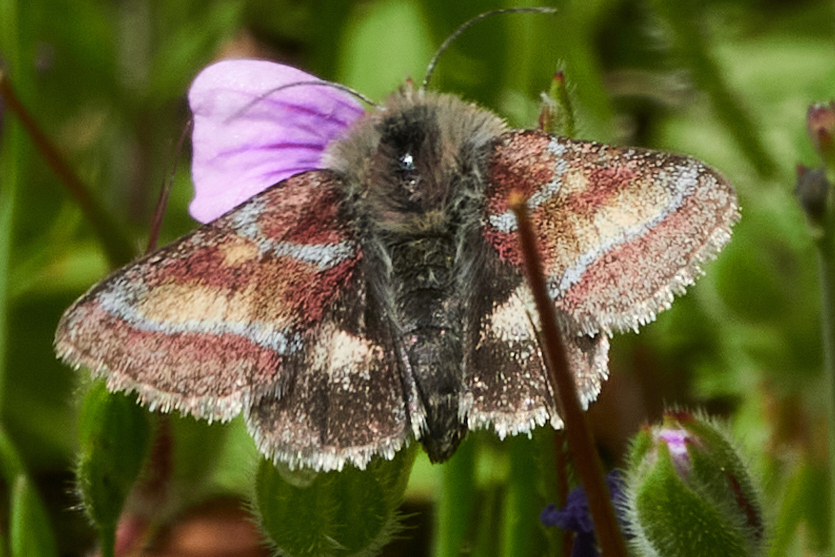
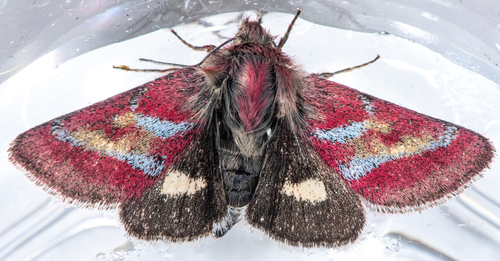
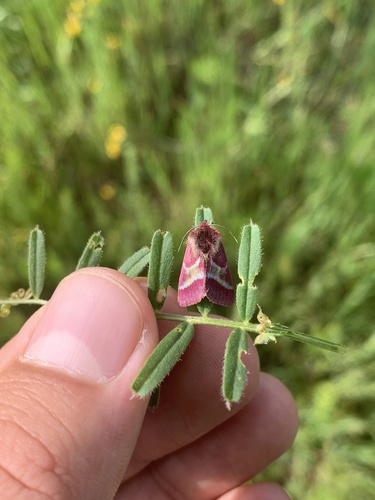
The common flower moth has a wingspan of about 17-21 mm and striking magenta forewings with pale yellow patches, while its hind wings are dark brown with a white center. It lives in desert areas such as the Mojave and in cismontane California, and it is found throughout North America, especially California and Nevada. Adults feed on nectar from several wildflowers, and the larvae eat the plant Castilleja exserta; the larval stage lasts about 28.5 days before they pupate in the ground and emerge in rainy spring or winter.
Source: Wikipedia
How to recognize it
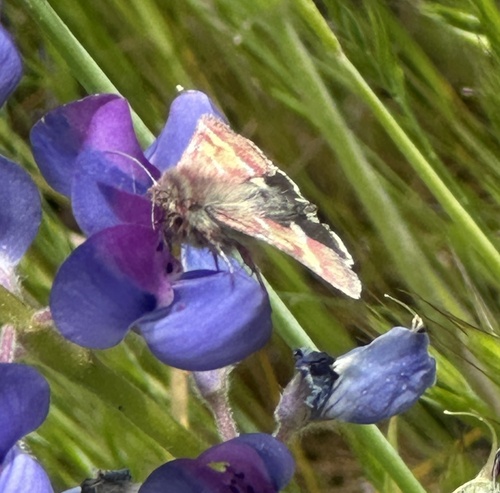
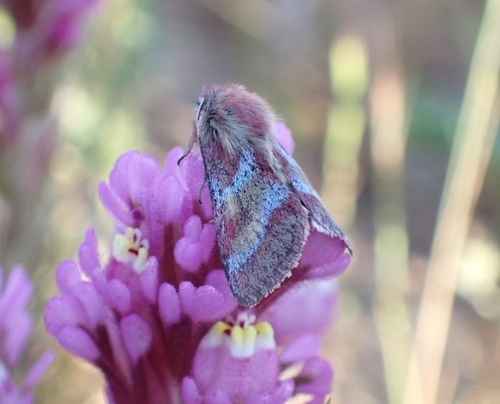
The moth’s forewings are magenta with pale yellow areas, and its hind wings are dark brown with a white spot in the center. The top of the thorax is covered in purple, grey and black hairs, while the underside of the thorax and abdomen have yellow hairs.
Source: Wikipedia
Size
Its wingspan ranges from 17 to 21 mm.
Source: Wikipedia
Where it lives
It inhabits desert regions such as the Mojave and the cismontane areas of California.
Source: Wikipedia
What it eats
Adults obtain nectar from plants like Allium amplectens, Cryptantha species, Lasthenia californica, Layia fremontii and Layia platyglossa. Larvae feed on Castilleja exserta (also known as O. pupurascens).
Source: Wikipedia
Life cycle
The larval stage, including all instars, lasts about 28.5 days. Fully grown larvae drop to the ground, tunnel in and pupate there.
Source: Wikipedia
When you see it
Moths emerge from the ground in spring or winter when enough rain triggers germination of their host plant’s seeds.
Source: Wikipedia
Where it comes from
Schinia pulchripennis is native to North America, including the states of California and Nevada.
Source: Wikipedia
Where it is found in the US
Recorded in 1 of 51 states and DC. Most records: California.
Darker = more records. Counts are museum and citizen-science records, not population size.
Source: GBIF
Status: native in North America; native in United States. Source: iNaturalist
Months it is reported in the US
Source: GBIF
More photos
Questions people ask
When do these moths appear?
They emerge in spring or winter after rain causes their host plant’s seeds to germinate.
Source: Wikipedia
What do the caterpillars eat?
The caterpillars feed on Castilleja exserta (O. pupurascens).
Source: Wikipedia
Where can I find this moth?
It is found in desert habitats like the Mojave and in cismontane California, throughout North America, especially California and Nevada.
Source: Wikipedia
Same family (Noctuidae)
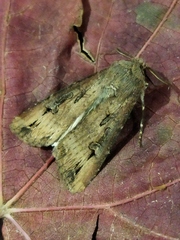 Ipsilon Dart MothAgrotis ipsilonDamages trees, gardens or crops
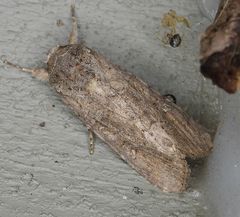 Fall Armyworm MothSpodoptera frugiperdaDamages trees, gardens or crops
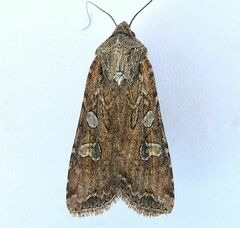 Army Cutworm MothEuxoa auxiliarisDamages trees, gardens or crops
 Large Yellow UnderwingNoctua pronubaDamages trees, gardens or crops
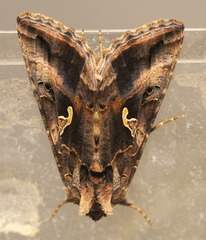 Silver ΥAutographa gamma
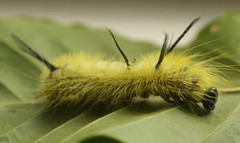 American DaggerAcronicta americanaCan irritate skin
Sources
- Wikipedia: https://en.wikipedia.org/wiki/Schinia_pulchripennis
Look it up elsewhere: GBIF · iNaturalist · BugGuide · ITIS · Wikipedia
Text written 2026-10-25 from the sources above and checked sentence by sentence against them. Data fetched 2026-10-25.