 Bug FAQ
Sara Orangetip
Anthocharis sara · Order: Lepidoptera · Family: Pieridae
Also called: Sara's Orangetip, Sara Orange-tip
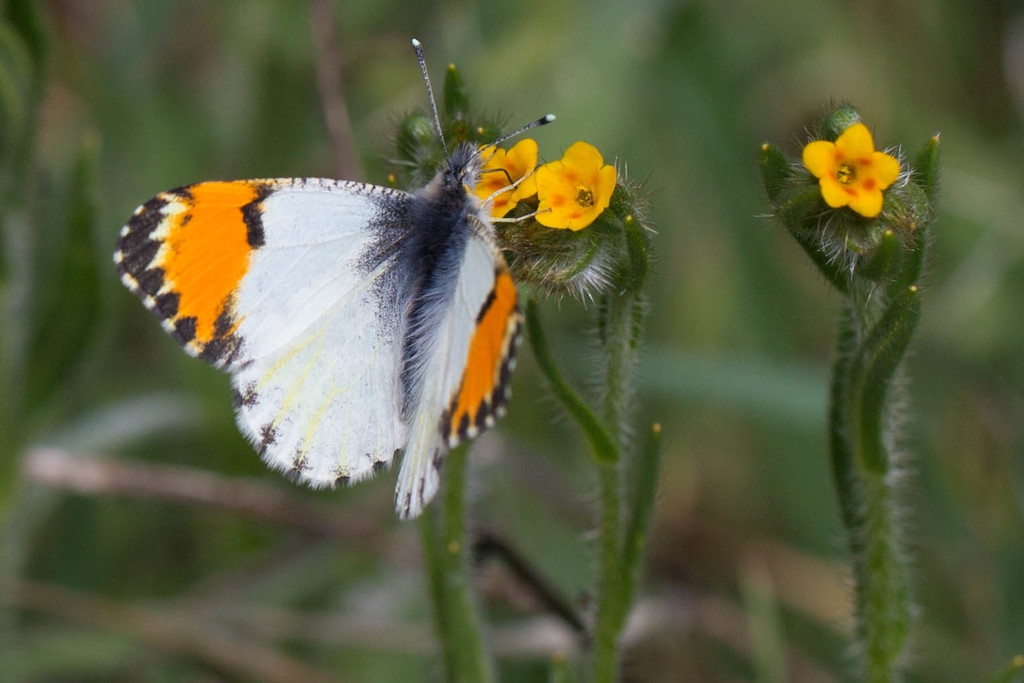
Female orange-tips have bright orange wing tips, while males have tips that reflect ultraviolet and look orange to us but appear purple to butterflies.
Source: Wikipedia
How to recognize it
Females show orange tips on their wings; males have ultraviolet-reflective tips that look orange to humans but bee-purple to other butterflies.
Source: Wikipedia
Where it lives
They live in orchards, fields, meadows and canyons.
Source: Wikipedia
What it eats
Females lay eggs on stems, pedicels and petiole bases of host plants, sometimes on buds, flowers or leaves; the caterpillars then eat the buds, flowers and fruits.
Source: Wikipedia
Life cycle
The species has two flight periods each year and is absent the rest of the year.
Source: Wikipedia
When you see it
The first brood flies from late January through April, and the second brood from May to early July.
Source: Wikipedia
Where it is found in the US
Recorded in 14 of 51 states and DC. Most records: California, Idaho, New Mexico, Alaska, Washington, Arizona, Oregon, Colorado.
Darker = more records. Counts are museum and citizen-science records, not population size.
Source: GBIF
Status: native in North America; native in Canada; native in United States. Source: iNaturalist
Months it is reported in the US
Source: GBIF
More photos
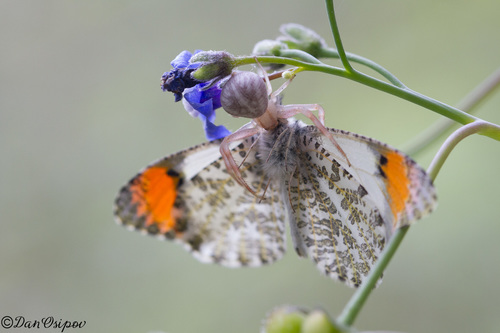
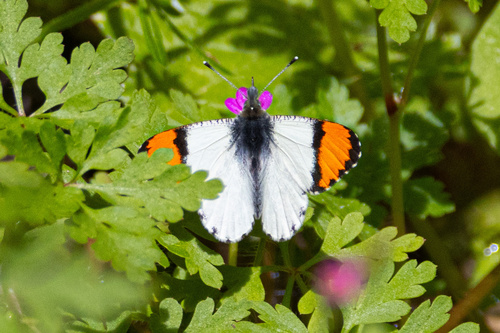

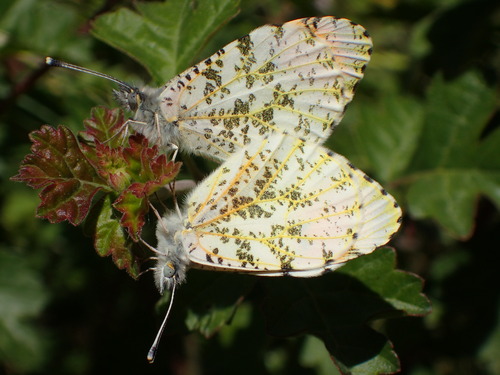
Same family (Pieridae)


Sources
- Wikipedia: https://en.wikipedia.org/wiki/Anthocharis_sara
Look it up elsewhere: GBIF · iNaturalist · BugGuide · ITIS · Wikipedia
Text written 2026-10-23 from the sources above and checked sentence by sentence against them. Data fetched 2026-10-23.