 Bug FAQ
Sandhill Carpenter ant
Camponotus socius · Order: Hymenoptera · Family: Formicidae
Source: Wikipedia
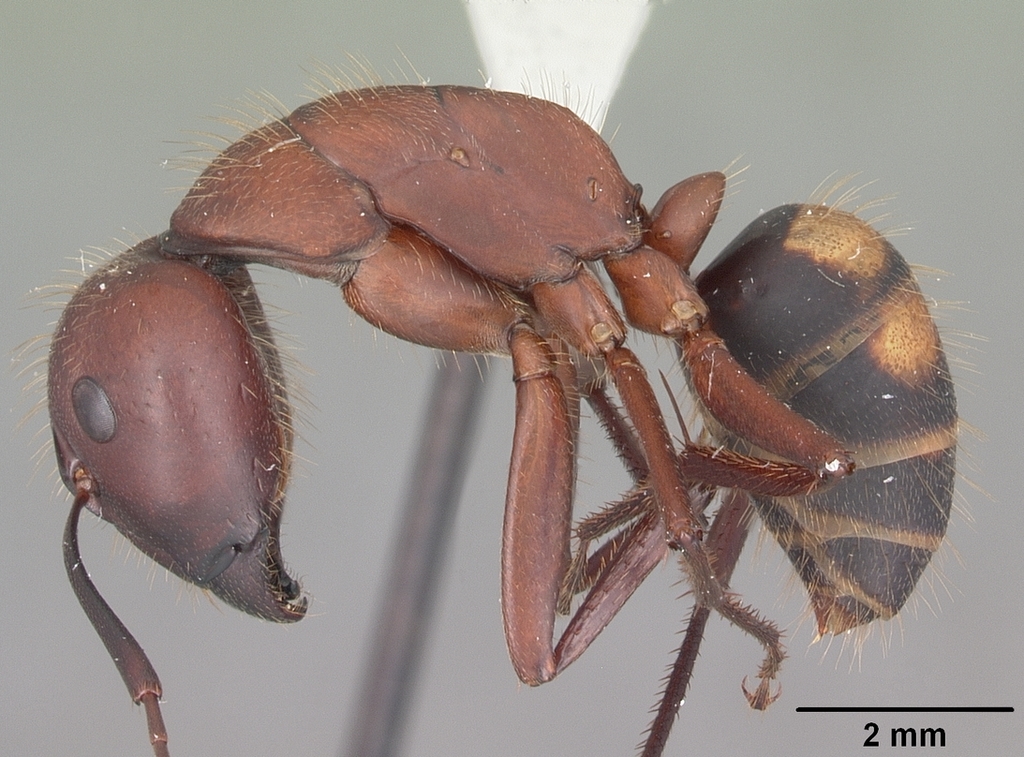
Sandhill carpenter ants are among the largest North American carpenter ants, with minor workers 7.5 to 10 mm long and majors up to about 16 mm; queens reach 17 to 18 mm and can grow to 20 mm when physogastric. They nest deep (about 60 cm) in well-drained sandy soils under shade, often in xeric sandhill habitats.
Source: Wikipedia
How to recognize it
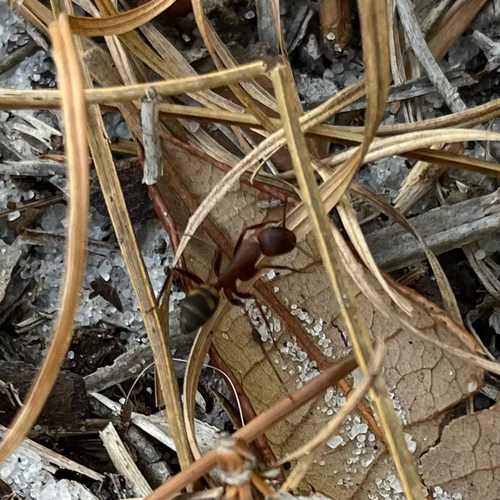
Their abdomen shows deep bronze to orange bands on each segment, while the thorax and legs are rusty brown-burgundy and the head is a darker maroon.
Source: Wikipedia
Size
Minor workers measure 7.5 to 10 mm, majors about 16 mm, and queens 17 to 20 mm in length.
Source: Wikipedia
Is it a pest in the house?
Although they are carpenter ants, they rarely damage homes because they nest in sandy soils rather than wood structures.
Source: Wikipedia
What it eats
Workers are omnivorous opportunists, preying on arthropods, scavenging, collecting honeydew from sap-sucking insects, and even feeding on lizard or bird feces for urea.
Source: Wikipedia
Life cycle
Winged alates emerge on warm, windless, overcast afternoons after heavy rain, typically between 2 p.m. and 5 p.m.; females walk away before flying, while males take off directly from the nest.
Source: Wikipedia
Where it comes from
They are native to the southeastern United States, occurring in Georgia, Alabama, Florida, the Carolinas, Mississippi, and nearby regions.
Source: Wikipedia
Lookalikes
The minor workers have elongated heads and slender bodies typical of the Tanaemyrmex subgenus, which can cause confusion with other carpenter ant species.
Source: Wikipedia
Where it is found in the US
Recorded in 7 of 51 states and DC. Most records: Florida, North Carolina, Georgia, Alabama, Mississippi, South Carolina, Maryland.
Darker = more records. Counts are museum and citizen-science records, not population size.
Source: GBIF
Status: endemic in United States; native in North America. Source: iNaturalist
Months it is reported in the US
Source: GBIF
More photos
Questions people ask
Where are sandhill carpenter ants found?
They occur in the southeastern United States, including Georgia, Alabama, Florida, the Carolinas, and Mississippi.
Source: Wikipedia
What do sandhill carpenter ants look like?
Their abdomen has bronze to orange bands, the thorax and legs are rusty brown-burgundy, and the head is dark maroon.
Source: Wikipedia
Do they damage homes?
No, they usually nest in sandy soils and are not a threat to wooden structures.
Source: Wikipedia
When do the winged ants appear?
Alates emerge on warm, calm, overcast afternoons after heavy rain, typically between 2 p.m. and 5 p.m.
Source: Wikipedia
Same family (Formicidae)
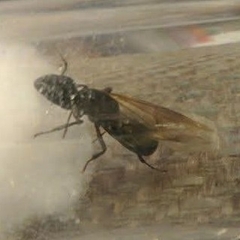 Eastern Black Carpenter AntCamponotus pennsylvanicusCan damage your home
 Red Imported Fire AntSolenopsis invictaCan sting
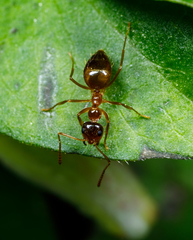 American Winter AntPrenolepis imparis
 Argentine AntLinepithema humileNuisance, not dangerous
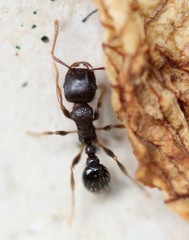 Immigrant Pavement AntTetramorium immigransCan sting
 Odorous House AntTapinoma sessileCan damage your home
Sources
- Wikipedia: https://en.wikipedia.org/wiki/Camponotus_socius
Look it up elsewhere: GBIF · iNaturalist · BugGuide · ITIS · Wikipedia
Text written 2026-10-24 from the sources above and checked sentence by sentence against them. Data fetched 2026-10-24.