 Bug FAQ
Salvinia Stem Borer Moth
Samea multiplicalis · Order: Lepidoptera · Family: Crambidae
Also called: Salvinia Stem-borer
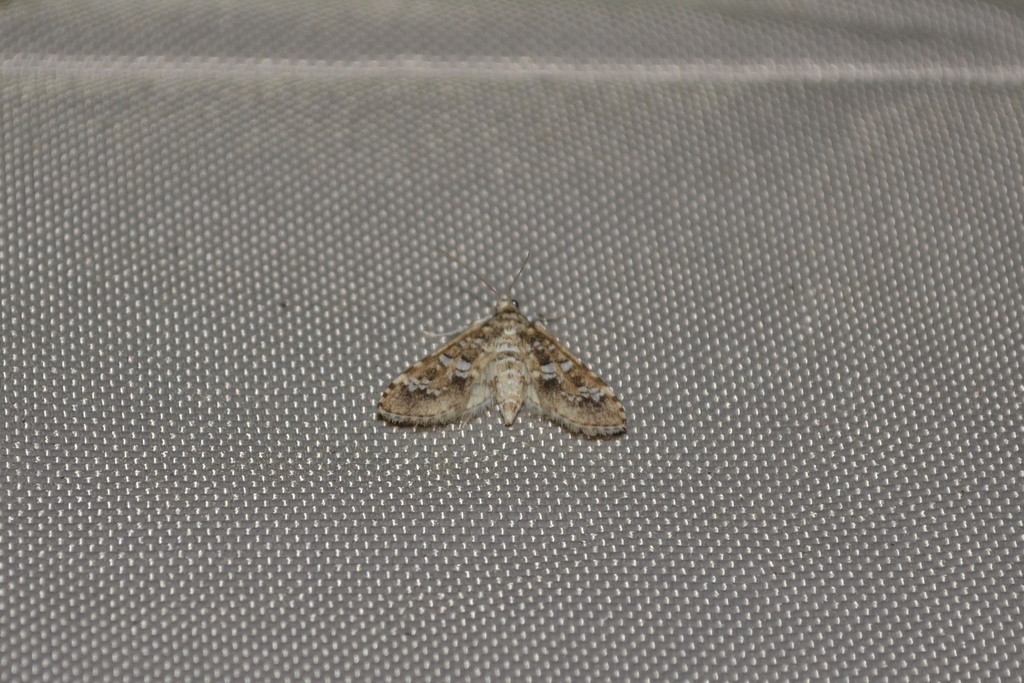
The Salvinia stem-borer moth larvae are pale yellow to green, while adults are tan with darker patterns. Its caterpillars feed on floating aquatic plants such as water velvet, water lettuce, and water ferns, often boring into stems.
Source: Wikipedia
How to recognize it
Larvae are pale yellow to green; adults are tan with darker markings.
Source: Wikipedia
Is it a pest in the house?
Females lay eggs on water plants such as Azolla, Pistia, and Salvinia. Larval feeding can kill host plants, making the moth useful for biological control of invasive water ferns like Salvinia molesta.
Source: Wikipedia
Where it lives
It lives on floating mats of water plants like Azolla, Pistia, and Salvinia in calm ponds, lakes, and slow rivers.
Source: Wikipedia
What it eats
Caterpillars eat several aquatic plants, especially Azolla, Pistia, Salvinia species, and sometimes water hyacinth. They feed by boring into stems or chewing leaves externally.
Source: Wikipedia
Life cycle
From egg to adult, the life span is about three to four weeks.
Source: Wikipedia
When you see it
Populations can survive year-round where food and warm temperatures persist.
Source: Wikipedia
Where it comes from
The species is native to Brazil and the southeastern United States, reaching as far west as Louisiana.
Source: Wikipedia
Lookalikes
It is parasitized by wasps, flies, and microsporidia.
Source: Wikipedia
Where it is found in the US
Recorded in 15 of 51 states and DC. Most records: Florida, Louisiana, Texas, Alabama, Mississippi, Georgia, South Carolina, Oklahoma.
Darker = more records. Counts are museum and citizen-science records, not population size.
Source: GBIF
Status: native in North America; native in Canada; native in United States. Source: iNaturalist
Months it is reported in the US
Source: GBIF
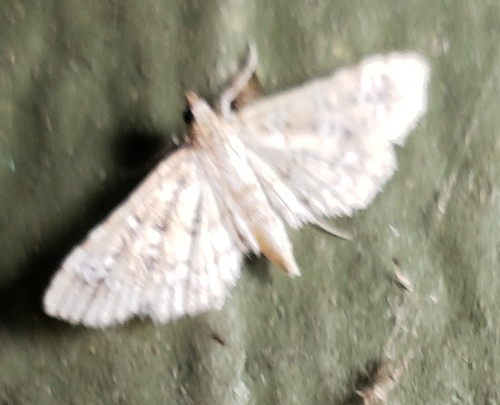
More photos
Questions people ask
How can I identify the Salvinia stem-borer moth?
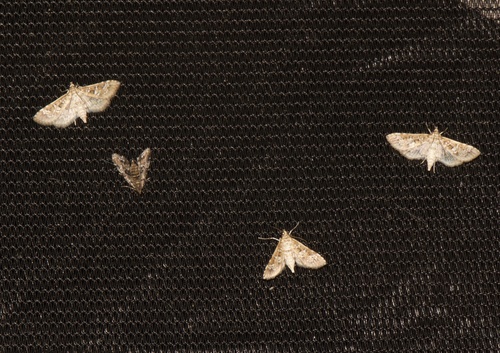
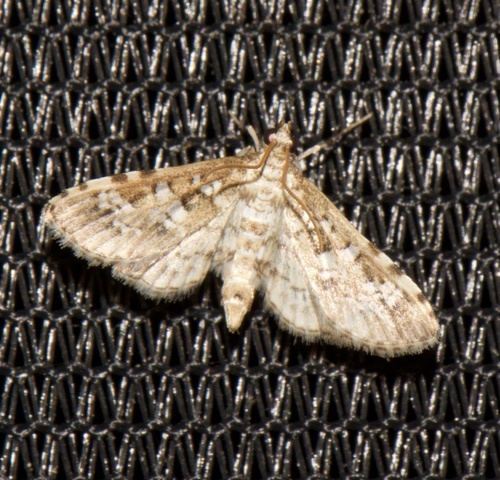
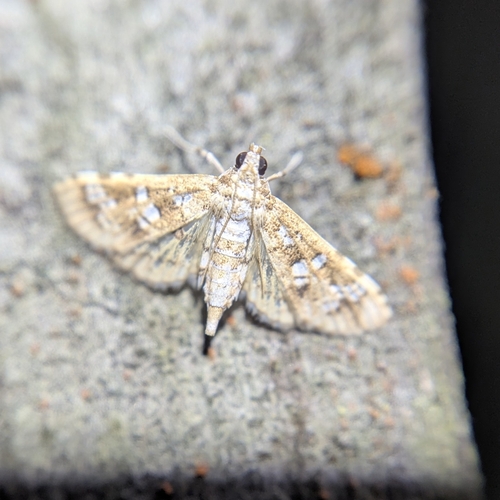
Look for pale yellow-green larvae and tan adult moths with darker patterns; they are found on floating water-plant mats.
Source: Wikipedia
What plants does this moth damage?
Its caterpillars feed on water velvet, water lettuce, and water ferns, sometimes killing the plants.
Source: Wikipedia
Can this moth survive the winter?
Yes, it can persist year-round where food and warm temperatures are available.
Source: Wikipedia
Same family (Crambidae)
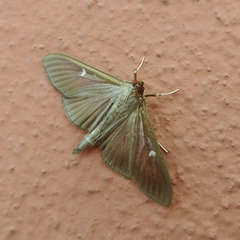 Box Tree MothCydalima perspectalisDamages trees, gardens or crops
 Celery Leaftier MothUdea rubigalisDamages trees, gardens or crops
 Elegant Grass-veneerMicrocrambus elegans
 Hawaiian Beet Webworm MothSpoladea recurvalisDamages trees, gardens or crops
 Garden Grass-veneerChrysoteuchia culmellaDamages trees, gardens or crops
 Bluegrass Webworm MothParapediasia teterrellusDamages trees, gardens or crops
Sources
- Wikipedia: https://en.wikipedia.org/wiki/Samea_multiplicalis
Look it up elsewhere: GBIF · iNaturalist · BugGuide · ITIS · Wikipedia
Text written 2026-10-23 from the sources above and checked sentence by sentence against them. Data fetched 2026-10-23.