 Bug FAQ
Rusty Shoulder Knot Moth
Aseptis binotata · Order: Lepidoptera · Family: Noctuidae
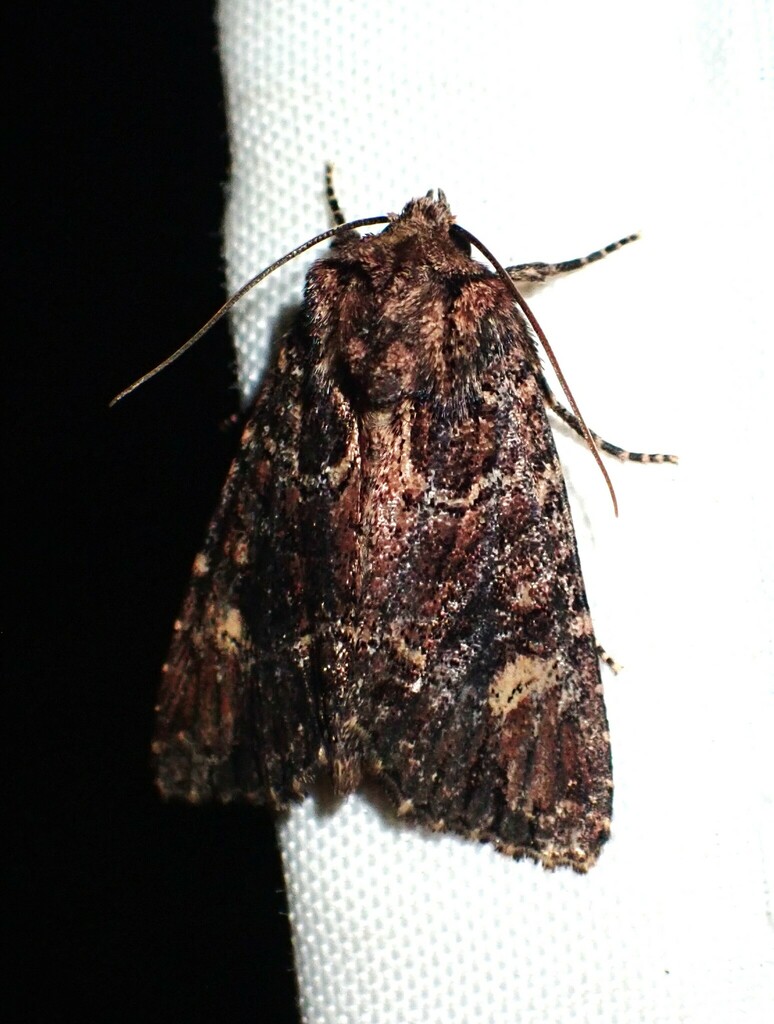
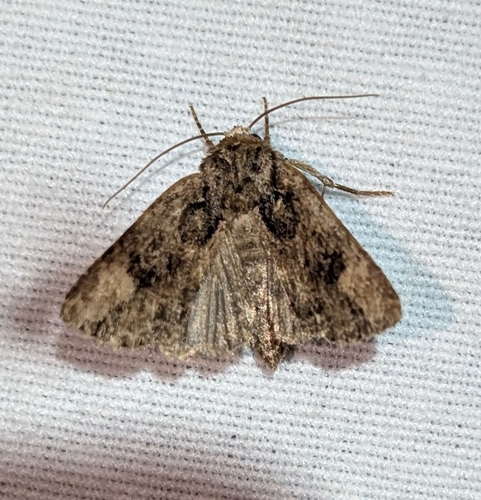
The Rusty Shoulder Knot Moth has a wingspan of about 30 to 35 mm and shows a wide range of forewing colors, from brownish to reddish tones, often with distinctive pale yellowish patches and dark lines. It lives across western North America, from the Pacific Coast of northern Mexico up to south-central British Columbia, and can be found from sea level to high mountain habitats.
Source: Wikipedia
How to recognize it
Forewing color varies widely, ranging from brownish to reddish brown, with dark specimens showing a large pale yellowish patch split by a dark postmedial line. Black markings include wedge shapes near the outer margin below the apex, outlines of three spots, and often a short basal dash. Pale individuals may appear washed out or have contrasting dark markings.
Source: Wikipedia
Size
The wingspan ranges from 29.5 to 35 mm.
Source: Wikipedia
Where it lives
It inhabits a variety of environments from dense forest to shrub desert, from sea level up to over 2000 m.
Source: Wikipedia
What it eats
Other recorded host plants include Oemleria, Symphoricarpos, and Ribes species.
Source: Wikipedia
Life cycle
The caterpillar is green with a white and red stripe along its side.
Source: Wikipedia
When you see it
In southern areas adults start flying in March at low elevations and from April to July in mountains. In northern regions the flight period begins later and can continue into August.
Source: Wikipedia
Lookalikes
It is the most variable species in its genus, making it hard to confuse with other Aseptis moths because of its wide color range.
Source: Wikipedia
Where it is found in the US
Recorded in 10 of 51 states and DC. Most records: California, Montana, Colorado, Washington, Oregon, Utah, South Dakota, Wyoming.
Darker = more records. Counts are museum and citizen-science records, not population size.
Source: GBIF
Status: native in North America; native in Canada; native in United States. Source: iNaturalist
Months it is reported in the US
Source: GBIF
More photos
Questions people ask
What does the Rusty Shoulder Knot Moth look like?
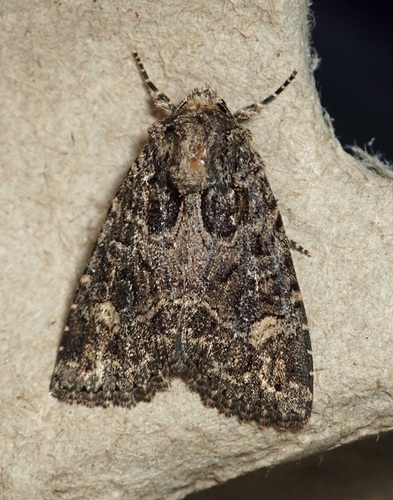
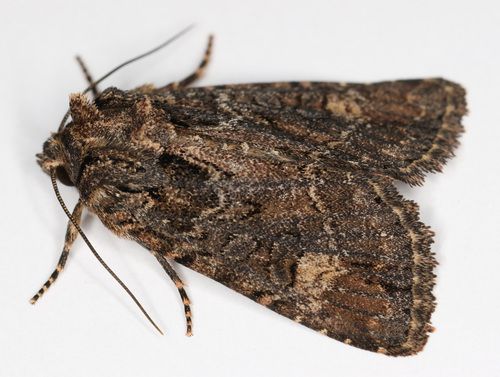
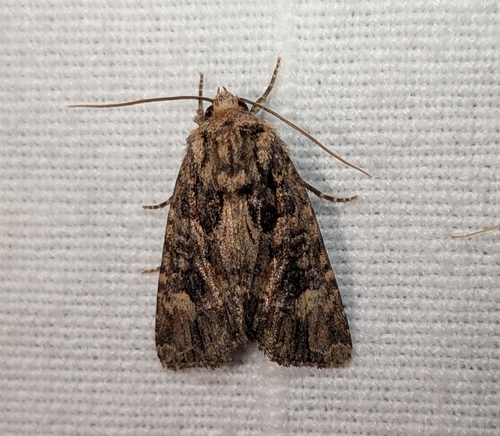
It has a 30 to 35 mm wingspan and can be brownish, gray-brown, yellowish, or reddish, often with a pale yellowish patch and dark lines on the forewings.
Source: Wikipedia
When can I see these moths?
In the south they appear from March at low elevations and from April to July in the mountains; in the north they show up later and may fly into August.
Source: Wikipedia
What plants do the caterpillars eat?
The larvae feed on broadleaf trees and shrubs such as big-leaf maple, ocean spray, Ceanothus, Oemleria, Symphoricarpos, and Ribes.
Source: Wikipedia
Same family (Noctuidae)
 Ipsilon Dart MothAgrotis ipsilonDamages trees, gardens or crops
 Fall Armyworm MothSpodoptera frugiperdaDamages trees, gardens or crops
 Army Cutworm MothEuxoa auxiliarisDamages trees, gardens or crops
 Large Yellow UnderwingNoctua pronubaDamages trees, gardens or crops
 Silver ΥAutographa gamma
 American DaggerAcronicta americanaCan irritate skin
Sources
- Wikipedia: https://en.wikipedia.org/wiki/Aseptis_binotata
Look it up elsewhere: GBIF · iNaturalist · BugGuide · ITIS · Wikipedia
Text written 2026-10-24 from the sources above and checked sentence by sentence against them. Data fetched 2026-10-24.