 Bug FAQ
Rocky Mountain Hornet Fly
Spilomyia liturata · Order: Diptera · Family: Syrphidae
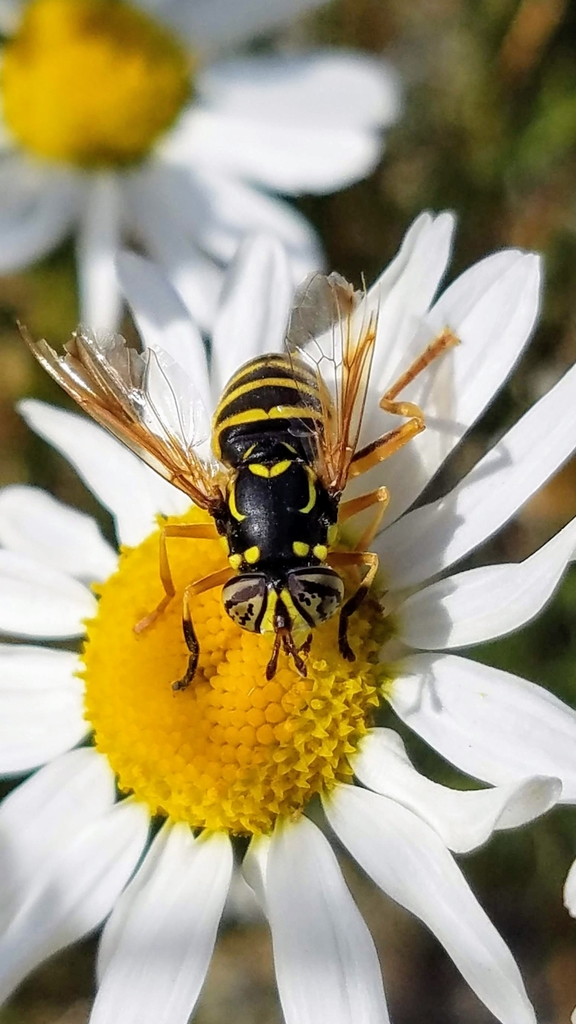
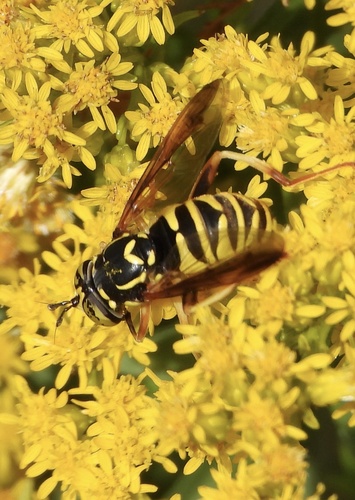
The Rocky Mountain Hornet Fly is a hoverfly that can stay almost motionless in the air. Adults feed on nectar and pollen from flowers, while the short-tailed larvae develop in moist rot holes of trees.
Source: Wikipedia
How to recognize it
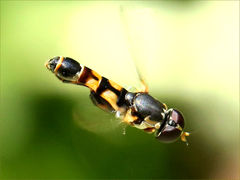
Hoverflies can hover, staying nearly motionless while flying.
Source: Wikipedia
Where it lives
Adults are commonly seen on flowers where they obtain nectar and pollen. Larvae live in moist environments such as rot holes in trees.
Source: Wikipedia
What it eats
Adults feed on flower nectar for energy and pollen for protein.
Source: Wikipedia
Life cycle
The larvae are short-tailed and develop in moist rot holes of trees.
Source: Wikipedia
Where it is found in the US
Recorded in 9 of 51 states and DC. Most records: Colorado, Idaho, Utah, New Mexico, Wyoming, Montana, Arizona, Washington.
Darker = more records. Counts are museum and citizen-science records, not population size.
Source: GBIF
Status: native in North America; native in Canada. Source: iNaturalist
Months it is reported in the US
Source: GBIF
More photos
Questions people ask
Where do the larvae of the Rocky Mountain Hornet Fly develop?
The larvae develop in moist rot holes of trees.
Source: Wikipedia
What do adult Rocky Mountain Hornet Flies eat?
Adults feed on nectar for energy and pollen for protein from flowers.
Source: Wikipedia
Can I see these flies hovering in place?
Yes, hoverflies can remain nearly motionless while flying.
Source: Wikipedia
Same family (Syrphidae)


Sources
- Wikipedia: https://en.wikipedia.org/wiki/Spilomyia_liturata
Look it up elsewhere: GBIF · iNaturalist · BugGuide · ITIS · Wikipedia
Text written 2026-10-28 from the sources above and checked sentence by sentence against them. Data fetched 2026-10-28.