 Bug FAQ
River Skater
Aquarius najas · Order: Hemiptera · Family: Gerridae
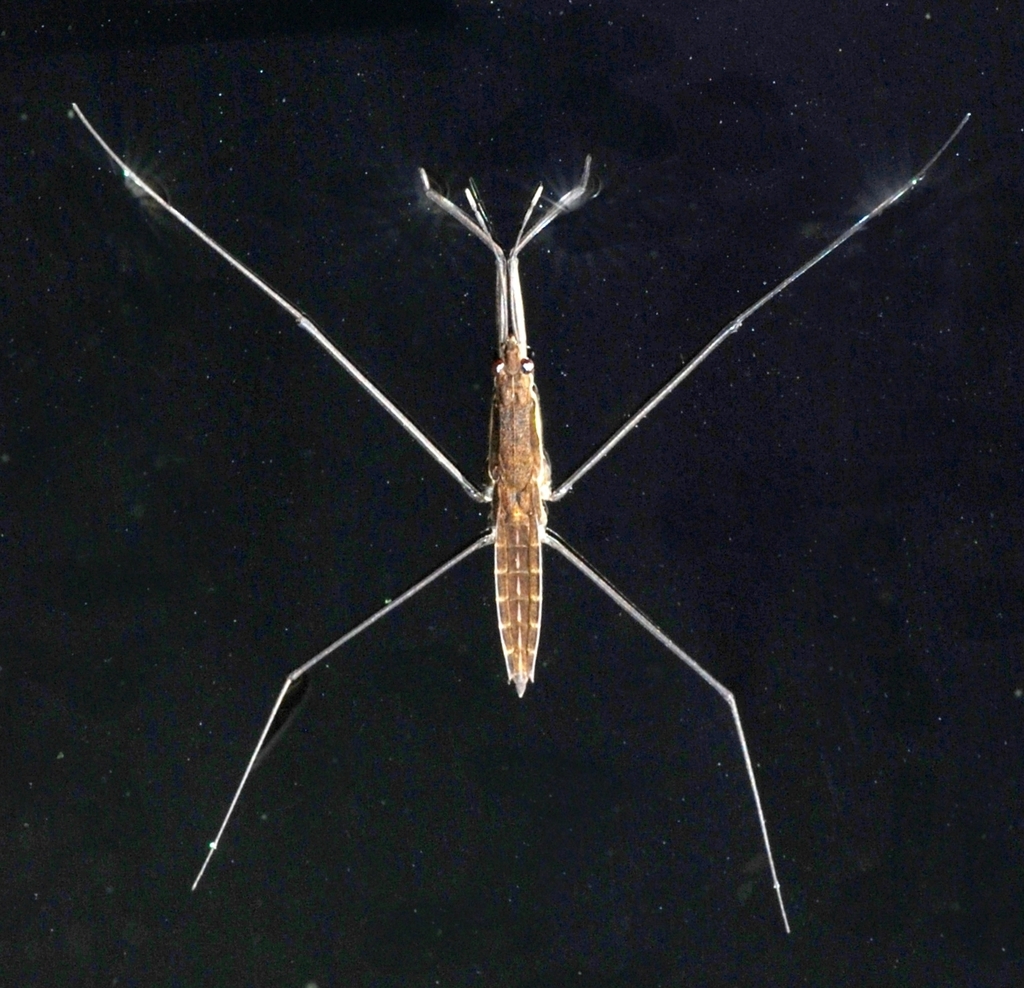
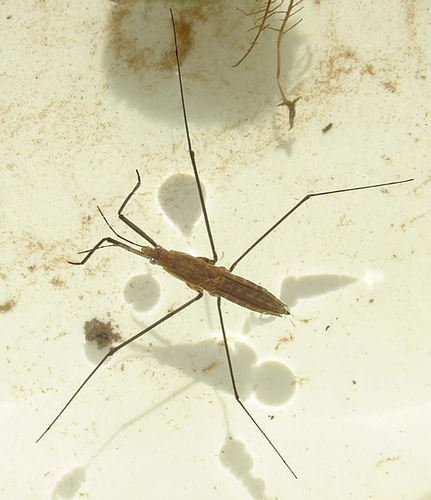
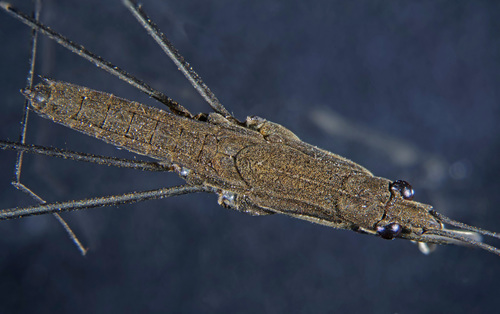
Adult females are about 16.5 mm long and males are roughly 30 % smaller. In northern Europe they lack wings, while in central and southern Europe they often have wings. They live on moving water, especially on stony river margins.
Source: Wikipedia
How to recognize it
Northern European individuals are wingless; central and southern European ones usually have wings.
Source: Wikipedia
Where it lives
They need flowing water and are found on the stony edges of rivers.
Source: Wikipedia
Life cycle
Adults overwinter; in spring they form daytime pairs, row together, then separate at night for females to lay eggs under water on flat stones, with males sometimes guarding and staying paired for weeks.
Source: Wikipedia
When you see it
They spend winter as adults and begin pairing in spring.
Source: Wikipedia
Where it comes from
The river skater is a European water-strider species.
Source: Wikipedia
Lookalikes
It was formerly called Gerris najas; the subgenus Aquarius was raised to genus rank in 1990.
Source: Wikipedia
More photos
Questions people ask
How big are river skaters?
Females are about 16.5 mm long and males are roughly 30 % smaller.
Source: Wikipedia
Do river skaters have wings?
In northern Europe they are wingless, while in central and southern Europe they often have wings.
Source: Wikipedia
Where do river skaters live?
They live on moving water, especially on the stony margins of rivers.
Source: Wikipedia
What is the life cycle of a river skater?
Adults overwinter; in spring they form pairs, row together by day, separate at night for females to lay eggs under water on flat stones, and males may guard the females for weeks.
Source: Wikipedia
Same family (Gerridae)
Sources
- Wikipedia: https://en.wikipedia.org/wiki/Aquarius_najas
Look it up elsewhere: GBIF · iNaturalist · BugGuide · ITIS · Wikipedia
Text written 2026-10-23 from the sources above and checked sentence by sentence against them. Data fetched 2026-10-22.