 Bug FAQ
North American Common Water Strider
Aquarius remigis · Order: Hemiptera · Family: Gerridae
Also called: Common Water Strider
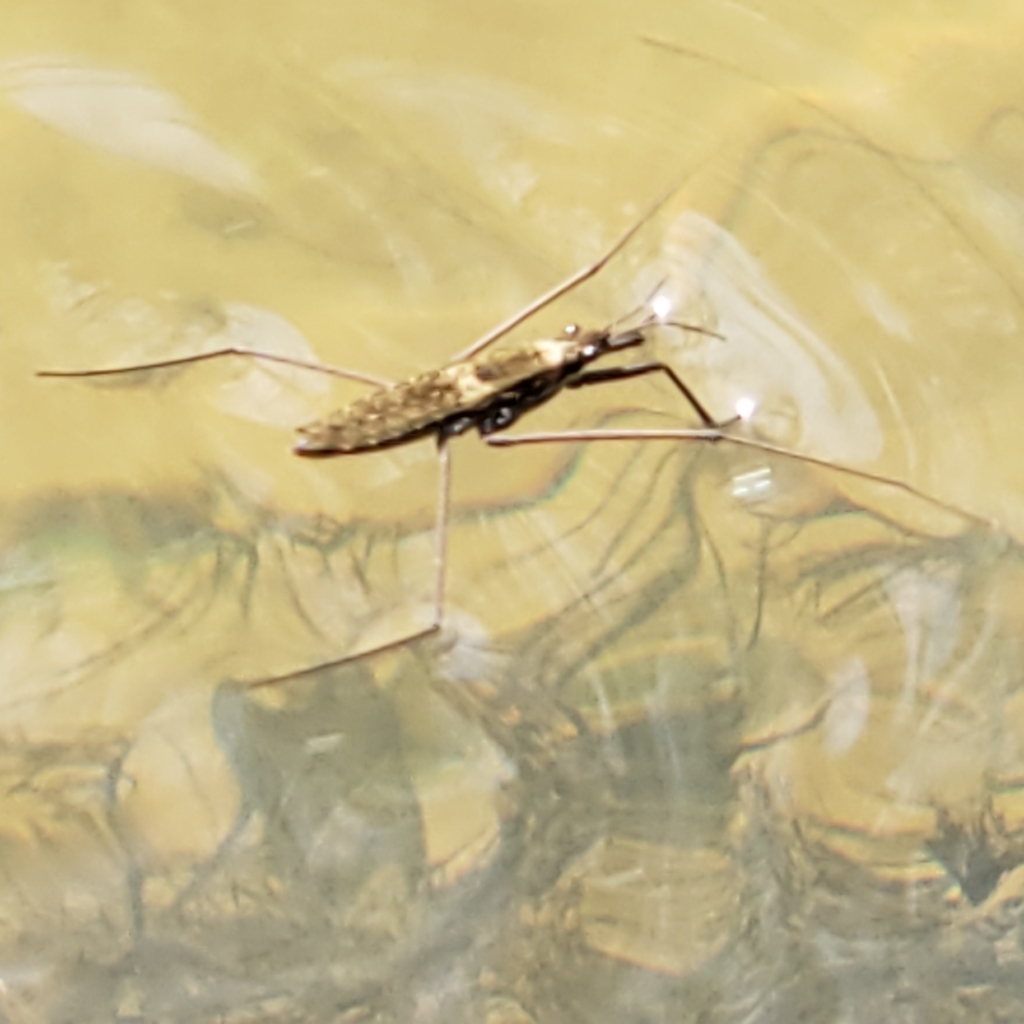
The North American common water strider is a dark brown to black insect about half an inch long. It lives on the surface of freshwater across North America, especially in the U.S. Midwest, and feeds on mosquito larvae and other insects that fall onto the water.
Source: Wikipedia
How to recognize it
It has a sharp beak used to pierce prey and suck out their insides.
Source: Wikipedia
Size
Adults are a little over half an inch long.
Source: Wikipedia
Where it lives
It was once placed in the genus Gerris, but the subgenus Aquarius was raised to full genus status in 1990.
Source: Wikipedia
What it eats
It preys on mosquito larvae beneath the surface and eats dead insects or other insects that land on the water.
Source: Wikipedia
Where it comes from
It occurs throughout North America, with the highest numbers in the Midwestern United States.
Source: Wikipedia
Lookalikes
It was formerly known as Gerris remigis before the taxonomic change in 1990.
Source: Wikipedia
Where it is found in the US
Recorded in 43 of 51 states and DC. Most records: California, Texas, Oregon, Illinois, Ohio, Washington, Colorado, New York.
Darker = more records. Counts are museum and citizen-science records, not population size.
Source: GBIF
Status: native in North America; native in Canada; native in United States. Source: iNaturalist
Months it is reported in the US
Source: GBIF
More photos
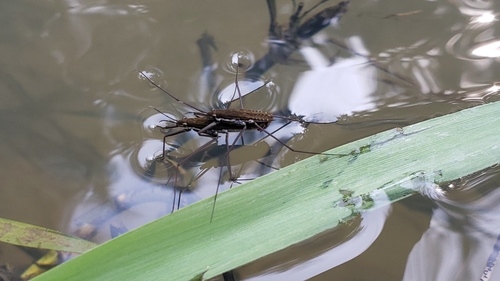
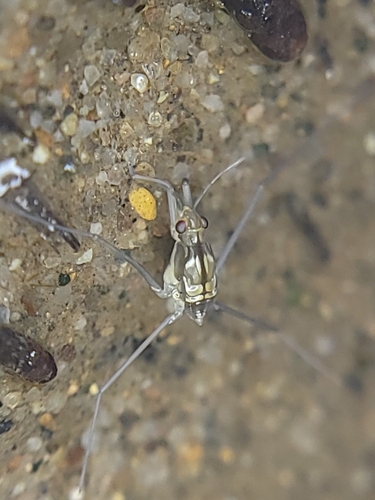
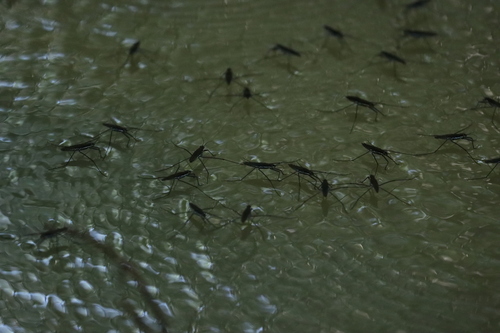
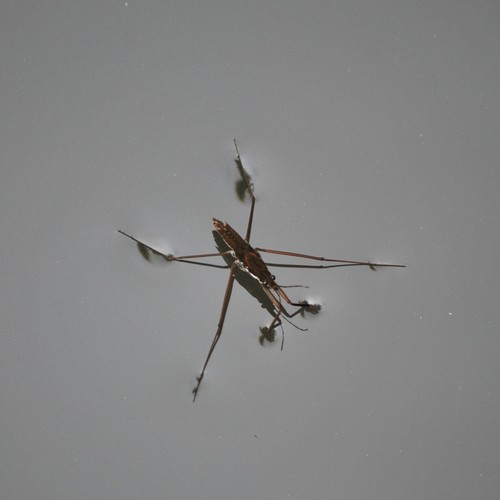
Same family (Gerridae)
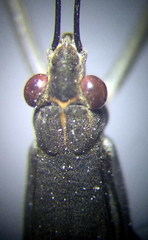

Sources
- Wikipedia: https://en.wikipedia.org/wiki/Aquarius_remigis
Look it up elsewhere: GBIF · iNaturalist · BugGuide · ITIS · Wikipedia
Text written 2026-10-22 from the sources above and checked sentence by sentence against them. Data fetched 2026-10-22.