 Bug FAQ
Ringbum Millipede Muncher Ant
Plectroctena mandibularis · Order: Hymenoptera · Family: Formicidae
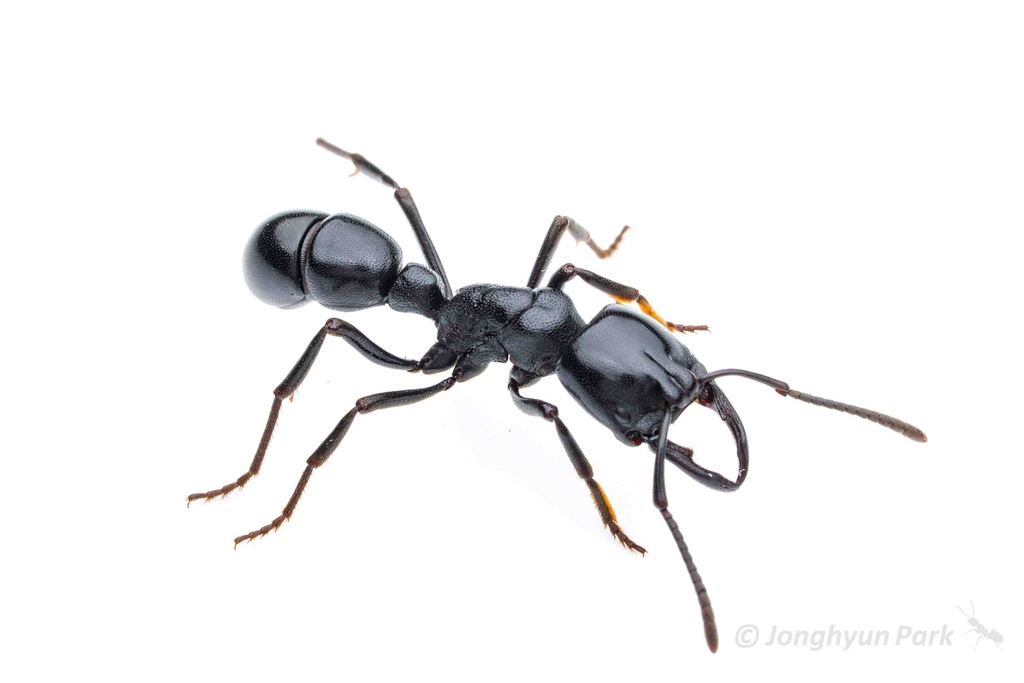
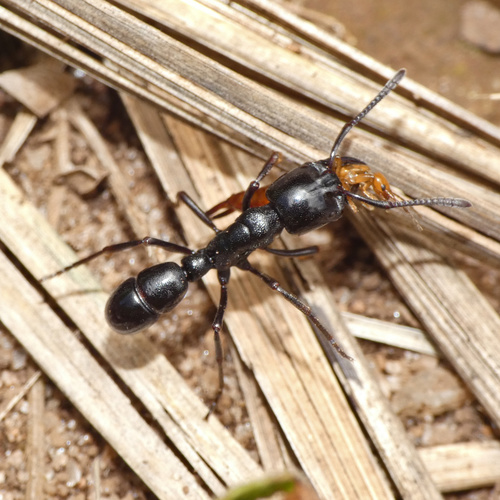
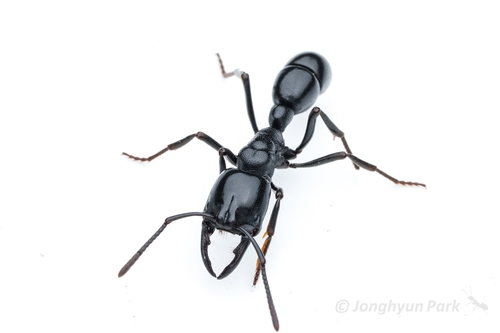
The Ringbum Millipede Muncher Ant is a relatively large ant species that hunts adult millipedes. Its colonies are small, usually fewer than fifty workers, and the ants work alone while foraging in open ground. It lives in southern and eastern Africa, from South Africa’s Eastern Cape up through Ethiopia.
Source: Wikipedia
How to recognize it
It gets the name “Ringbum Millipede Muncher” because it preys on millipedes.
Source: Wikipedia
Size
It is one of the larger members of its genus.
Source: Wikipedia
Where it lives
Workers search for food alone across open terrain. Their nests are built in chambers at least two feet below the soil surface.
Source: Wikipedia
What it eats
They specialize in hunting adult millipedes as their main food.
Source: Wikipedia
Life cycle
Colonies rarely contain more than fifty individuals.
Source: Wikipedia
Where it comes from
The species ranges from South Africa’s Eastern Cape through East Africa to Ethiopia.
Source: Wikipedia
Lookalikes
Other large Plectroctena ants, such as P. conjugata and P. minor, share the same millipede-eating habit.
Source: Wikipedia
More photos
Questions people ask
What do Ringbum Millipede Muncher Ants eat?
They mainly hunt and eat adult millipedes.
Source: Wikipedia
How big are these ants?
They are among the larger species in the Plectroctena genus.
Source: Wikipedia
Where are they found?
Their range extends from the Eastern Cape of South Africa through East Africa to Ethiopia.
Source: Wikipedia
Same family (Formicidae)
 Eastern Black Carpenter AntCamponotus pennsylvanicusCan damage your home
 Red Imported Fire AntSolenopsis invictaCan sting
 American Winter AntPrenolepis imparis
 Argentine AntLinepithema humileNuisance, not dangerous
 Immigrant Pavement AntTetramorium immigransCan sting
 Odorous House AntTapinoma sessileCan damage your home
Sources
- Wikipedia: https://en.wikipedia.org/wiki/Plectroctena_mandibularis
Look it up elsewhere: GBIF · iNaturalist · BugGuide · ITIS · Wikipedia
Text written 2026-10-23 from the sources above and checked sentence by sentence against them. Data fetched 2026-10-23.