 Bug FAQ
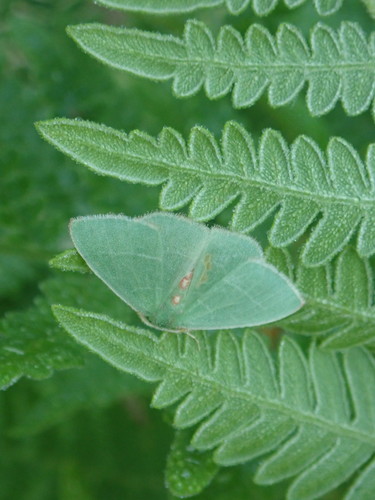
Red-fronted Emerald
Nemoria rubrifrontaria · Order: Lepidoptera · Family: Geometridae
Also called: Red-fronted Emerald Moth
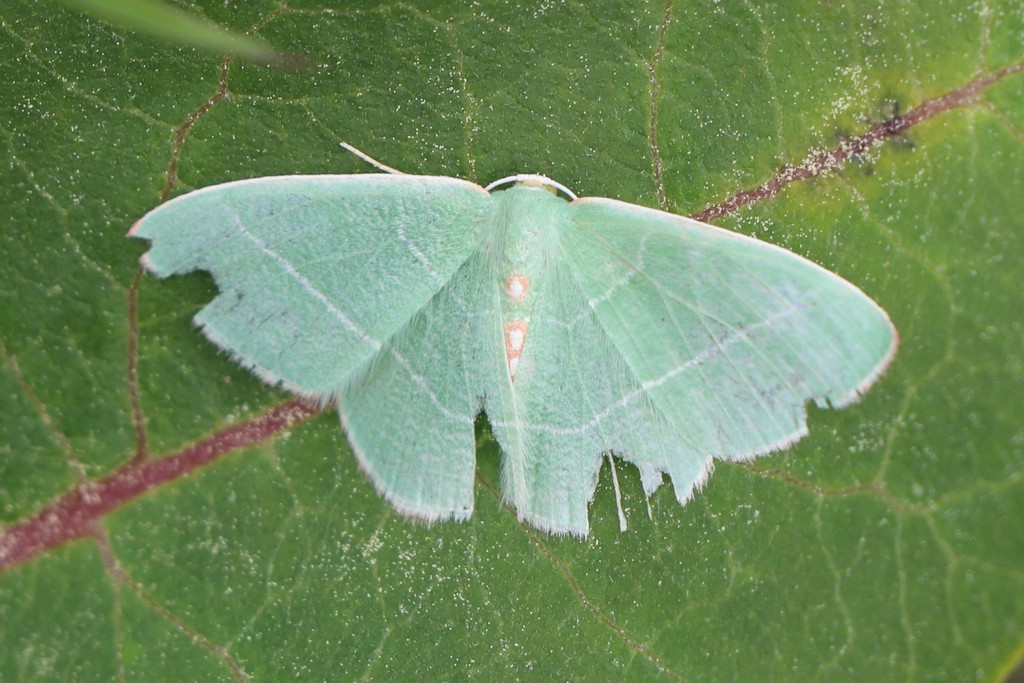
The red-fronted emerald is a North American moth whose larvae look like sweet-fern leaves and pass through five growth stages. Its eggs are pink, and the caterpillars continue to mimic sweet-fern foliage throughout their development.
Source: Wikipedia
How to recognize it
Larvae resemble the leaves of sweet fern, providing camouflage.
Source: Wikipedia
Where it lives
It occurs in North America.
Source: Wikipedia
Life cycle
The species lays pink eggs. After hatching, the larvae go through five instars while mimicking sweet-fern leaves.
Source: Wikipedia
Where it comes from
Its native range is North America.
Source: Wikipedia
Where it is found in the US
Recorded in 18 of 51 states and DC. Most records: Maine, Massachusetts, Michigan, New Hampshire, Delaware, Connecticut, Vermont, New Jersey.
Darker = more records. Counts are museum and citizen-science records, not population size.
Source: GBIF
Status: native in North America; native in Canada. Source: iNaturalist
Months it is reported in the US
Source: GBIF
More photos
Questions people ask
What do the larvae look like?
The caterpillars look like sweet-fern leaves, which helps them blend into their host plant.
Source: Wikipedia
Same family (Geometridae)




Sources
- Wikipedia: https://en.wikipedia.org/wiki/Nemoria_rubrifrontaria
Look it up elsewhere: GBIF · iNaturalist · BugGuide · ITIS · Wikipedia
Text written 2026-10-28 from the sources above and checked sentence by sentence against them. Data fetched 2026-10-28.