 Bug FAQ
Red-based Jezebel
Delias pasithoe · Order: Lepidoptera · Family: Pieridae
Also called: Red Base Jezebel
Source: Wikipedia
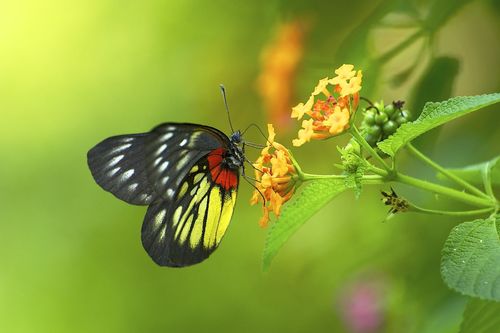
The red-base Jezebel is a medium-large butterfly with a wingspan of about 66 to 90 mm. Its upperside is black with distinctive white and grey-white streaks and patches, while the underside shows black with bright crimson and yellow markings. It lives in South and Southeast Asia, feeding on many plant species such as Buddleja, tea, citrus, mistletoes and the binga tree, so it can be a pest of gardens and forests.
Source: Wikipedia
How to recognize it
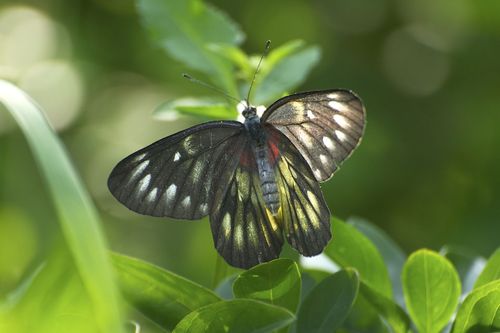
Upperside is black with broad white and grey-white streaks and spots; hindwing has a large yellow dorsal patch and grey-white hastate markings. Underside is black with a crimson base patch, yellow dorsal area and many grey-white and chrome-yellow spots.
Source: Wikipedia
Size
Wingspan ranges from 66 to 90 mm.
Source: Wikipedia
What it eats
Adults feed on nectar from Buddleja, tea (Camellia sinensis), Citrus maxima, various mistletoes (Taxillus, Loranthus) and other plants.
Source: Wikipedia
Life cycle
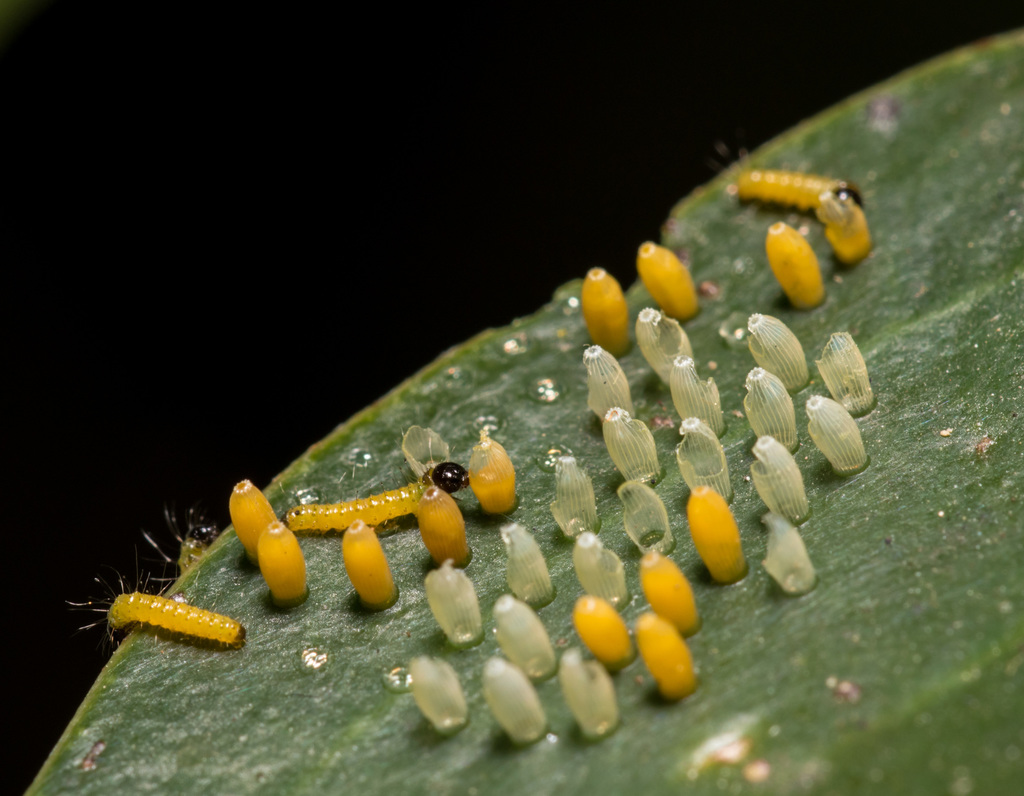
Larva is brownish-red, about 2 inches long, with rows of long bristles that are black on the outside and yellow in the middle. Pupa is very dark reddish-brown or black, smooth, with a head bearing three sharp points and small tubercles on the abdomen.
Source: Wikipedia
When you see it
Adults are observed in March feeding on young binga leaves.
Source: Wikipedia
Where it comes from
Occurs from Nepal, Sikkim and Assam through Myanmar, the Malay Peninsula to Borneo, and east to Thailand and southern China.
Source: Wikipedia
Lookalikes
There is historical confusion about whether the name aglaja applies to this butterfly or to the dark green fritillary (Speyeria aglaja).
Source: Wikipedia
More photos

Questions people ask
Does the red-base Jezebel damage garden plants?
Yes, it feeds on many ornamental and forest plants, so it can harm gardens and young trees.
Source: Wikipedia
When can I see this butterfly?
Adults have been recorded in March, especially on binga trees.
Source: Wikipedia
Same family (Pieridae)


Sources
- Wikipedia: https://en.wikipedia.org/wiki/Delias_pasithoe
Look it up elsewhere: GBIF · iNaturalist · BugGuide · Wikipedia
Text written 2026-10-22 from the sources above and checked sentence by sentence against them. Data fetched 2026-10-22.