 Bug FAQ
Armyworm Moth
Pseudaletia unipuncta · Order: Lepidoptera · Family: Noctuidae
Also called: White-speck Moth, American Wainscot, White Speck
Source: Wikipedia
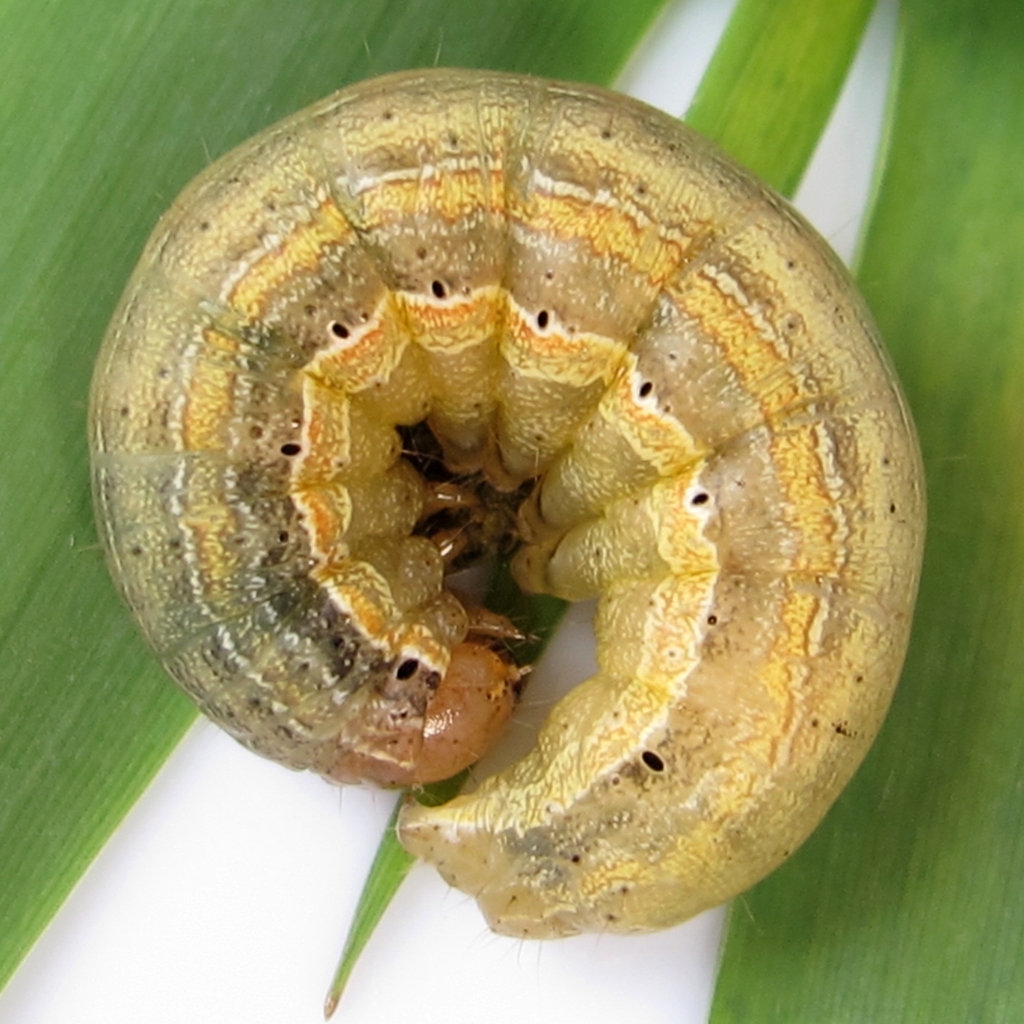
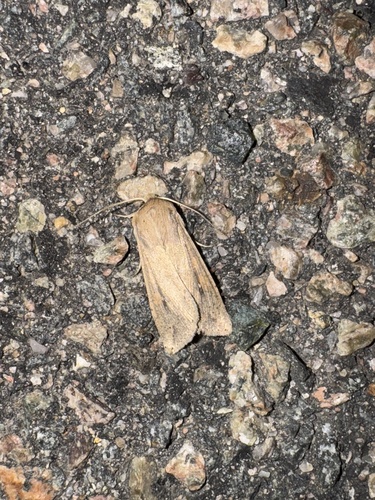
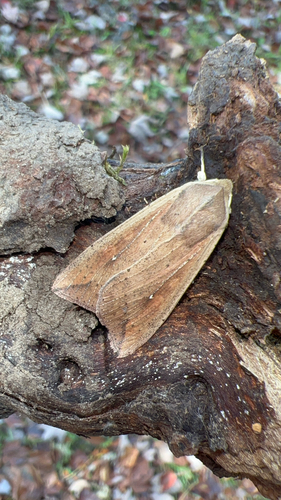
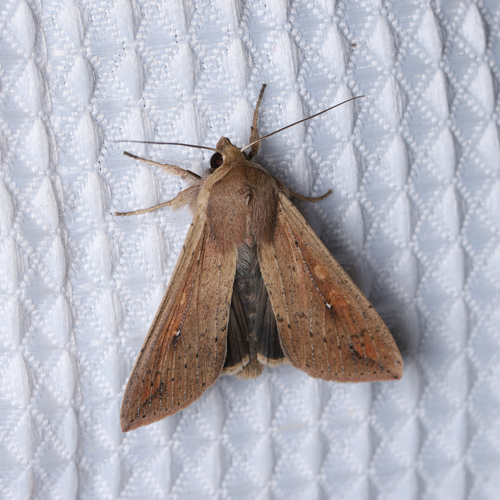
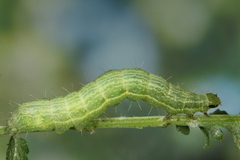
Mythimna unipuncta, known as the true armyworm moth, is found across most of North America and other continents. Its larvae feed on many grasses and crops, while adults sip nectar and fruit. It can produce two to three generations per year and migrates north in spring and south in fall.
Source: Wikipedia
Is it a pest in the house?
The true armyworm is regarded as an agricultural pest and outbreaks of swarms are common.
Source: Wikipedia
How to get rid of it
Check fields early in June and use pheromone traps to monitor adult numbers; leaf damage may indicate need for insecticides or baits.
Source: Wikipedia
What it eats
Larvae eat a variety of grasses and other crops. Adults feed on flower nectar and ripe or decaying fruit.
Source: Wikipedia
Life cycle
Each generation takes 30 to 50 days and passes through egg, larva, pupa, and adult stages while avoiding predators and disease.
Source: Wikipedia
When you see it
They migrate north in spring and south in fall to mate in favorable summer conditions. Females may mate five or six times during their life.
Source: Wikipedia
Where it comes from
Although likely originating in the Neotropics, it has been introduced elsewhere and is considered an agricultural pest.
Source: Wikipedia
Lookalikes
It is also known by several other common names but belongs to the Noctuidae family.
Source: Wikipedia
Where it is found in the US
Recorded in 51 of 51 states and DC. Most records: Texas, California, Illinois, Maryland, Pennsylvania, Massachusetts, Ohio, Wisconsin.
Darker = more records. Counts are museum and citizen-science records, not population size.
Source: GBIF
Months it is reported in the US
Source: GBIF
More photos

Questions people ask
How can I know if there is an armyworm problem in my garden?
Look for leaf damage from feeding larvae and consider setting pheromone traps to gauge adult populations.
Source: Wikipedia
Same family (Noctuidae)
 Ipsilon Dart MothAgrotis ipsilonDamages trees, gardens or crops
 Fall Armyworm MothSpodoptera frugiperdaDamages trees, gardens or crops
 Army Cutworm MothEuxoa auxiliarisDamages trees, gardens or crops
 Large Yellow UnderwingNoctua pronubaDamages trees, gardens or crops
 Silver ΥAutographa gamma
 American DaggerAcronicta americanaCan irritate skin
Sources
- Wikipedia: https://en.wikipedia.org/wiki/Mythimna_unipuncta
Look it up elsewhere: GBIF · iNaturalist · BugGuide · ITIS · Wikipedia
Text written 2026-10-22 from the sources above and checked sentence by sentence against them. Data fetched 2026-10-22.