 Bug FAQ
Protohermes grandis
Protohermes grandis · Order: Megaloptera · Family: Corydalidae

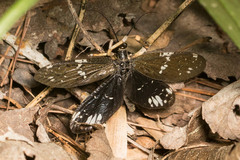
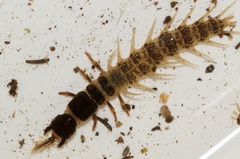
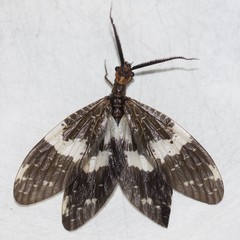
Protohermes grandis adults are about 36 to 40 mm long, have a slender body and four large wings. They can be found in many habitats, from streams and flatlands to forests and mountains, while the larvae live in clear water. Adults feed on nectar from Japanese chestnut flowers at night, and the growing larvae hunt larger prey, avoiding smaller items.
Source: Wikipedia
How to recognize it
The body is a light yellow-brown and the wings have yellow spots.
Source: Wikipedia
Size
Adults measure roughly 36 to 40 mm, have a skinny build and four sizable wings.
Source: Wikipedia
Where it lives
They occur in streams, flatlands, forests and mountains. Larvae develop in clear water such as streams.
Source: Wikipedia
What it eats
Adults sip nectar from Japanese chestnut flowers, usually at night. Growing larvae prey on larger animals and tend to ignore smaller ones.
Source: Wikipedia
Life cycle
The larval stage lasts about one to three years, while adults live only four to seven days. The length of each stage depends on the type of aquatic environment.
Source: Wikipedia
Where it comes from
Protohermes grandis is found in North America as well as in China, Japan, Korea, Taiwan, South Africa, Madagascar, Australia and New Zealand.
Source: Wikipedia
Lookalikes
They are closely related to Protohermes immaculatus.
Source: Wikipedia
More photos


Questions people ask
What do adult Protohermes grandis eat?
Adults feed on nectar from Japanese chestnut flowers at night.
Source: Wikipedia
Where do the larvae of Protohermes grandis live?
The larvae live in clear water, such as streams.
Source: Wikipedia
Same family (Corydalidae)




Sources
- Wikipedia: https://en.wikipedia.org/wiki/Protohermes_grandis
Look it up elsewhere: GBIF · iNaturalist · BugGuide · Wikipedia
Text written 2026-10-23 from the sources above and checked sentence by sentence against them. Data fetched 2026-10-23.