 Bug FAQ
Proteuxoa tetronycha
Proteuxoa tetronycha · Order: Lepidoptera · Family: Noctuidae
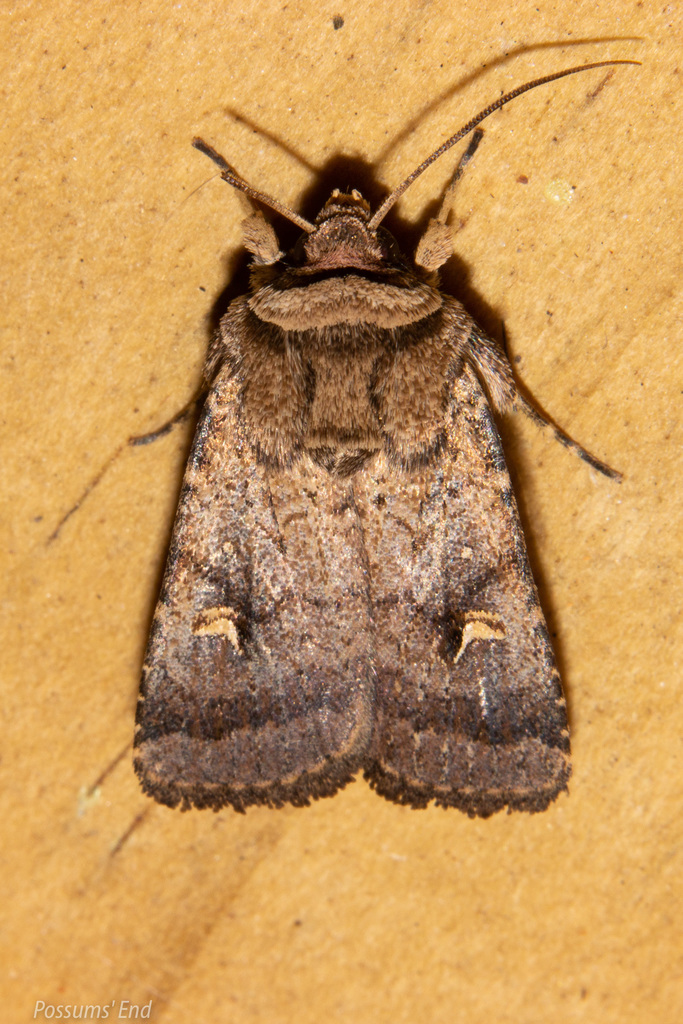
Adult moths have a wingspan of about 29 to 33 mm. The species is found throughout New Zealand but not on the Chatham Islands. Caterpillars have been raised on Acaena and Poa cita and probably eat a range of plants.
Source: Wikipedia
How to recognize it
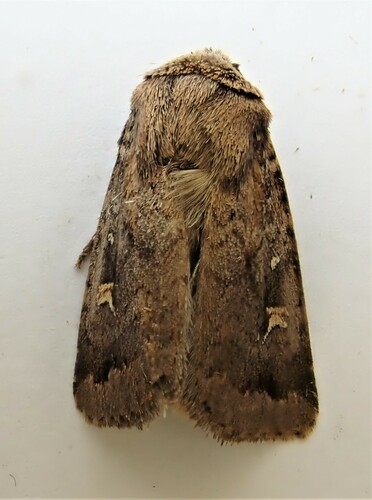
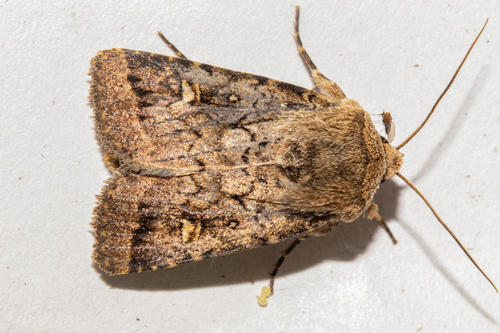
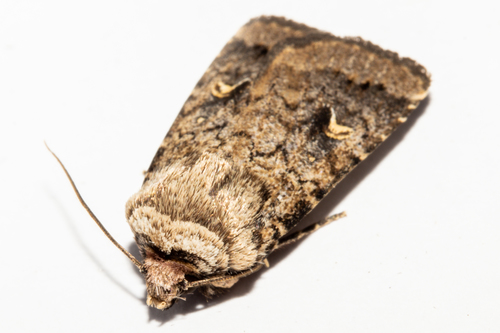
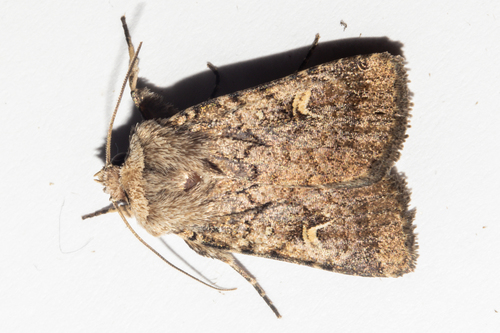
It looks a lot like Proteuxoa comma, but its prothorax is paler and the base of its forewings is browner.
Source: Wikipedia
Size
Adults measure 29 to 33 mm across the wings.
Source: Wikipedia
Where it lives
The moth occurs across New Zealand, though it has not been recorded on the Chatham Islands.
Source: Wikipedia
What it eats
Larvae probably feed on many host plants and have been successfully raised on Acaena species and Poa cita.
Source: Wikipedia
Life cycle
Adults fly from September through March and are attracted to light.
Source: Wikipedia
When you see it
The flight period for adults runs from September to March.
Source: Wikipedia
Where it comes from
It is endemic to New Zealand.
Source: Wikipedia
Lookalikes
It was once confused with the rarer Proteuxoa comma because the two look very similar.
Source: Wikipedia
More photos
Questions people ask
What do the caterpillars eat?
Caterpillars have been raised on Acaena species and Poa cita and likely feed on a variety of plants.
Source: Wikipedia
How can I tell this moth apart from Proteuxoa comma?
Look for a paler prothorax and a browner base colour on the forewings; otherwise they look very similar.
Source: Wikipedia
Same family (Noctuidae)
 Ipsilon Dart MothAgrotis ipsilonDamages trees, gardens or crops
 Fall Armyworm MothSpodoptera frugiperdaDamages trees, gardens or crops
 Army Cutworm MothEuxoa auxiliarisDamages trees, gardens or crops
 Large Yellow UnderwingNoctua pronubaDamages trees, gardens or crops
 Silver ΥAutographa gamma
 American DaggerAcronicta americanaCan irritate skin
Sources
- Wikipedia: https://en.wikipedia.org/wiki/Proteuxoa_tetronycha
Look it up elsewhere: GBIF · iNaturalist · BugGuide · Wikipedia
Text written 2026-10-23 from the sources above and checked sentence by sentence against them. Data fetched 2026-10-23.