 Bug FAQ
Potato Tuber Moth
Phthorimaea operculella · Order: Lepidoptera · Family: Gelechiidae
Also called: Potato Moth, Potato Tuberworm, Tobacco Splitworm
Source: Wikipedia
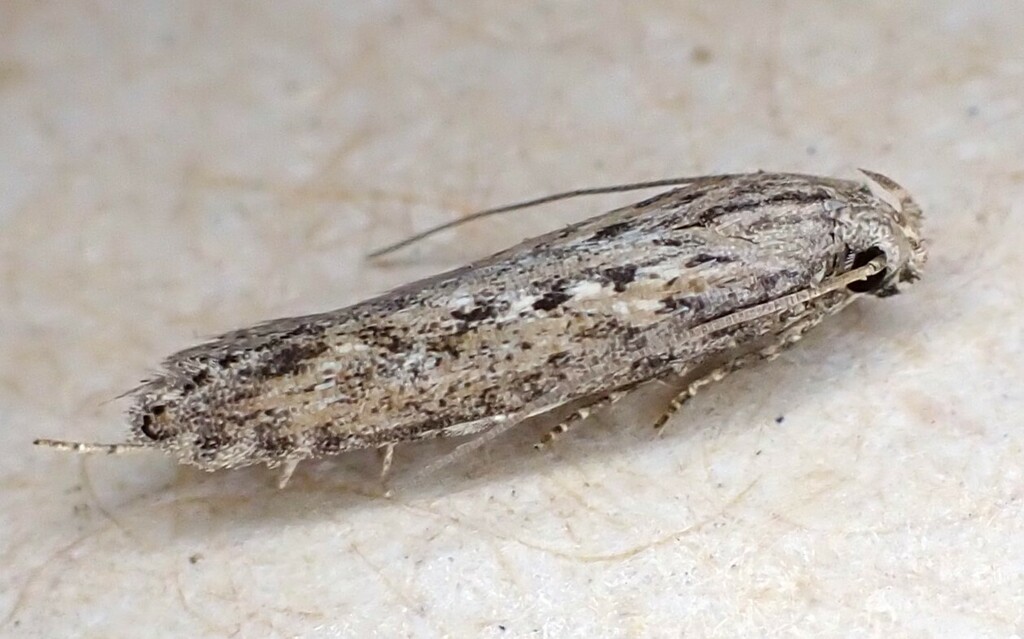
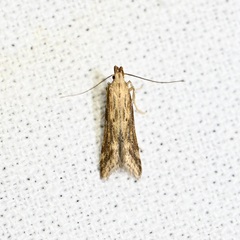
Adult potato tuber moths are about 10 mm long with a 12 mm wingspan and have a narrow light-brown body and gray-brown wings marked with many tiny dark spots; females show a black “X” on the forewings when at rest. The larvae feed on the tubers, roots, foliage and fruits of potatoes and other Solanaceae, causing the crops to become unsellable.
Source: Wikipedia
How to recognize it
Adults have a narrow light-brown body and gray-brown wings dotted with small dark spots.
Source: Wikipedia
Size
The moth’s body length is about 10 mm and its wingspan is roughly 12 mm.
Source: Wikipedia
Is it a pest in the house?
Larvae can severely damage potato, tobacco and tomato crops, making the produce unsellable.
Source: Wikipedia
How to get rid of it
- Farmers use insecticides, biological parasites and sprinkler irrigation to keep infestations low.
- The parasitoid wasp Apanteles subandinus has been introduced to attack the moth’s larvae.
- The wasp Diadegma mollipla is another larval parasitoid used in some regions.
Source: Wikipedia
Where it lives
It is usually found near potatoes or other members of the Solanaceae family. The species prefers warm, subtropical or tropical environments.
Source: Wikipedia
What it eats
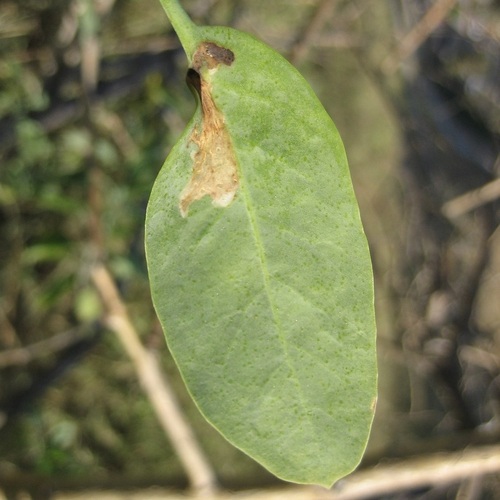
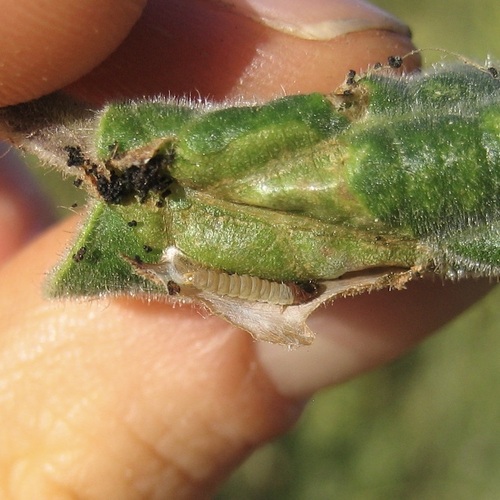
Larvae feed on potato tubers, roots and leaves, acting as leaf-miners. They also eat other Solanaceae such as tobacco, eggplant, tomato and bell pepper.
Source: Wikipedia
Where it comes from
It occurs worldwide, especially in subtropical, tropical and Mediterranean climates.
Source: Wikipedia
Where it is found in the US
Recorded in 21 of 51 states and DC. Most records: South Carolina, California, Minnesota, Michigan, New Mexico, Idaho, Kansas, Pennsylvania.
Darker = more records. Counts are museum and citizen-science records, not population size.
Source: GBIF
Status: introduced in Canada. Source: iNaturalist
Months it is reported in the US
Source: GBIF
More photos
Questions people ask
How can I prevent potato tuber moth damage?
Use sprinkler irrigation to deter egg-laying females and consider releasing parasitoid wasps such as Apanteles subandinus or Diadegma mollipla, along with appropriate insecticides.
Source: Wikipedia
What plants are at risk from potato tuber moth larvae?
Potato, tobacco, eggplant, tomato and bell pepper plants can be attacked, with larvae feeding on tubers, roots, foliage and fruits.
Source: Wikipedia
How can I tell a female potato tuber moth from a male?
Females display a distinctive black “X” on their forewings when the wings are closed, which males lack.
Source: Wikipedia
What size are adult potato tuber moths?
Adults are about 10 mm long with a wingspan of roughly 12 mm.
Source: Wikipedia
Same family (Gelechiidae)
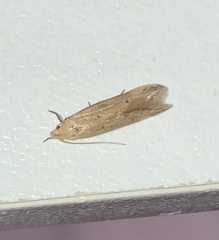 Angoumois Grain MothSitotroga cerealellaDamages trees, gardens or crops
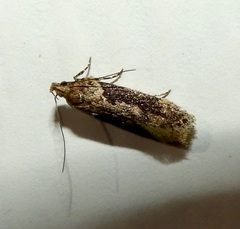 Black-smudged Chionodes MothChionodes mediofuscella
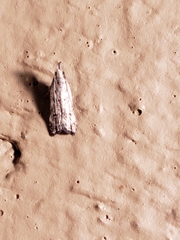 Inverse and Kimball's Dichomeris MothsDichomeris inversella
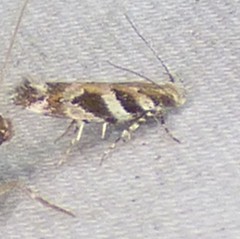 Pink-washed Aristotelia MothAristotelia roseosuffusella
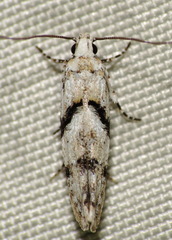 White Stripe-backed MothArogalea cristifasciella
 Burdock Seedhead MothMetzneria lappella
Sources
- Wikipedia: https://en.wikipedia.org/wiki/Phthorimaea_operculella
Look it up elsewhere: GBIF · iNaturalist · BugGuide · Wikipedia
Text written 2026-10-26 from the sources above and checked sentence by sentence against them. Data fetched 2026-10-26.