 Bug FAQ
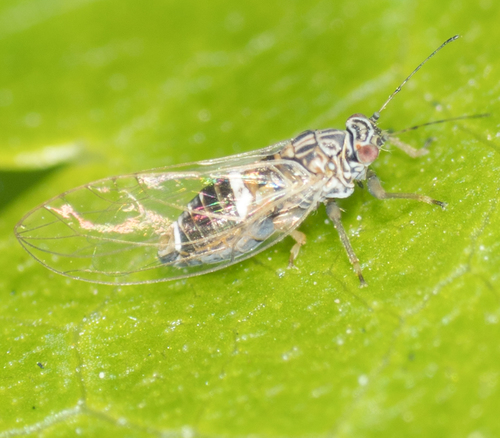
Potato Psyllid
Bactericera cockerelli · Order: Hemiptera · Family: Triozidae
Source: Wikipedia
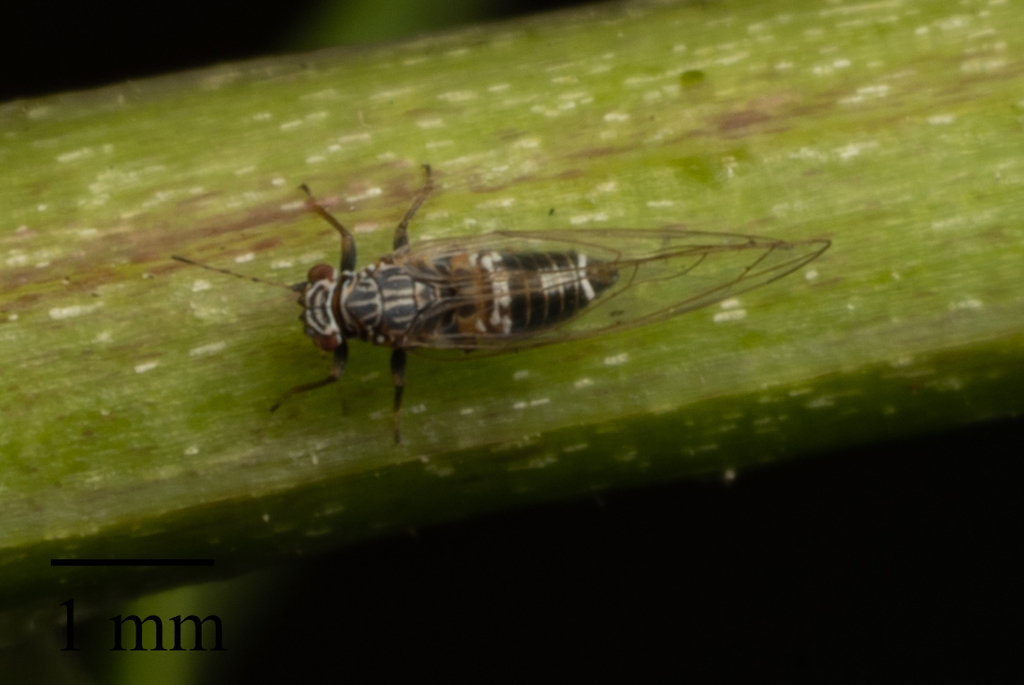
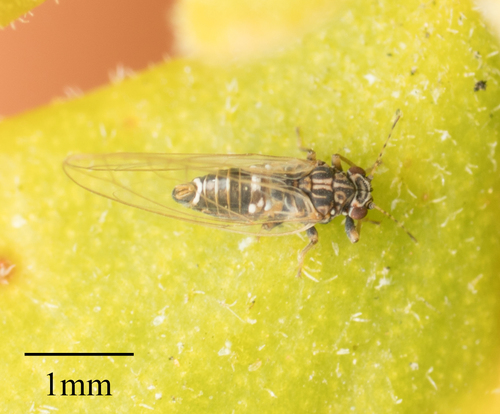
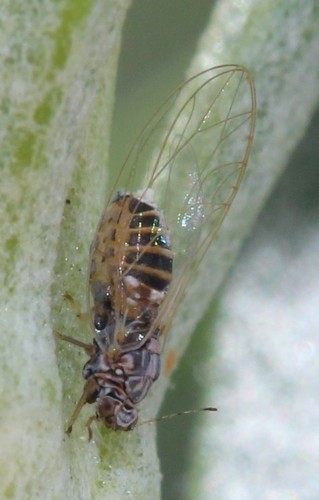
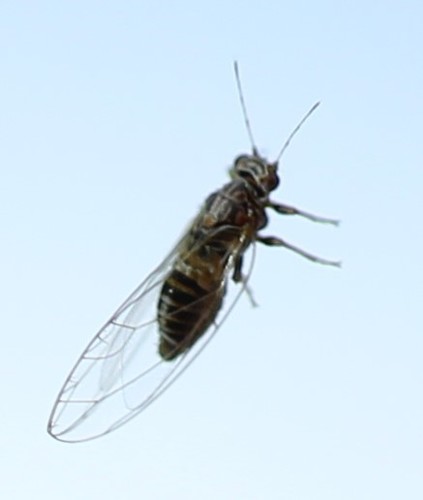
Both young and adult potato psyllids feed on the sap of solanaceous plants such as potatoes and tomatoes. They are native to southern North America and are mainly found in the western part of the continent on potato and tomato fields. Feeding nymphs can cause a condition called psyllid yellows, and the insects can transmit the bacterium Candidatus Liberibacter.
Source: Wikipedia
How to recognize it
The immature stages are tiny and hide on the undersides of leaves while feeding.
Source: Wikipedia
Is it a pest in the house?
They are a common pest of potato and tomato crops. On potatoes, feeding nymphs can cause a yellowing disorder known as psyllid yellows.
Source: Wikipedia
Where it lives
They are most commonly seen on potato and tomato crops. Their range is limited to the western side of the continent.
Source: Wikipedia
What it eats
Both nymphs and adults suck phloem sap from their host plants. Their primary hosts are plants in the nightshade family.
Source: Wikipedia
Life cycle
They have long been thought to move north each year from southern regions. More recent studies show distinct regional populations exist.
Source: Wikipedia
When you see it
Seasonal migration northward each year has been the traditional view.
Source: Wikipedia
Where it comes from
The species originates from southern parts of North America.
Source: Wikipedia
Where it is found in the US
Recorded in 12 of 51 states and DC. Most records: California, Arizona, Nevada, Utah, New Mexico, Kansas, Texas, Nebraska.
Darker = more records. Counts are museum and citizen-science records, not population size.
Source: GBIF
Months it is reported in the US
Source: GBIF
More photos
Questions people ask
What crops does the potato psyllid damage?
It feeds on potatoes and tomatoes, and its feeding can cause a yellowing disease in potatoes.
Source: Wikipedia
Can the potato psyllid spread disease?
Yes, it can transmit the bacterium Candidatus Liberibacter, which causes disease in plants.
Source: Wikipedia
Where is the potato psyllid found?
It is native to southern North America and is mainly found in the western part of the continent on solanaceous crops.
Source: Wikipedia
How can I recognize the nymphs?
The nymphs are very small and hide on the undersides of leaves while feeding.
Source: Wikipedia
Same family (Triozidae)

Sources
- Wikipedia: https://en.wikipedia.org/wiki/Bactericera_cockerelli
Look it up elsewhere: GBIF · iNaturalist · BugGuide · Wikipedia
Text written 2026-10-23 from the sources above and checked sentence by sentence against them. Data fetched 2026-10-23.