 Bug FAQ
Portland Ribbon Wave
Idaea degeneraria · Order: Lepidoptera · Family: Geometridae

The Portland Ribbon Wave moth has a wingspan of about 26 to 31 mm and shows small pale brown wings with darker brown markings between the antemedian and median lines. It lives on warm limestone cliffs, flies once a year in June-July, and its caterpillars eat low herbaceous plants such as dandelion and knotgrass. The species occurs across most of Europe, the Near East and North Africa.
Source: Wikipedia
How to recognize it
The moth’s wings are pale brown with darker brown marks between the antemedian and median lines.
Source: Wikipedia
Size
Its wingspan ranges from 26 to 31 mm.
Source: Wikipedia
Where it lives
It prefers warm limestone undercliffs.
Source: Wikipedia
What it eats
The larvae feed on low herbaceous plants, especially dandelion and knotgrass.
Source: Wikipedia
Life cycle
Adults are on the wing in a single generation from June to July.
Source: Wikipedia
When you see it
Adults fly from June to July.
Source: Wikipedia
Where it comes from
It is found throughout most of Europe, the Near East and North Africa.
Source: Wikipedia
Where it is found in the US
Recorded in 1 of 51 states and DC. Most records: Georgia.
Darker = more records. Counts are museum and citizen-science records, not population size.
Source: GBIF
More photos

Same family (Geometridae)
 Willow BeautyPeribatodes rhomboidaria
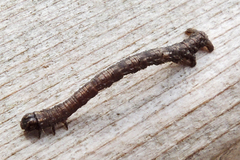 Pale BeautyCampaea perlataDamages trees, gardens or crops
 Large Lace-border MothScopula limboundataDamages trees, gardens or crops
 Riband WaveIdaea aversata
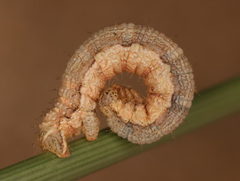 Yellow Shell MothCamptogramma bilineata
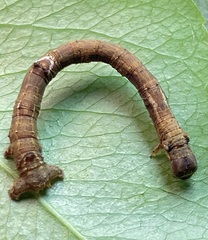 Large Maple Spanworm MothProchoerodes lineolaDamages trees, gardens or crops
Sources
- Wikipedia: https://en.wikipedia.org/wiki/Idaea_degeneraria
Look it up elsewhere: GBIF · iNaturalist · BugGuide · Wikipedia
Text written 2026-10-22 from the sources above and checked sentence by sentence against them. Data fetched 2026-10-22.