 Bug FAQ
Plantain moth
Scopula rubraria · Order: Lepidoptera · Family: Geometridae
Source: Wikipedia
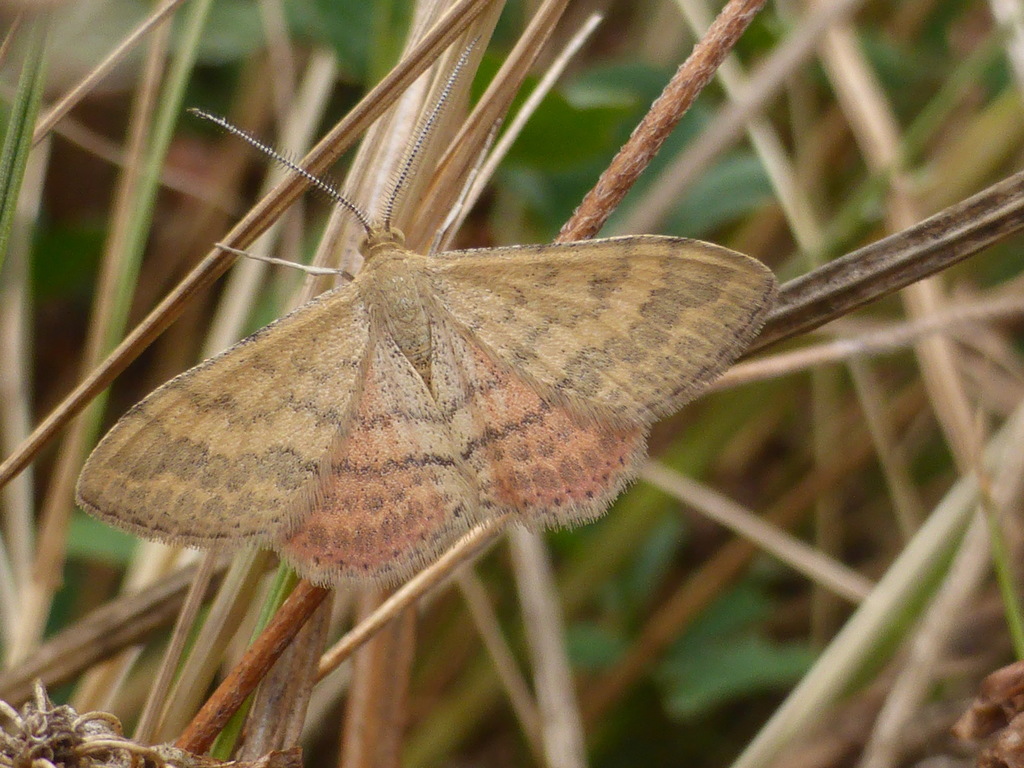
The plantain moth has a wingspan of about 20 mm and straw-coloured wings with zigzag patterns. It lives across New Zealand, Australia and nearby islands, especially coastal areas. Its caterpillars feed on plantain species and can also eat lucerne.
Source: Wikipedia
How to recognize it
The moth’s wings are straw coloured with zigzag markings.
Source: Wikipedia
Size
The wingspan is roughly 20 mm (0.79 in).
Source: Wikipedia
What it eats
Caterpillars feed on narrow-leaved plantain, can be raised on lucerne, and also eat the New Zealand endemic plantain Plantago spathulata.
Source: Wikipedia
Where it is found in the US
Recorded in 1 of 51 states and DC. Most records: California.
Darker = more records. Counts are museum and citizen-science records, not population size.
Source: GBIF
Questions people ask
Are they a garden pest?
Their larvae feed on plantain and lucerne, so they can damage those garden plants.
Source: Wikipedia
Where can I find plantain moths?
They occur across New Zealand, Australia and nearby islands, especially in coastal areas.
Source: Wikipedia
Same family (Geometridae)
 Willow BeautyPeribatodes rhomboidaria
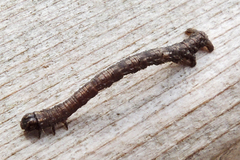 Pale BeautyCampaea perlataDamages trees, gardens or crops
 Large Lace-border MothScopula limboundataDamages trees, gardens or crops
 Riband WaveIdaea aversata
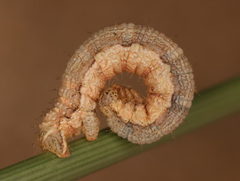 Yellow Shell MothCamptogramma bilineata
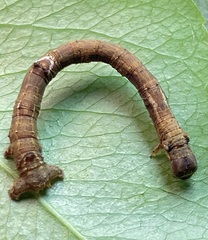 Large Maple Spanworm MothProchoerodes lineolaDamages trees, gardens or crops
Sources
- Wikipedia: https://en.wikipedia.org/wiki/Scopula_rubraria
Look it up elsewhere: GBIF · iNaturalist · BugGuide · Wikipedia
Text written 2026-10-22 from the sources above and checked sentence by sentence against them. Data fetched 2026-10-22.