 Bug FAQ
Pink Feather Boa Millipede
Gosodesmus claremontus · Order: Platydesmida · Family: Andrognathidae
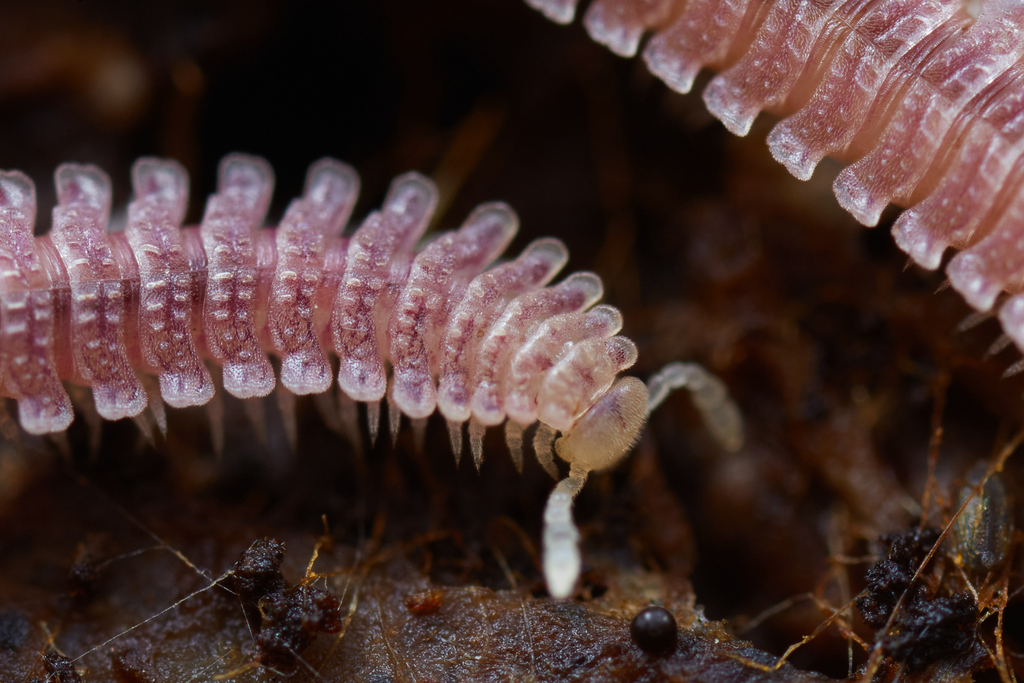
Adults are 17 to 27 mm long and can have up to 81 body segments. They are found in the Coast Ranges and Sierra Nevada, often inside rotted oak wood.
Source: Wikipedia
How to recognize it
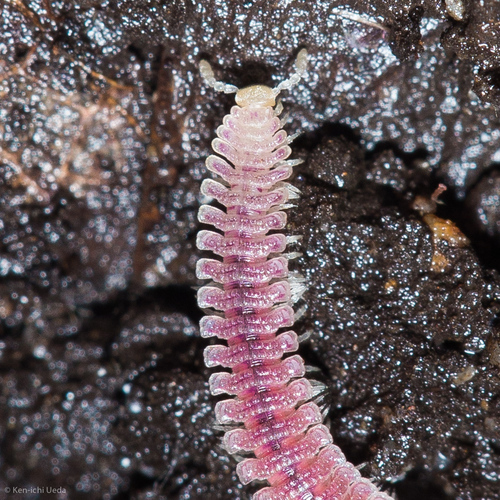
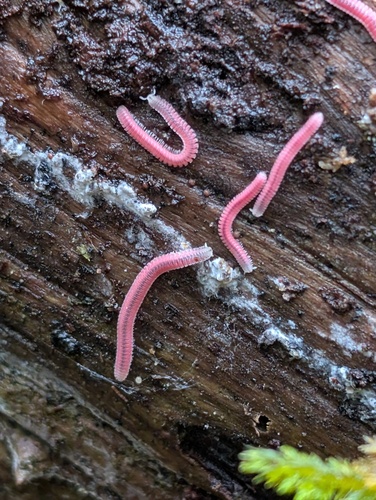
Color varies from bright pink to coral, sometimes with a black or purple dorsal stripe.
Source: Wikipedia
Size
Body length is between 17 mm and 27 mm (about 0.7 to 1.1 in) and may include up to 81 segments.
Source: Wikipedia
Where it lives
Occurs in the Coast Ranges and Sierra Nevada, frequently in rotted wood, especially oak.
Source: Wikipedia
Where it is found in the US
Recorded in 2 of 51 states and DC. Most records: California, Oregon.
Darker = more records. Counts are museum and citizen-science records, not population size.
Source: GBIF
Status: native in United States. Source: iNaturalist
Months it is reported in the US
Source: GBIF
More photos

Questions people ask
What does this millipede look like?
It is pink to coral in color and may have a black or purple stripe on its back.
Source: Wikipedia
How big does it get?
Adults measure 17 to 27 mm long and can have up to 81 body segments.
Source: Wikipedia
Where might I find it?
It lives in the Coast Ranges and Sierra Nevada, often inside rotted oak wood.
Source: Wikipedia
Same family (Andrognathidae)

Sources
- Wikipedia: https://en.wikipedia.org/wiki/Gosodesmus
Look it up elsewhere: GBIF · iNaturalist · BugGuide · ITIS · Wikipedia
Text written 2026-10-24 from the sources above and checked sentence by sentence against them. Data fetched 2026-10-24.