 Bug FAQ
Feather Millipede
Brachycybe lecontii · Order: Platydesmida · Family: Andrognathidae
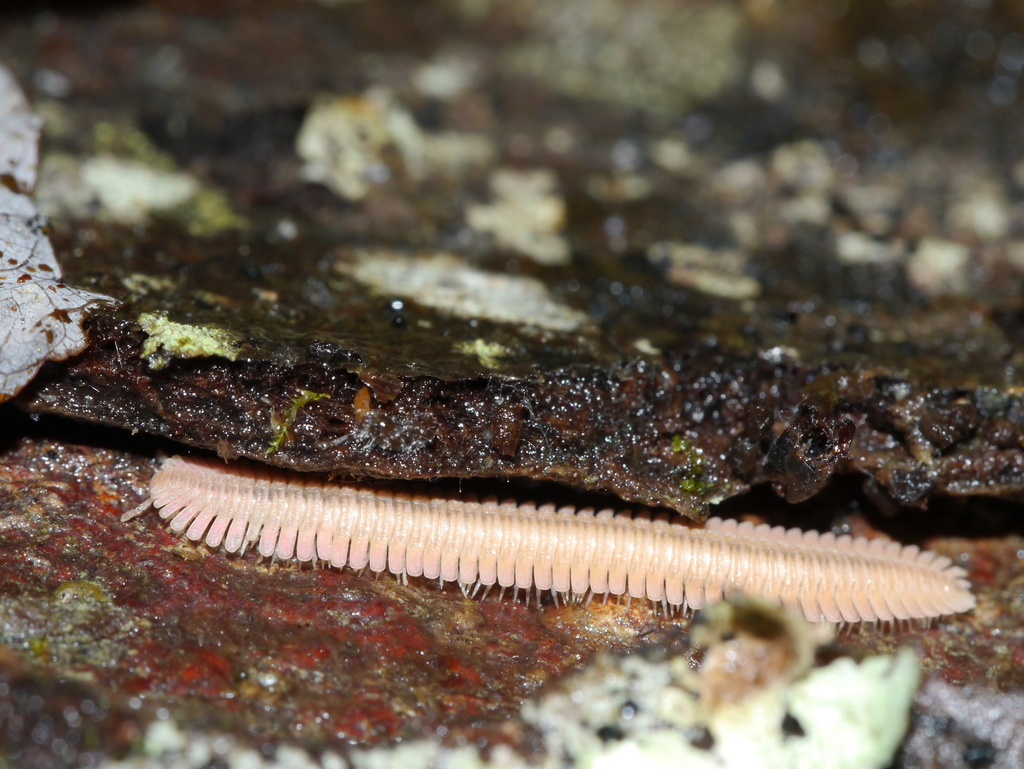
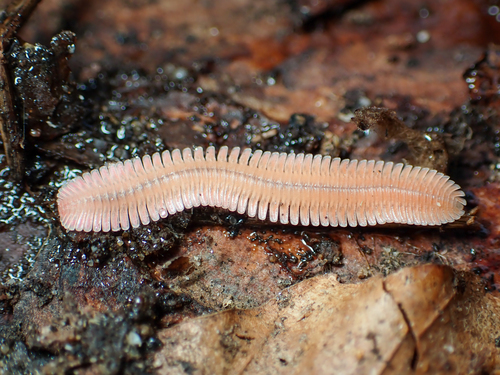
The feather millipede Brachycybe lecontii is pink-colored, though the shade varies across its range, and it has no eyes. It lives in the eastern United States, forms social colonies, and feeds on a wide variety of fungi. Males guard the eggs for three to four weeks but do not care for the hatchlings.
Source: Wikipedia
How to recognize it
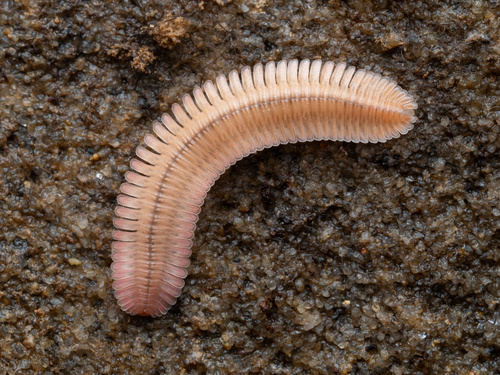
It is pink, with the exact hue changing in different geographic areas. It lacks eyes, like other members of its genus.
Source: Wikipedia
Where it lives
It forms colonies, living socially with other individuals.
Source: Wikipedia
What it eats
It eats fungi from many different fungal orders.
Source: Wikipedia
Life cycle
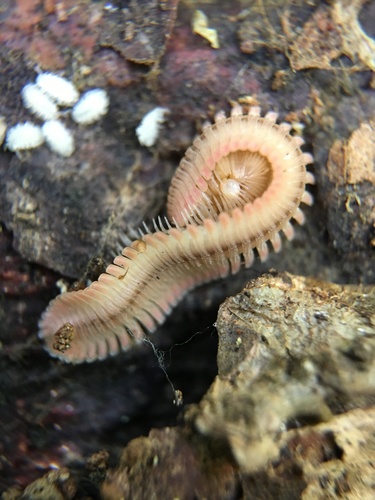
Males look after the eggs for three to four weeks until they hatch. After hatching, the parental care stops.
Source: Wikipedia
Where it comes from
Its native range is the eastern United States.
Source: Wikipedia
Lookalikes
Like other Brachycybe species, it is commonly called a feather millipede.
Source: Wikipedia
Where it is found in the US
Recorded in 14 of 51 states and DC. Most records: Tennessee, Arkansas, Alabama, North Carolina, Kentucky, Georgia, Virginia, South Carolina.
Darker = more records. Counts are museum and citizen-science records, not population size.
Source: GBIF
Status: native in North America; native in United States. Source: iNaturalist
Months it is reported in the US
Source: GBIF
More photos
Questions people ask
Same family (Andrognathidae)
Sources
- Wikipedia: https://en.wikipedia.org/wiki/Brachycybe_lecontii
Look it up elsewhere: GBIF · iNaturalist · BugGuide · ITIS · Wikipedia
Text written 2026-10-24 from the sources above and checked sentence by sentence against them. Data fetched 2026-10-24.