 Bug FAQ
Pine White
Neophasia menapia · Order: Lepidoptera · Family: Pieridae
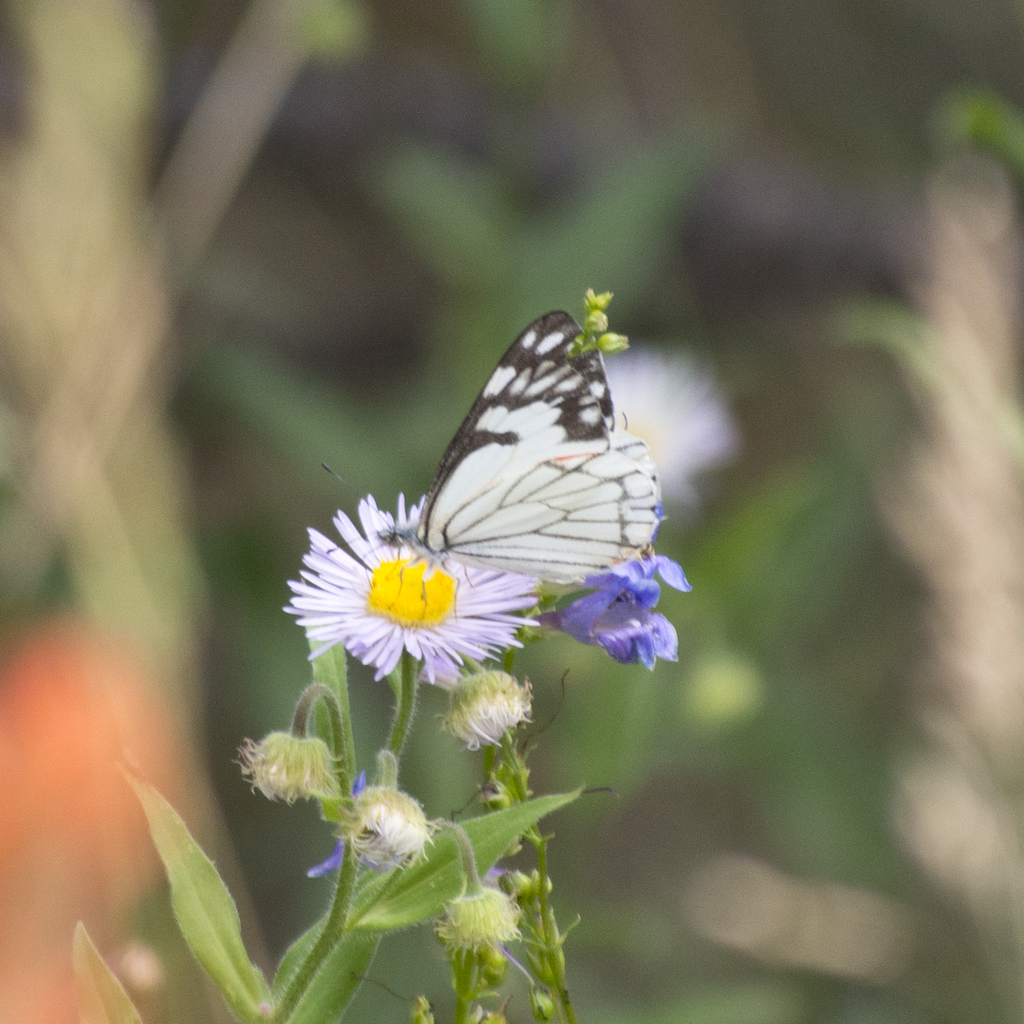
It lives in pine and Douglas-fir forests of northern coastal California and other parts of the western United States and southern British Columbia.
Source: Wikipedia
How to recognize it
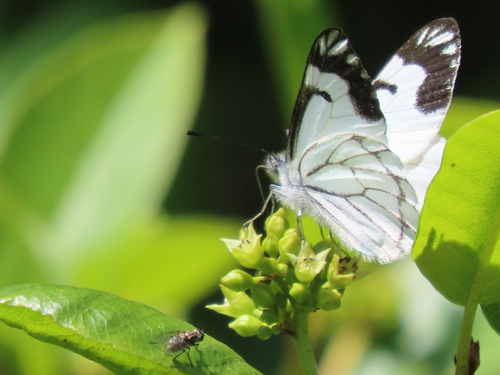
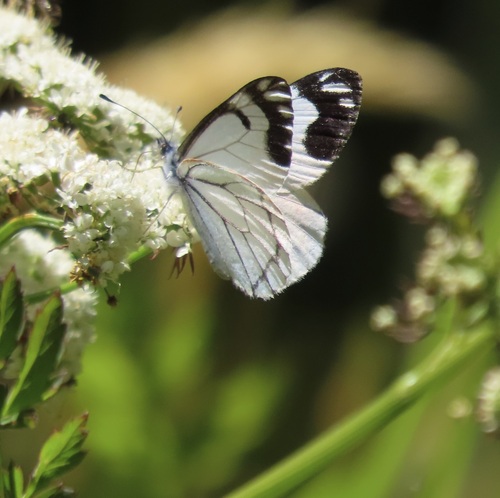
Its wings are primarily white with black veins and distinct black bars across the wings.
Source: Wikipedia
Size
The adult’s wingspan ranges from 42 to 50 mm (1.7 to 2.0 in).
Source: Wikipedia
Where it lives
It inhabits pine forests and Douglas-fir forests along the northern California coast.
Source: Wikipedia
What it eats
Caterpillars feed on various conifers such as pines, Douglas-fir, western hemlock, balsam fir, grand fir and Sitka spruce. Adults sip nectar from rabbitbrush, other yellow-flowering composites, and monarda.
Source: Wikipedia
Life cycle
The species has one generation per year and lays its eggs on live pine needles.
Source: Wikipedia
Where it comes from
It is native to the western United States and southern British Columbia, Canada.
Source: Wikipedia
Lookalikes
It resembles Neophasia terlooii, but the two species only overlap in New Mexico.
Source: Wikipedia
Where it is found in the US
Recorded in 14 of 51 states and DC. Most records: California, Oregon, Washington, Colorado, Idaho, New Mexico, Montana, Arizona.
Darker = more records. Counts are museum and citizen-science records, not population size.
Source: GBIF
Status: native in North America; native in United States; native in Canada. Source: iNaturalist
Months it is reported in the US
Source: GBIF
More photos
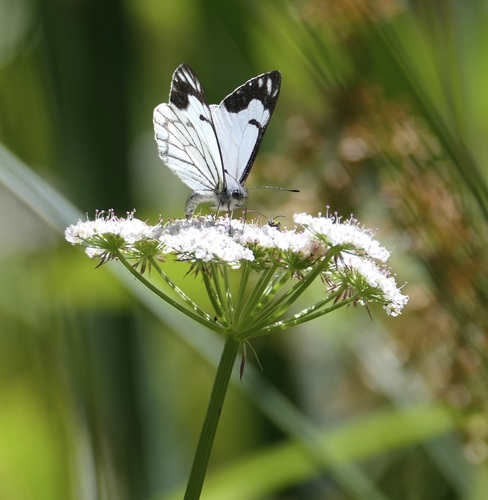
Same family (Pieridae)
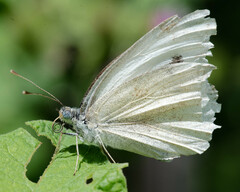

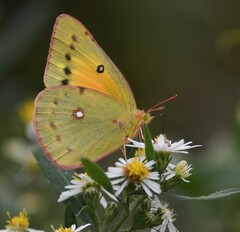
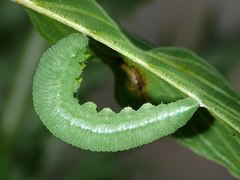

Sources
- Wikipedia: https://en.wikipedia.org/wiki/Neophasia_menapia
Look it up elsewhere: GBIF · iNaturalist · BugGuide · ITIS · Wikipedia
Text written 2026-10-23 from the sources above and checked sentence by sentence against them. Data fetched 2026-10-23.