 Bug FAQ
Phyllocnistis hyperpersea
Phyllocnistis hyperpersea · Order: Lepidoptera · Family: Gracillariidae
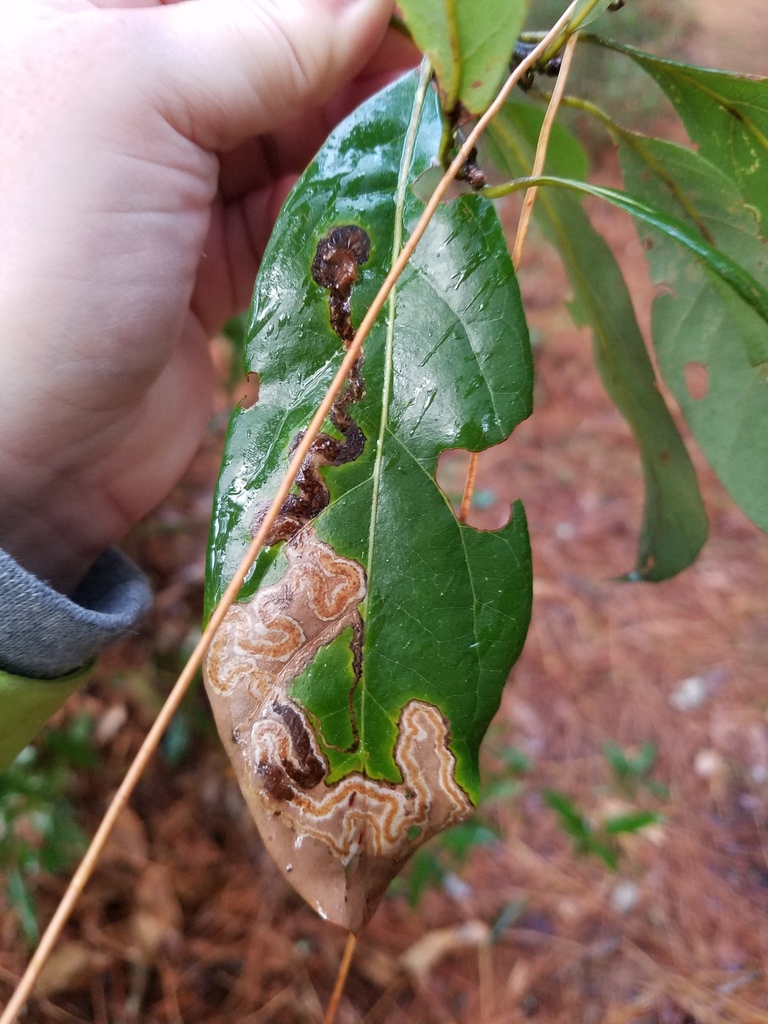
The forewings measure about 2 mm in length (1.9 to 2.2 mm). Adults are found from Virginia’s low-coastal counties down through the Florida Everglades. Larvae mine the leaves of avocado (Persea americana) and redbay (Persea borbonia).
Source: Wikipedia
Size
Forewing length ranges from 1.9 to 2.2 mm.
Source: Wikipedia
Where it lives
It occurs along the low-lying Atlantic coastal plain from Virginia to the Florida Everglades.
Source: Wikipedia
What it eats
Larvae feed on the leaves of avocado (Persea americana) and redbay (Persea borbonia).
Source: Wikipedia
When you see it
Adults appear in many months, from September through June, depending on the location in the southeastern United States.
Source: Wikipedia
Lookalikes
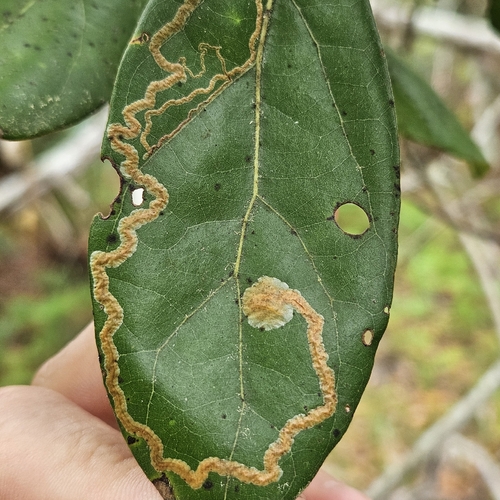
Its median frass line is unusually broad for Phyllocnistis, resembling that of the Chilean genus Prophyllocnistis.
Source: Wikipedia
Where it is found in the US
Recorded in 8 of 51 states and DC. Most records: North Carolina, Florida, South Carolina, Maryland, Virginia, California, Georgia, Texas.
Darker = more records. Counts are museum and citizen-science records, not population size.
Source: GBIF
Months it is reported in the US
Source: GBIF
More photos
Questions people ask
What plants do the larvae feed on?
The larvae mine the leaves of avocado (Persea americana) and redbay (Persea borbonia).
Source: Wikipedia
How can I tell this leaf miner apart from similar species?
Its median frass line is broader than typical for Phyllocnistis and looks more like that of the Chilean genus Prophyllocnistis.
Source: Wikipedia
Same family (Gracillariidae)
 Horse-chestnut LeafminerCameraria ohridellaDamages trees, gardens or crops
 Aspen Serpentine Leafminer MothPhyllocnistis populiellaDamages trees, gardens or crops
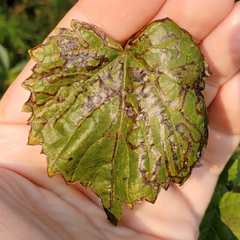 Phyllocnistis vitegenella complexPhyllocnistis vitegenellaDamages trees, gardens or crops
 Locust Digitate Leafminer MothParectopa robiniellaDamages trees, gardens or crops
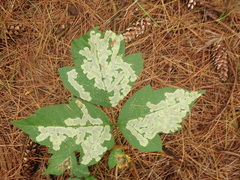 Poison Ivy Leaf-miner MothCameraria guttifinitella
 Phyllocnistis insignisDamages trees, gardens or crops
Sources
- Wikipedia: https://en.wikipedia.org/wiki/Phyllocnistis_hyperpersea
Look it up elsewhere: GBIF · iNaturalist · BugGuide · Wikipedia
Text written 2026-10-29 from the sources above and checked sentence by sentence against them. Data fetched 2026-10-29.