 Bug FAQ
Horse-chestnut Leafminer
Cameraria ohridella · Order: Lepidoptera · Family: Gracillariidae
Also called: Horse chestnut leaf miner
Source: Wikipedia
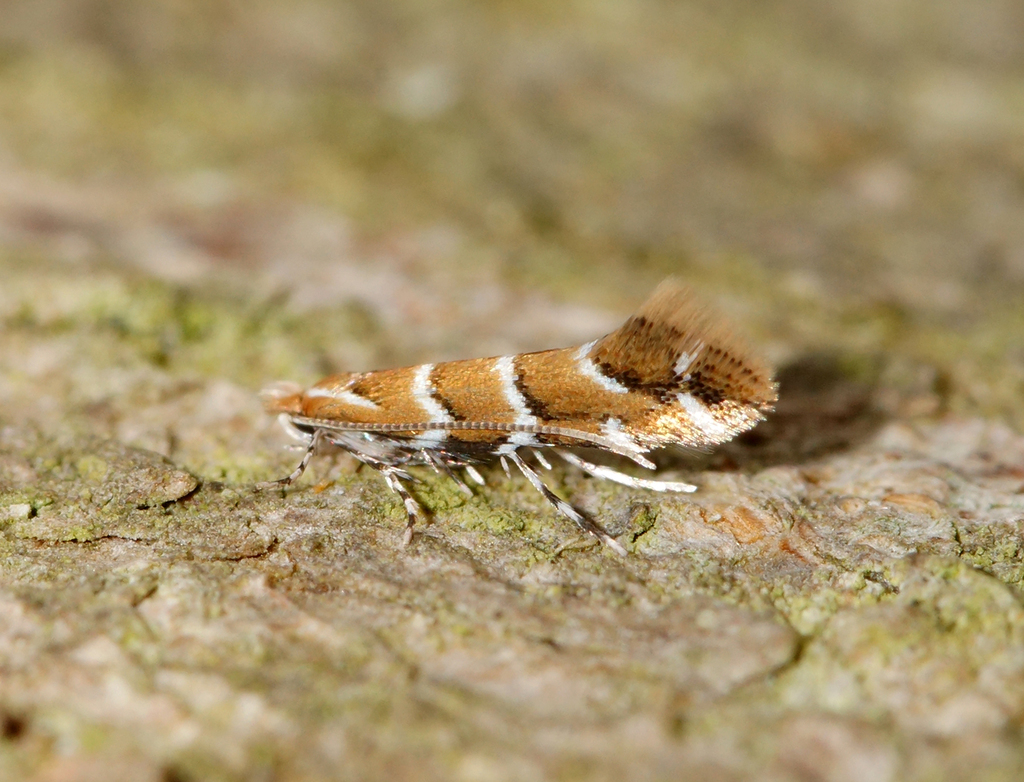
Adult moths are tiny, about 5 mm long, with bright brown forewings marked by thin silvery stripes and dark grey fringed hindwings. Females lay 20-40 eggs on leaf tops; larvae mine the leaf tissue, go through five instars, and can produce up to three generations a year.
Source: Wikipedia
Size
The moth is up to 5 mm (about 3⁄16 inch) long.
Source: Wikipedia
How to get rid of it
Removing and burning leaves before adult emergence (by end of March) can reduce populations, though tree removal is not recommended. Fenoxycarb, which has low environmental toxicity, can cause up to 100 % pupal mortality and works well with manual leaf removal; imidacloprid is usually banned because it harms bees.
Source: Wikipedia
Where it lives
First recorded in North Macedonia in 1984, it now occurs in many European countries including the UK, France, Germany and Sweden.
Source: Wikipedia
What it eats
Larvae mine the leaves of the common horse-chestnut (Aesculus hippocastanum). Early larvae create a small, vein-parallel cavity and sip sap rather than eat leaf tissue.
Source: Wikipedia
Life cycle
Each female lays 20-40 eggs singly on leaf uppersides; after hatching in 2 to 3 weeks, larvae pass through five feeding stages and two spinning stages before pupating. In warm, dry weather up to five generations can occur per year, but the average in western Europe is three.
Source: Wikipedia
When you see it
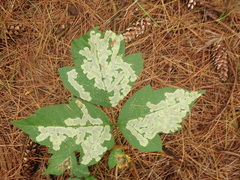
The final generation of the year overwinters as a pupa for more than six months. Heavy infestations can cause mines to merge, covering almost the whole leaf surface.
Source: Wikipedia
Where it comes from
Specimens were first collected in central Greece in 1879, long before the species was described. Although its natural host grows at higher elevations, the moth thrives in well-watered city parks at lower elevations, but avoids hotter regions like Spain.
Source: Wikipedia
Lookalikes
Pupae lack a cremaster and have strong lateral spines on the first five abdominal segments, distinguishing them from Phyllonorycter pupae.
Source: Wikipedia
More photos

Questions people ask
How can I get rid of them?
Clear and burn infested leaves before late March, or apply fenoxycarb together with leaf removal; avoid imidacloprid because it harms bees.
Source: Wikipedia
Why are my horse-chestnut leaves turning brown and speckled?
The larvae mine the leaf tissue, creating brown mines that can merge and cover most of the leaf in severe infestations.
Source: Wikipedia
Same family (Gracillariidae)



Sources
- Wikipedia: https://en.wikipedia.org/wiki/Horse-chestnut_leaf_miner
Look it up elsewhere: GBIF · iNaturalist · BugGuide · Wikipedia
Text written 2026-10-22 from the sources above and checked sentence by sentence against them. Data fetched 2026-10-22.