 Bug FAQ
Philolithus elatus
Philolithus elatus · Order: Coleoptera · Family: Tenebrionidae
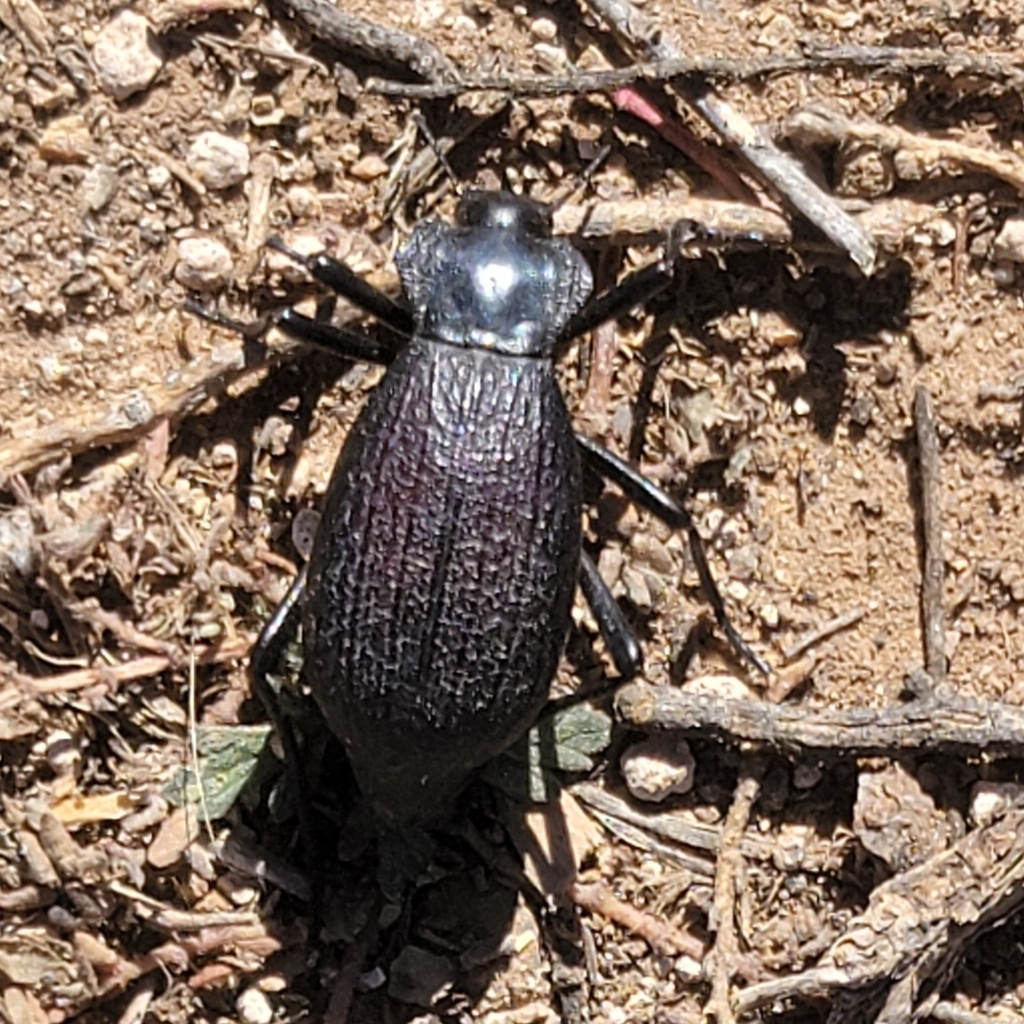
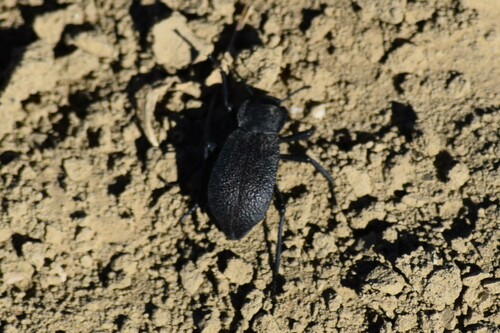
Philolithus elatus is a large, shiny black darkling beetle about 21 to 35 mm long, with a smooth, convex pronotum and a distinct constriction before the elytra. It lives in various western North American habitats such as shrub savannas, steppes, grasslands and desert shrub areas, and it is thought to be a detritivore that helps recycle nutrients. Adults lay eggs on Pogonomyrmex ant mounds, and the species mimics the appearance and defensive posture of Eleodes beetles.
Source: Wikipedia
How to recognize it
The beetle is shiny black with a smooth, convex pronotum that widens at the margins, which are spotted with punctures. A clear narrowing separates the prothorax from the elytra, and the elytral pattern varies among subspecies.
Source: Wikipedia
What it eats
The beetle is expected to be a detritivore, feeding on decaying organic matter and contributing to nutrient cycling.
Source: Wikipedia
Life cycle
Adults deposit their eggs on mounds built by Pogonomyrmex ants.
Source: Wikipedia
Where it comes from
Philolithus elatus is native to western North America.
Source: Wikipedia
Lookalikes
Each subspecies closely resembles a sympatric subspecies of Eleodes, and the beetle also mimics Eleodes' characteristic head-standing defensive posture.
Source: Wikipedia
Where it is found in the US
Recorded in 12 of 51 states and DC. Most records: New Mexico, Utah, Arizona, Colorado, Wyoming, Texas, Idaho, Nevada.
Darker = more records. Counts are museum and citizen-science records, not population size.
Source: GBIF
Months it is reported in the US
Source: GBIF
More photos
Questions people ask
What does Philolithus elatus look like?
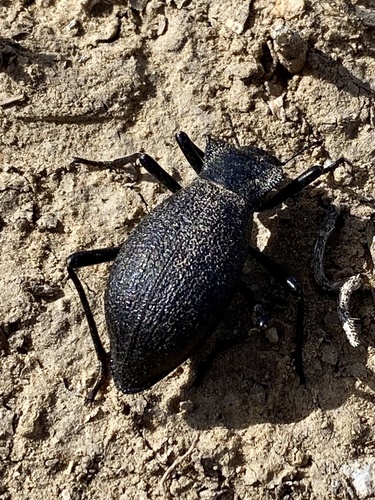
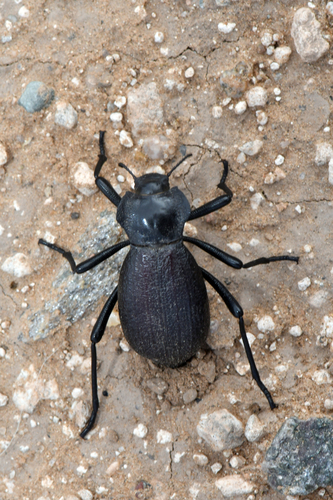
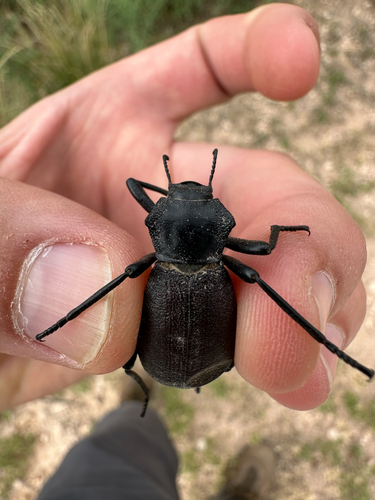
It is a shiny black beetle about 2 to 3.5 cm long, with a smooth, convex pronotum that widens at the edges and shows puncture spots, and a narrowed area before the elytra.
Source: Wikipedia
Where is Philolithus elatus found?
It lives in a variety of western North American habitats, including shrub savannas, steppes, grasslands and desert shrub areas.
Source: Wikipedia
What does Philolithus elatus eat?
It is thought to be a detritivore that feeds on dead plant and animal material, helping recycle nutrients.
Source: Wikipedia
How does Philolithus elatus reproduce?
Adults lay their eggs on the mounds of Pogonomyrmex ants.
Source: Wikipedia
Same family (Tenebrionidae)


Sources
- Wikipedia: https://en.wikipedia.org/wiki/Philolithus_elatus
Look it up elsewhere: GBIF · iNaturalist · BugGuide · Wikipedia
Text written 2026-10-25 from the sources above and checked sentence by sentence against them. Data fetched 2026-10-25.