 Bug FAQ
Yellow Mealworm Beetle
Tenebrio molitor · Order: Coleoptera · Family: Tenebrionidae
Also called: Common Mealworm Beetle, Giant common mealworm beetle, Mealworm Beetle, Hardback Beetle
Source: Wikipedia
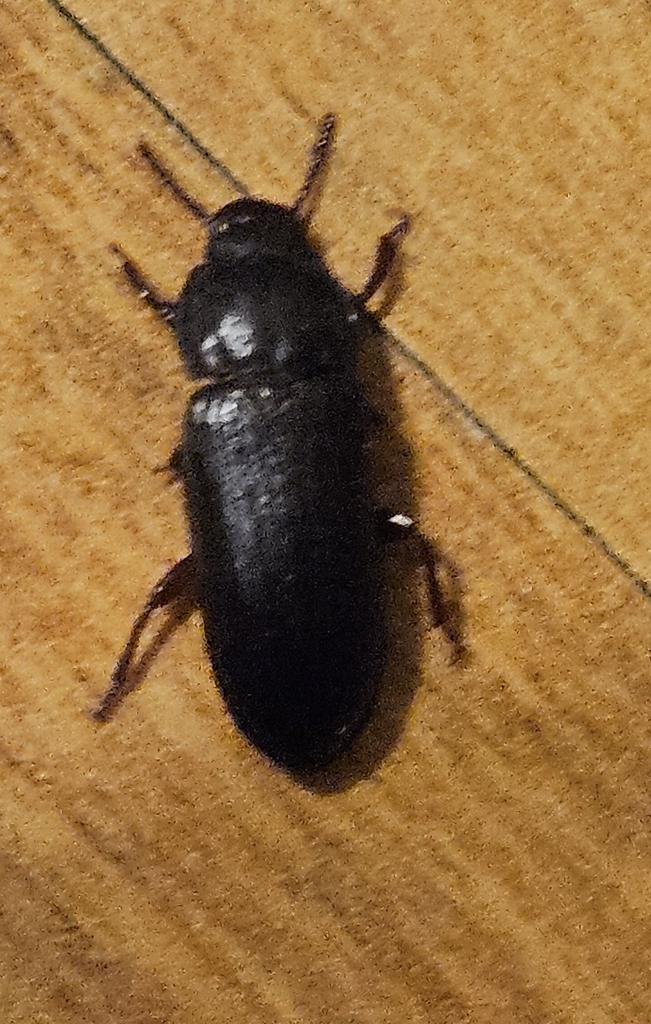
Adult yellow mealworm beetles are dark brown to black and measure about 1.3 to 1.8 cm, while larvae can grow to 2.5 cm or longer. They develop through egg, larva, pupa and adult stages, with eggs hatching in 4 to 19 days and adults emerging after 3 to 30 days depending on temperature. The beetles are considered pests of stored grain and other pantry products.
Source: Wikipedia
How to recognize it
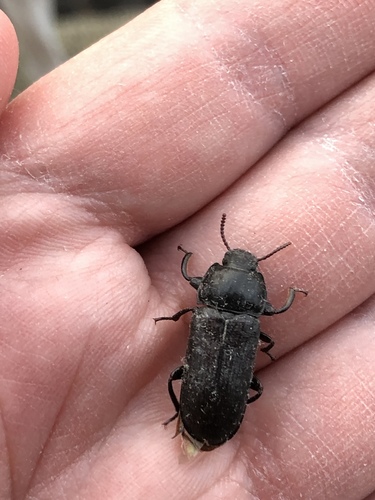
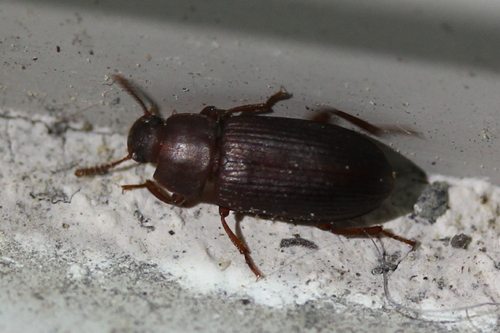
Adults are dark brown or black and have linear grooves along the abdomen and only four tarsal segments on the hind legs.
Source: Wikipedia
Size
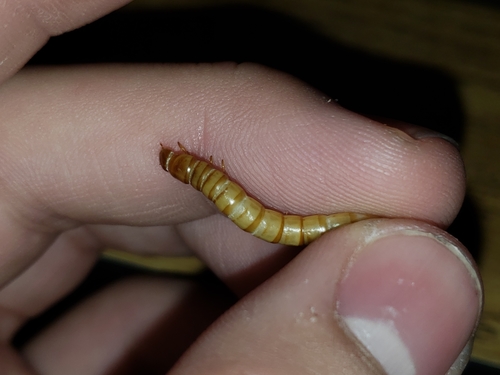
Larvae are typically about 2.5 cm long or more. Adults range from 1.25 to 1.8 cm in length.
Source: Wikipedia
Does it bite or sting?
The first human cases of larvae in the gastrointestinal tract were recorded in the 19th century.
Source: Wikipedia
Where it lives
They prefer warm climates with higher humidity.
Source: Wikipedia
What it eats
Larvae feed on vegetation and dead insects. They are commonly used as food for captive reptiles, fish, birds, small mammals, and for wild birds at feeders.
Source: Wikipedia
Life cycle
They undergo four holometabolic stages: egg, larva, pupa, and adult. Eggs hatch in 4 to 19 days; larvae molt through 9 to 20 instars before pupating; pupae turn brown and emerge as adults after 3 to 30 days, depending on temperature.
Source: Wikipedia
When you see it
The species breeds prolifically, and a female can lay about 500 eggs over a 6 to 12 month adult life.
Source: Wikipedia
Lookalikes
It is often confused with the black mealworm beetle (T. obscurus); T. molitor is larger and has a different shape.
Source: Wikipedia
Where it is found in the US
Recorded in 49 of 51 states and DC. Most records: Michigan, Washington, Utah, Pennsylvania, New York, Kentucky, Ohio, Wisconsin.
Darker = more records. Counts are museum and citizen-science records, not population size.
Source: GBIF
Status: introduced in North America; introduced in United States; introduced in Canada. Source: iNaturalist
Months it is reported in the US
Source: GBIF
More photos

Questions people ask
Do they bite or sting?
There are no reports of bites or stings; the only human cases involve larvae found in the gastrointestinal tract.
Source: Wikipedia
How big are they?
Adults are about 1.3 to 1.8 cm long, while larvae can reach 2.5 cm or more.
Source: Wikipedia
Why are they a problem in my pantry?
They infest stored grain and other pantry foods, degrading their quality.
Source: Wikipedia
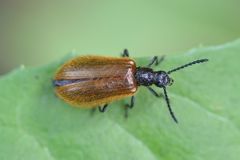
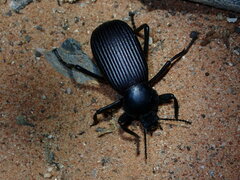
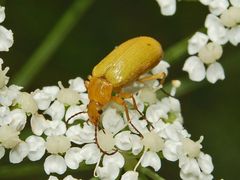
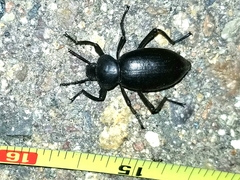
Same family (Tenebrionidae)


Sources
- Wikipedia: https://en.wikipedia.org/wiki/Mealworm
Look it up elsewhere: GBIF · iNaturalist · BugGuide · ITIS · Wikipedia
Text written 2026-10-24 from the sources above and checked sentence by sentence against them. Data fetched 2026-10-24.