 Bug FAQ
Pheidole parva
Pheidole parva · Order: Hymenoptera · Family: Formicidae

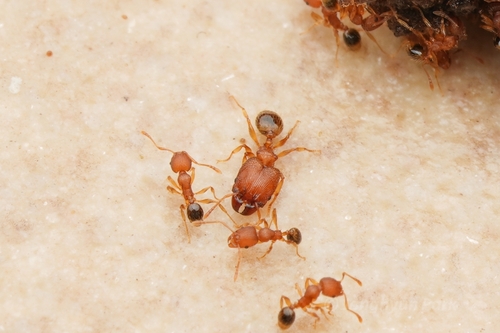
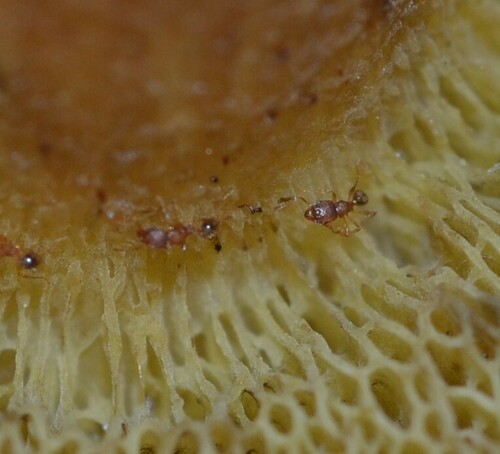
Pheidole parva is a tiny ant in the Myrmicinae subfamily. It lives in soil, leaf litter, under stones, in rotten logs, on low vegetation and even under bark, from parks and gardens to mangroves and rainforests up to 445 m elevation. The species is widespread in the Old World, probably introduced to Madagascar and the Arabian Peninsula through human commerce.
Source: Wikipedia
How to recognize it
On small Southwest Indian Ocean islands it can look similar to P. jonas, especially the minor workers.
Source: Wikipedia
Size
Pheidole parva belongs to the ant subfamily Myrmicinae.
Source: Wikipedia
Is it a pest in the house?
Nests have been found under potted plants, indicating it can be introduced to homes through commerce.
Source: Wikipedia
Where it lives
It is found in soil, leaf litter, under stones, root mats, rotten logs, low vegetation and under bark of live trees.
Source: Wikipedia
Where it comes from
Pheidole parva is a widespread, probably invasive species in many Old World regions. It is most likely an introduced species in the Malagasy region. Its presence under potted plants suggests introduction to the Arabian Peninsula via trade.
Source: Wikipedia
Lookalikes
It may be superficially confused with P. jonas on those islands because the minors look alike.
Source: Wikipedia
Where it is found in the US
Recorded in 3 of 51 states and DC. Most records: Florida, Louisiana, Maryland.
Darker = more records. Counts are museum and citizen-science records, not population size.
Source: GBIF
Status: introduced in United States. Source: iNaturalist
Months it is reported in the US
Source: GBIF
More photos
Questions people ask
Where is Pheidole parva found?
It lives in many Old World habitats, from parks and gardens to mangroves and rainforests, often at low elevations.
Source: Wikipedia
Can Pheidole parva be confused with other ants?
Yes, on some small islands it looks similar to P. jonas, especially the minor workers.
Source: Wikipedia
Same family (Formicidae)
 Eastern Black Carpenter AntCamponotus pennsylvanicusCan damage your home
 Red Imported Fire AntSolenopsis invictaCan sting
 American Winter AntPrenolepis imparis
 Argentine AntLinepithema humileNuisance, not dangerous
 Immigrant Pavement AntTetramorium immigransCan sting
 Odorous House AntTapinoma sessileCan damage your home
Sources
- Wikipedia: https://en.wikipedia.org/wiki/Pheidole_parva
Look it up elsewhere: GBIF · iNaturalist · BugGuide · ITIS · Wikipedia
Text written 2026-10-23 from the sources above and checked sentence by sentence against them. Data fetched 2026-10-23.