 Bug FAQ
Pharaoh Ant
Monomorium pharaonis · Order: Hymenoptera · Family: Formicidae
Source: Wikipedia
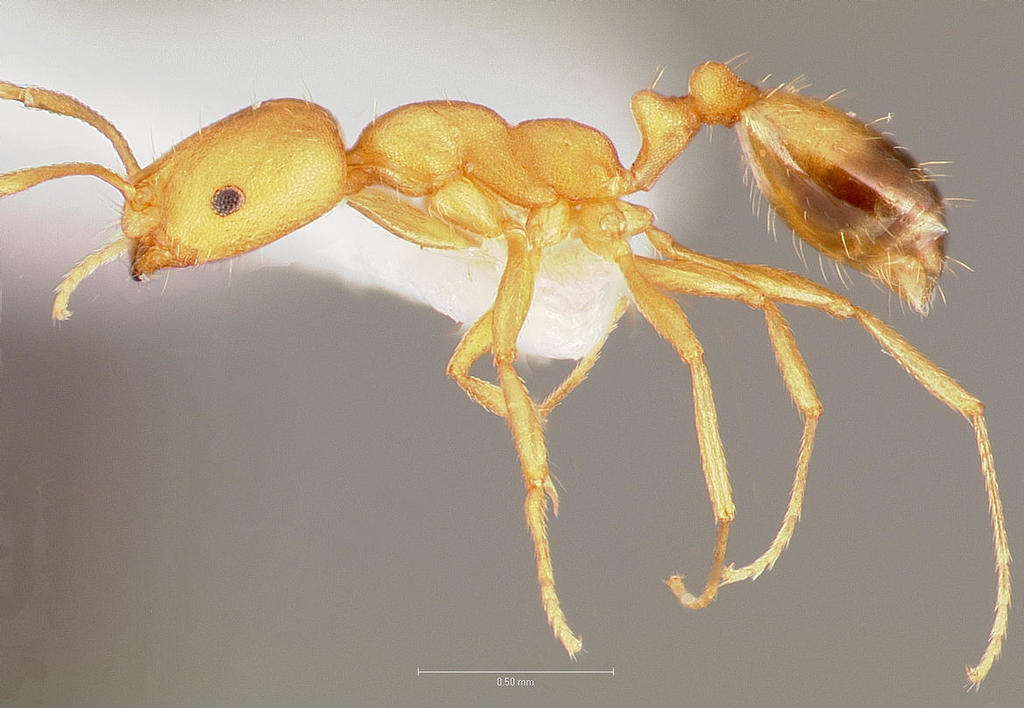
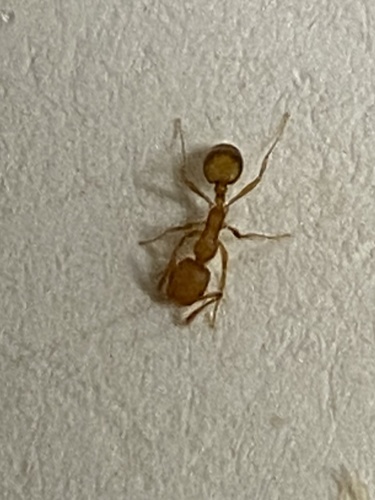
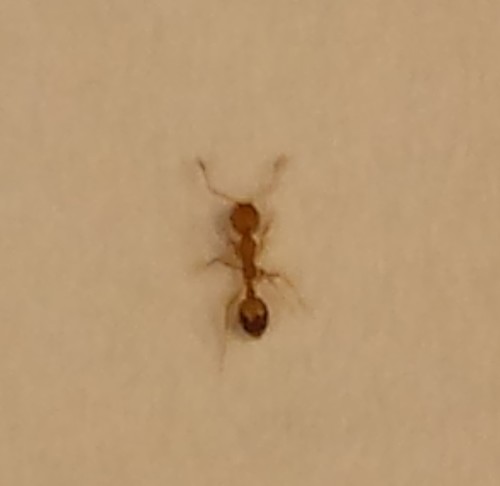
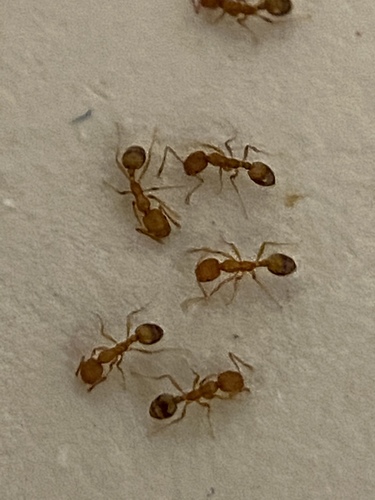
Pharaoh ants are tiny yellow-brown ants about 2 mm long that live in heated buildings worldwide. They breed continuously, with queens laying hundreds of eggs and development taking 38 to 45 days.
Source: Wikipedia
How to recognize it
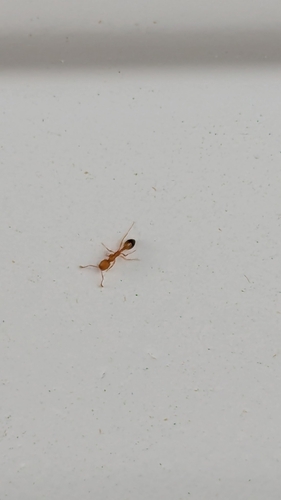
They are light yellow to reddish brown with a darker abdomen. The narrow waist (petiole) has two nodes and the thorax lacks spines.
Source: Wikipedia
Size
Adults are about 2 mm long and appear almost transparent.
Source: Wikipedia
Does it bite or sting?
Workers have a non-functional stinger that only releases pheromones.
Source: Wikipedia
Where it lives
Although tropical in origin, they thrive in any heated building, even in temperate climates.
Source: Wikipedia
What it eats
They use a sophisticated food-preference strategy that includes satiation behavior.
Source: Wikipedia
Life cycle
A queen can lay hundreds of eggs over her lifetime. Eggs develop to mature adults in about 38 to 45 days, depending on temperature and humidity.
Source: Wikipedia
When you see it
In heated buildings they breed continuously throughout the year.
Source: Wikipedia
Where it is found in the US
Recorded in 33 of 51 states and DC. Most records: Florida, Mississippi, Illinois, Texas, California, New York, Delaware, Louisiana.
Darker = more records. Counts are museum and citizen-science records, not population size.
Source: GBIF
Status: introduced in North America. Source: iNaturalist
Months it is reported in the US
Source: GBIF
More photos
Questions people ask
Where do Pharaoh ants live?
They live in heated indoor spaces worldwide, even in temperate regions with central heating.
Source: Wikipedia
Same family (Formicidae)
 Eastern Black Carpenter AntCamponotus pennsylvanicusCan damage your home
 Red Imported Fire AntSolenopsis invictaCan sting
 American Winter AntPrenolepis imparis
 Argentine AntLinepithema humileNuisance, not dangerous
 Immigrant Pavement AntTetramorium immigransCan sting
 Odorous House AntTapinoma sessileCan damage your home
Sources
- Wikipedia: https://en.wikipedia.org/wiki/Pharaoh_ant
Look it up elsewhere: GBIF · iNaturalist · BugGuide · ITIS · Wikipedia
Text written 2026-10-22 from the sources above and checked sentence by sentence against them. Data fetched 2026-10-22.