 Bug FAQ
Peppered Moth
Biston betularia · Order: Lepidoptera · Family: Geometridae
Also called: Pepper-and-salt Geometer Moth, Pepper And Salt Geometer
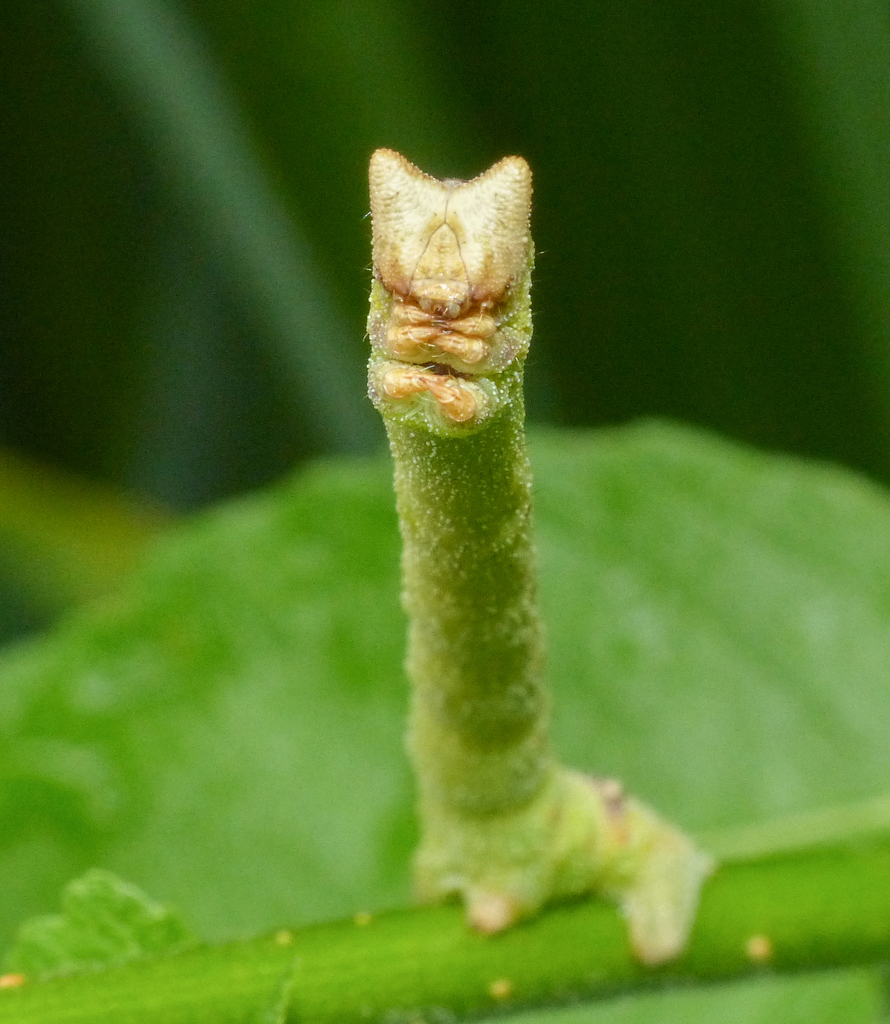
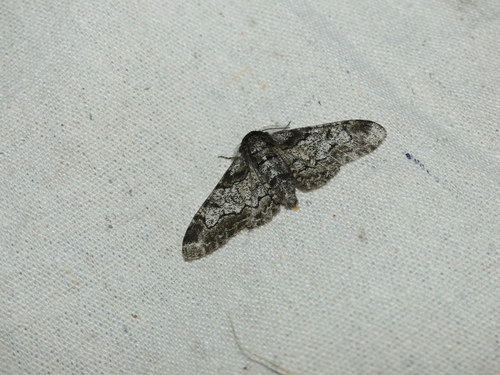
The peppered moth has a wingspan of about 45 to 62 mm, typically around 55 mm. Its wings are white with black speckles and crosswise lines, though rare individuals may show grey or brown tones. It flies at night in temperate regions of the northern hemisphere and rests on trees during the day.
Source: Wikipedia
How to recognize it
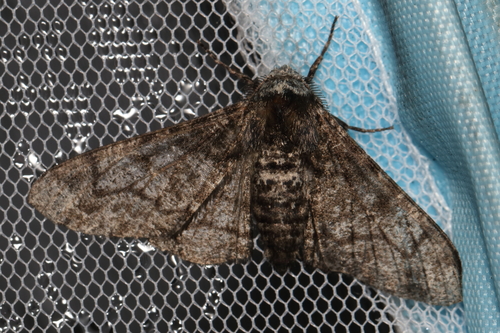
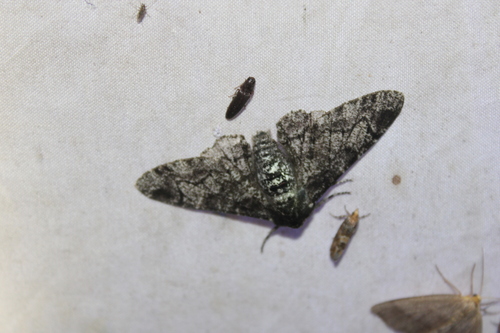
The moth’s wings are white with black spotting and distinct transverse lines; occasional forms can be grey or brown.
Source: Wikipedia
Size
Wingspan ranges from 45 mm to 62 mm, with a median of about 55 mm.
Source: Wikipedia
Where it lives
It is a nocturnal species found mainly in temperate zones of the northern hemisphere. During daylight it rests on tree trunks where birds may prey on it.
Source: Wikipedia
What it eats
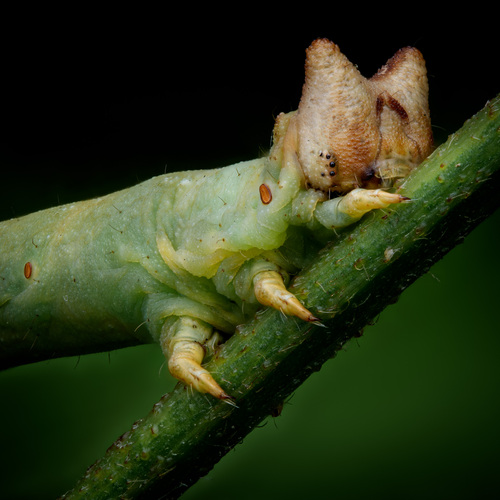
Caterpillars mimic twigs in colour, ranging from green to brown.
Source: Wikipedia
Life cycle
The species undergoes the typical four-stage lepidopteran life cycle: egg, several larval instars, pupae, and adult. Late in the season the larvae drop to the soil to pupate and overwinter there.
Source: Wikipedia
When you see it
Adults emerge from pupae between late May and August, with males appearing slightly earlier than females. They emerge in the late afternoon, dry their wings, and then fly at night.
Source: Wikipedia
Where it comes from
Its range includes much of Europe, North America, and large parts of Asia such as China, Russia, Japan, and the Korean Peninsula.
Source: Wikipedia
Lookalikes
Both melanic (dark) and typical light forms exist, controlled by genetics, and are sometimes mistakenly listed as separate subspecies.
Source: Wikipedia
Where it is found in the US
Recorded in 41 of 51 states and DC. Most records: Pennsylvania, Massachusetts, Michigan, Connecticut, Vermont, Ohio, New York, Minnesota.
Darker = more records. Counts are museum and citizen-science records, not population size.
Source: GBIF
Status: native in North America; native in United States; native in Canada. Source: iNaturalist
Months it is reported in the US
Source: GBIF
More photos
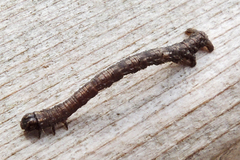
Same family (Geometridae)
 Willow BeautyPeribatodes rhomboidaria
 Pale BeautyCampaea perlataDamages trees, gardens or crops
 Large Lace-border MothScopula limboundataDamages trees, gardens or crops
 Riband WaveIdaea aversata
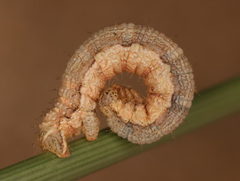 Yellow Shell MothCamptogramma bilineata
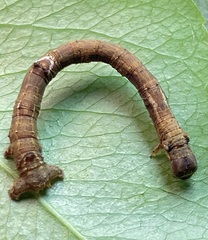 Large Maple Spanworm MothProchoerodes lineolaDamages trees, gardens or crops
Sources
- Wikipedia: https://en.wikipedia.org/wiki/Peppered_moth
Look it up elsewhere: GBIF · iNaturalist · BugGuide · ITIS · Wikipedia
Text written 2026-10-22 from the sources above and checked sentence by sentence against them. Data fetched 2026-10-22.