 Bug FAQ
Pellucid Hover Fly
Volucella pellucens · Order: Diptera · Family: Syrphidae
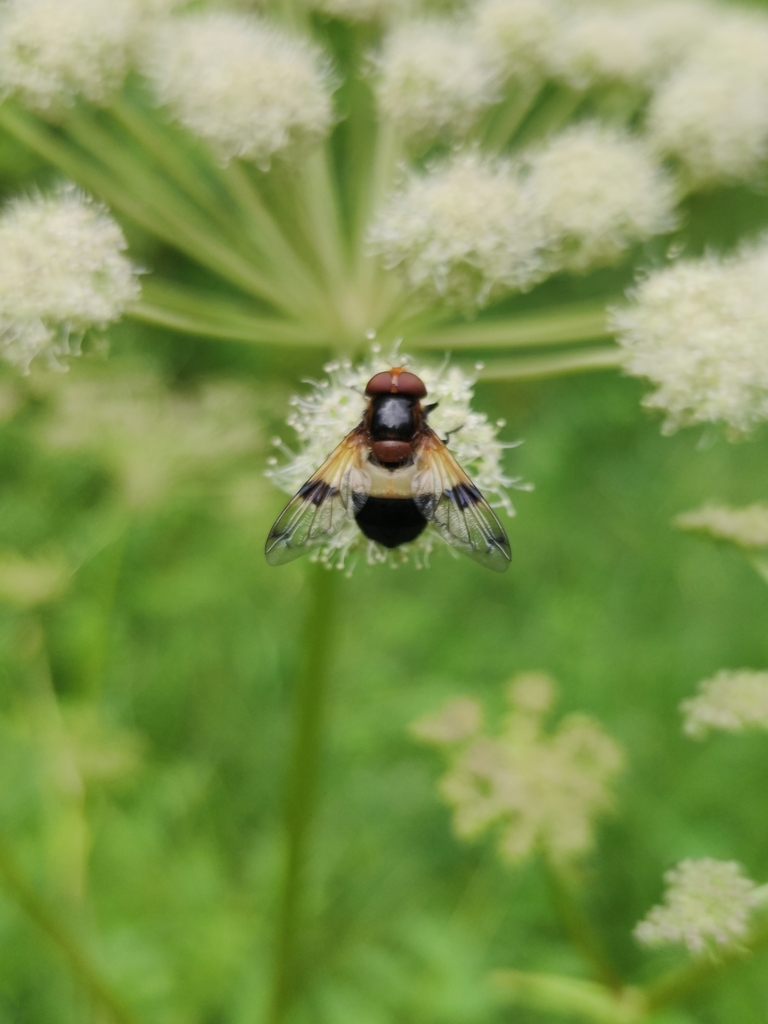
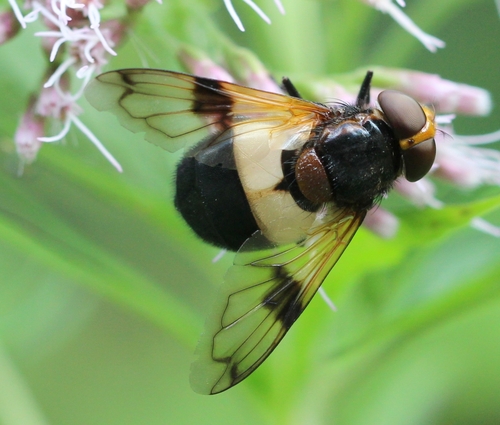
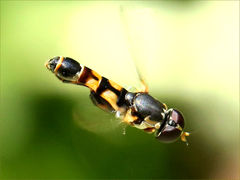
The pellucid hoverfly is a medium-sized fly about 13 to 17 mm long with transparent wings that have amber leading edges and brown patches. It has a broad black body with a yellow band on the front of the abdomen, making it look like a bee or wasp.
Source: Wikipedia
How to recognize it
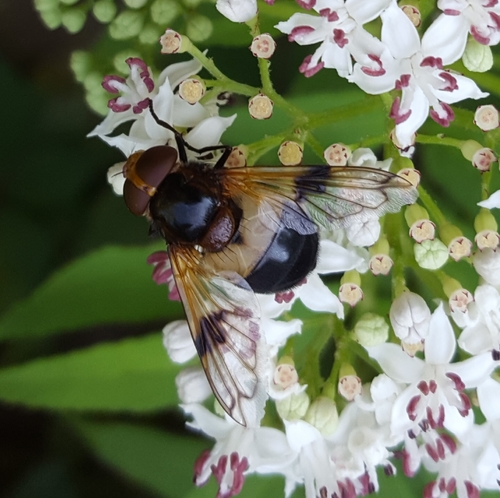
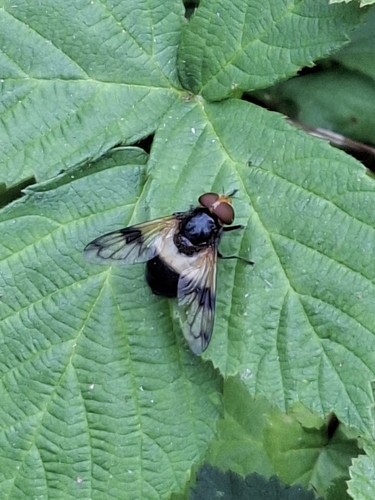
Its body is mainly black with a wide yellow band on the front of the abdomen, giving it a bee-like appearance. The two clear wings have an amber front edge and a brown spot on each wing.
Source: Wikipedia
Size
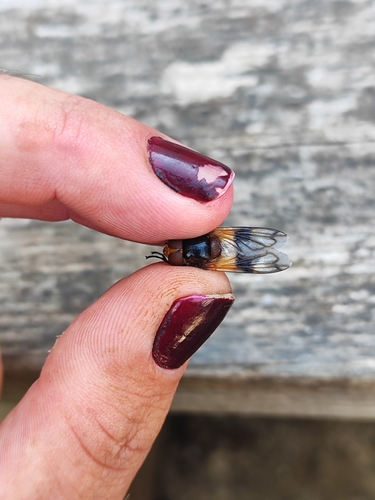
Adults measure about 13 to 17 mm in length, and their wings are roughly 10 to 15.5 mm long.
Source: Wikipedia
Where it lives
They are usually seen in woodlands and hedgerows but can also wander into gardens.
Source: Wikipedia
What it eats
Adults feed on nectar and pollen from many flowers from May to October. The larvae develop inside the nests of social wasps and feed on the host’s young and dead adults.
Source: Wikipedia
Life cycle
Adults emerge each year from mid-May to June. Fully grown larvae leave the wasp nest and pupate in the soil below.
Source: Wikipedia
When you see it
Adults are active and visit flowers from May through October.
Source: Wikipedia
Where it comes from
The species occurs across much of Europe, from Ireland through the Palearctic to Japan.
Source: Wikipedia
Lookalikes
Its bee-like look is a form of mimicry shared with other hoverflies to deter predators. Unlike true bees or wasps, hoverflies have only two wings, while Hymenoptera have four.
Source: Wikipedia
More photos
Same family (Syrphidae)


Sources
- Wikipedia: https://en.wikipedia.org/wiki/Volucella_pellucens
Look it up elsewhere: GBIF · iNaturalist · BugGuide · Wikipedia
Text written 2026-10-22 from the sources above and checked sentence by sentence against them. Data fetched 2026-10-22.