 Bug FAQ
Pear Sucker
Cacopsylla pyricola · Order: Hemiptera · Family: Psyllidae
Also called: Pear psylla
Source: Wikipedia
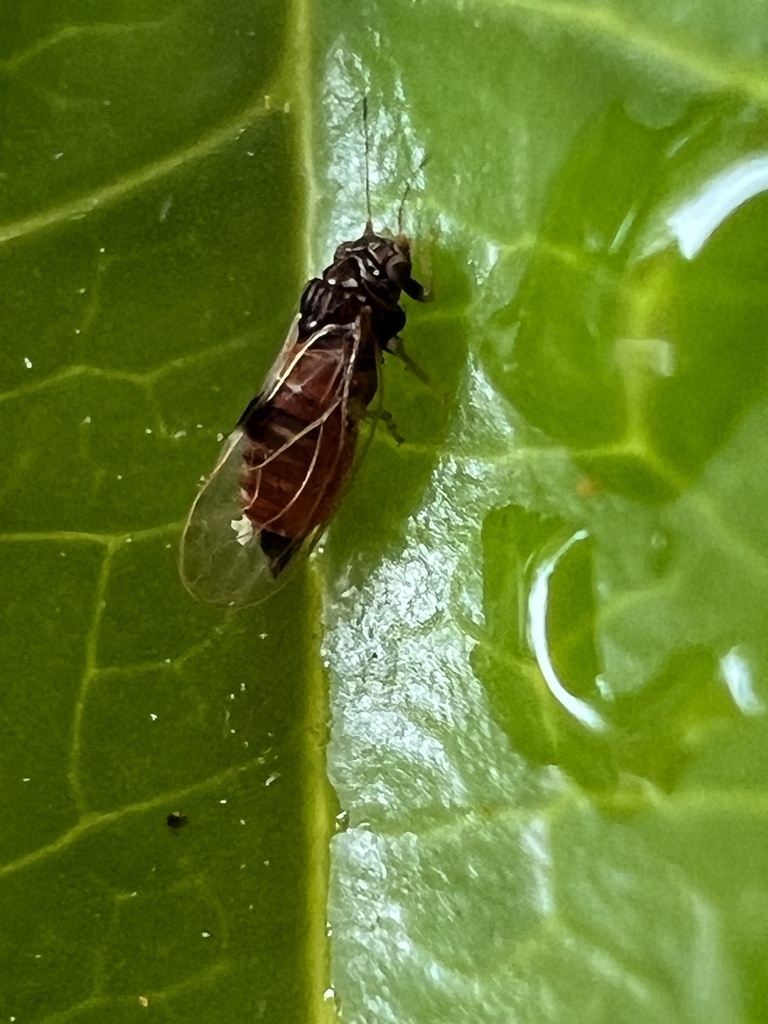
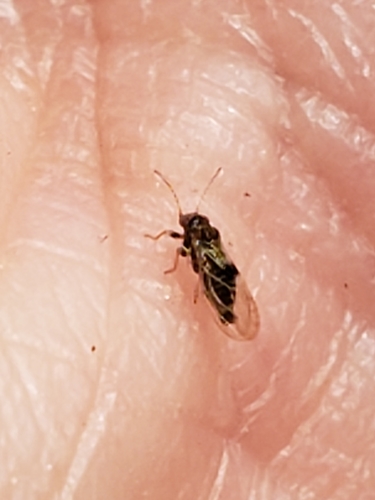
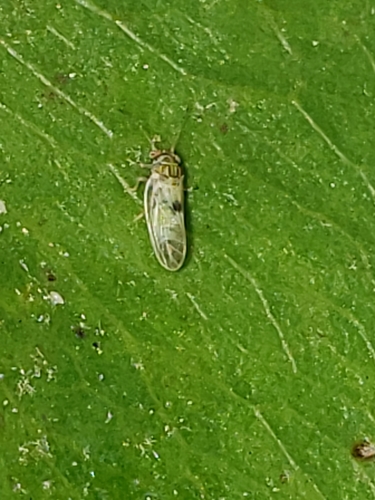
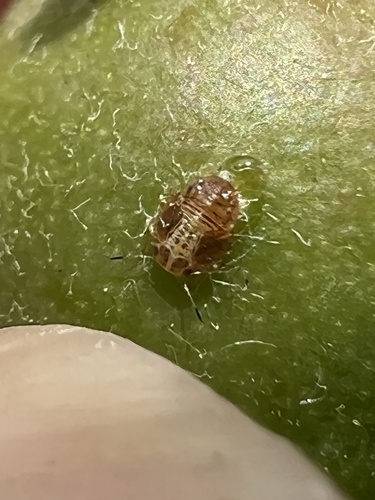
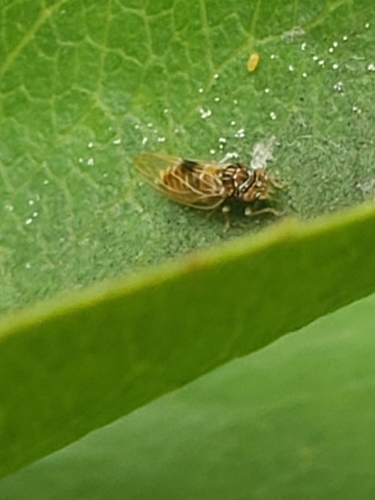
Adult pear suckers are pale in summer and turn reddish-brown to black in winter, with dusky transparent wings. Nymphs start yellowish or pink, later become green to dark brown with red eyes and wing buds that have three to five knobbed bristles. They can produce up to six generations each year, and adults overwinter on bark or twigs of pear trees.
Source: Wikipedia
How to recognize it
Developing wing buds on later instars have three to five knobbed bristles along their edges.
Source: Wikipedia
Is it a pest in the house?
Their host plants are limited to pear and quince, making them a pest of those fruit trees.
Source: Wikipedia
Where it lives
Cacopsylla pyricola is native to Europe and was introduced to the eastern United States in the early 1800s, later spreading to the Pacific Northwest fruit regions. Nymphs are mostly immobile and are found on the underside of leaves.
Source: Wikipedia
What it eats
Nymphs feed on buds and flowers of their host tree, sucking out sap with their mouthparts. They excrete large amounts of honeydew that attracts ants, flies, bees and other insects.
Source: Wikipedia
Life cycle
Adult pear suckers overwinter on bark or twigs of pear trees or nearby vegetation. Up to six generations can develop in a single year, allowing populations to increase rapidly.
Source: Wikipedia
When you see it
In spring, females lay eggs on twigs and expanding shoots, attaching them with short stalks on the ventral side.
Source: Wikipedia
Where it comes from
The species originates from Europe.
Source: Wikipedia
Where it is found in the US
Recorded in 8 of 51 states and DC. Most records: California, Virginia, Illinois, Washington, Ohio, New York, Oregon, Rhode Island.
Darker = more records. Counts are museum and citizen-science records, not population size.
Source: GBIF
Status: introduced in Canada. Source: iNaturalist
Months it is reported in the US
Source: GBIF
More photos
Questions people ask
How many generations can pear suckers produce each year?
They may have up to six generations annually.
Source: Wikipedia
Same family (Psyllidae)
Sources
- Wikipedia: https://en.wikipedia.org/wiki/Cacopsylla_pyricola
Look it up elsewhere: GBIF · iNaturalist · BugGuide · Wikipedia
Text written 2026-10-27 from the sources above and checked sentence by sentence against them. Data fetched 2026-10-27.