 Bug FAQ
Box Sucker
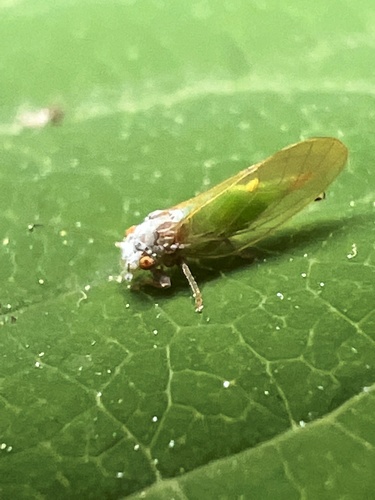
Psylla buxi · Order: Hemiptera · Family: Psyllidae
Also called: Boxwood psyllid
Source: Wikipedia
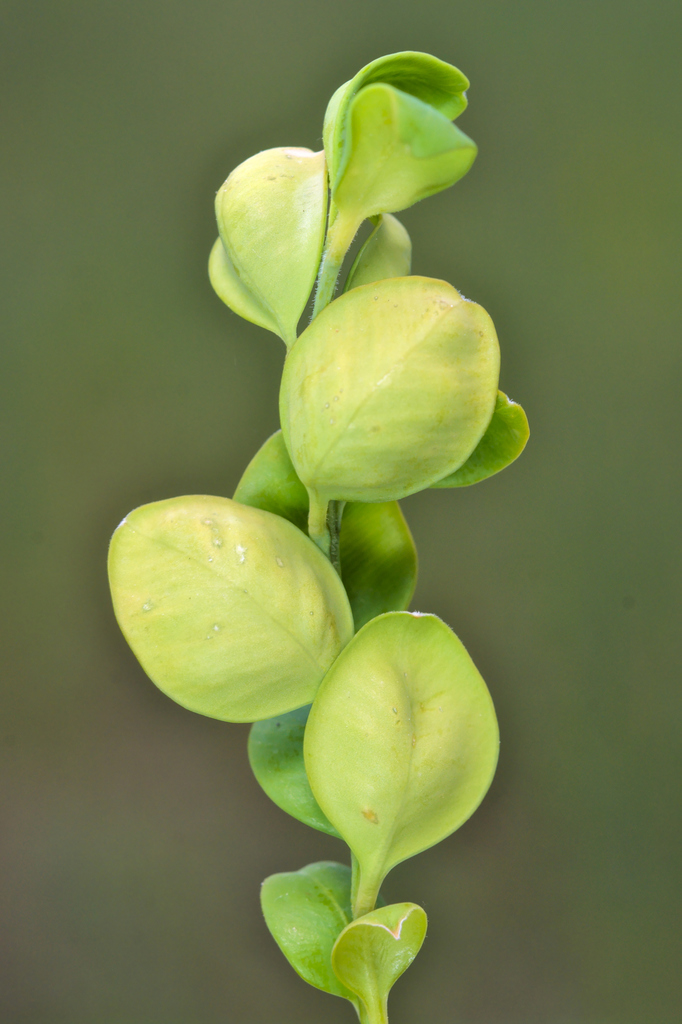
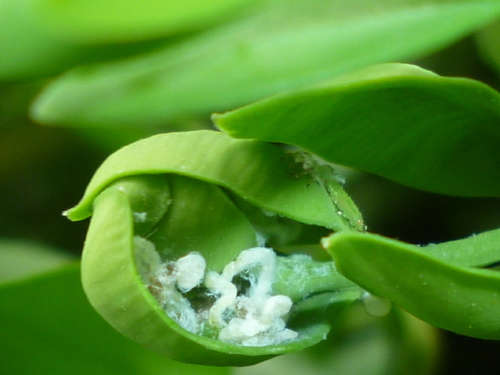
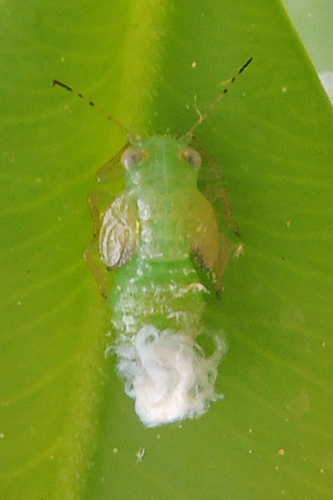
Box sucker nymphs are pale green, covered in white wax, and hide in thick, strongly concave leaves during summer. The insect creates cabbage-like leaf clusters (galls) at the tips of box shoots, which can harm the plant.
Source: Wikipedia
How to recognize it
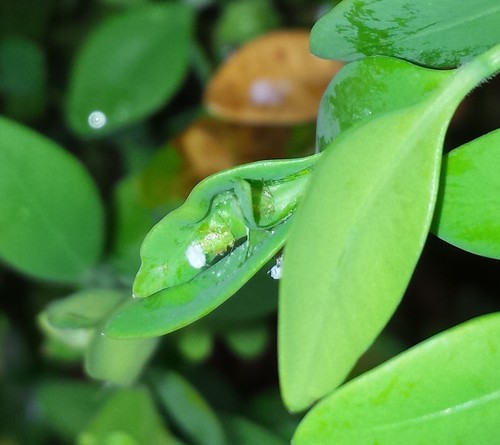
Leaves become slightly thicker, strongly concave, and hide many pale green nymphs coated with white wax.
Source: Wikipedia
Where it lives
It originates from Europe and has been introduced to North America.
Source: Wikipedia
When you see it
In summer, many pale green nymphs are concealed in the leaves.
Source: Wikipedia
Where it comes from
It is native to Europe and also occurs in North America as an introduced species.
Source: Wikipedia
Where it is found in the US
Recorded in 27 of 51 states and DC. Most records: New York, Illinois, Wisconsin, California, New Jersey, Ohio, Michigan, Indiana.
Darker = more records. Counts are museum and citizen-science records, not population size.
Source: GBIF
Status: introduced in Canada. Source: iNaturalist
Months it is reported in the US
Source: GBIF
More photos
Questions people ask
How can I identify box sucker?
Look for slightly thicker, strongly concave leaves that hide pale green nymphs covered in white wax during summer.
Source: Wikipedia
When are box sucker nymphs most visible?
They are most noticeable in the summer when they hide in the thickened leaves.
Source: Wikipedia
Where does box sucker come from?
It is native to Europe and has been introduced to North America.
Source: Wikipedia
What damage does box sucker cause?
It forms cabbage-like galls at the tips of box shoots, which can harm the plant.
Source: Wikipedia
Sources
- Wikipedia: https://en.wikipedia.org/wiki/Psylla_buxi
Look it up elsewhere: GBIF · iNaturalist · BugGuide · Wikipedia
Text written 2026-10-23 from the sources above and checked sentence by sentence against them. Data fetched 2026-10-23.