 Bug FAQ
Peacock Fly
Callopistromyia annulipes · Order: Diptera · Family: Ulidiidae

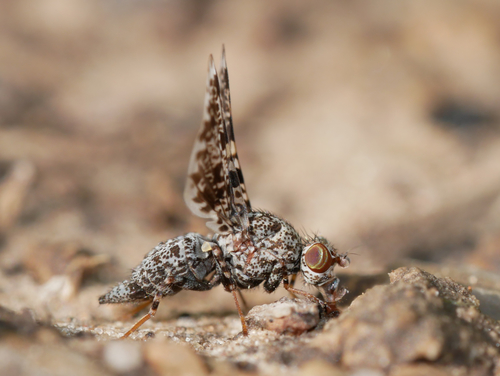
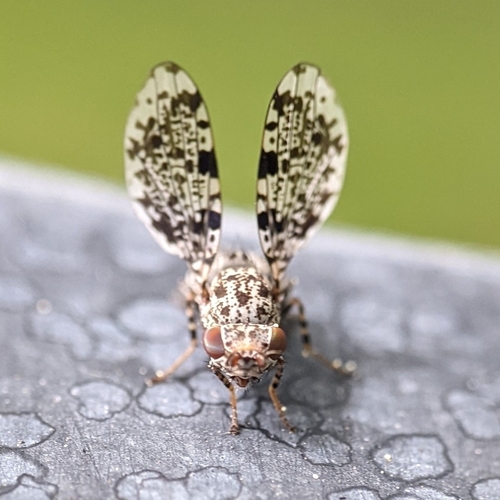
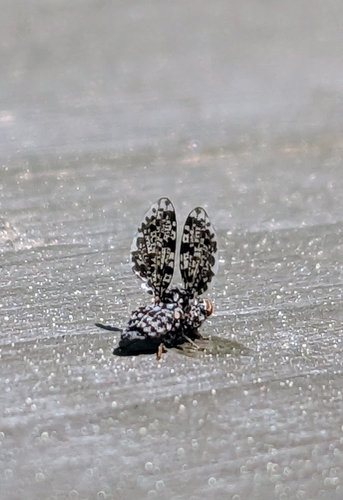
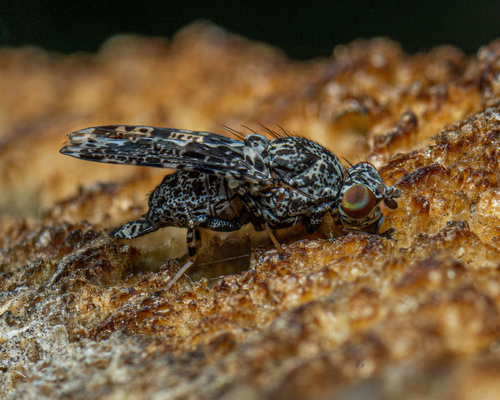
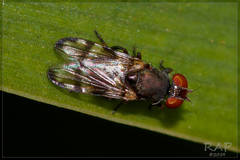
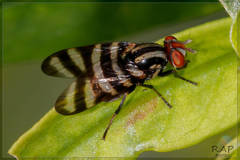
The peacock fly shows blue reflections that make its wings look like a peacock's tail. Males and females stand on rotting wood with their wings raised straight up and pointed forward. They are native to and found throughout North America.
Source: Wikipedia
How to recognize it
Its wings have blue reflections that give a peacock-tail appearance.
Source: Wikipedia
Where it lives
Both sexes perch on decaying trees or logs, holding their wings vertically and pointing them forward.
Source: Wikipedia
Where it comes from
The species is native to and widespread across North America.
Source: Wikipedia
Where it is found in the US
Recorded in 43 of 51 states and DC. Most records: Pennsylvania, Virginia, New York, Ohio, Maryland, North Carolina, Tennessee, Indiana.
Darker = more records. Counts are museum and citizen-science records, not population size.
Source: GBIF
Months it is reported in the US
Source: GBIF
More photos
Questions people ask
What does the peacock fly look like?
Its wings show blue reflections that make them resemble a peacock's tail.
Source: Wikipedia
Where can I find peacock flies?
They perch on rotting trees or logs, holding their wings up and pointed forward.
Source: Wikipedia
Is the peacock fly native to my area?
Yes, it is native to and common throughout North America.
Source: Wikipedia
Same family (Ulidiidae)


Sources
- Wikipedia: https://en.wikipedia.org/wiki/Callopistromyia_annulipes
Look it up elsewhere: GBIF · iNaturalist · BugGuide · ITIS · Wikipedia
Text written 2026-10-23 from the sources above and checked sentence by sentence against them. Data fetched 2026-10-22.