 Bug FAQ
Common Picture-winged Fly
Delphinia picta · Order: Diptera · Family: Ulidiidae
Also called: Painted Compost Fly
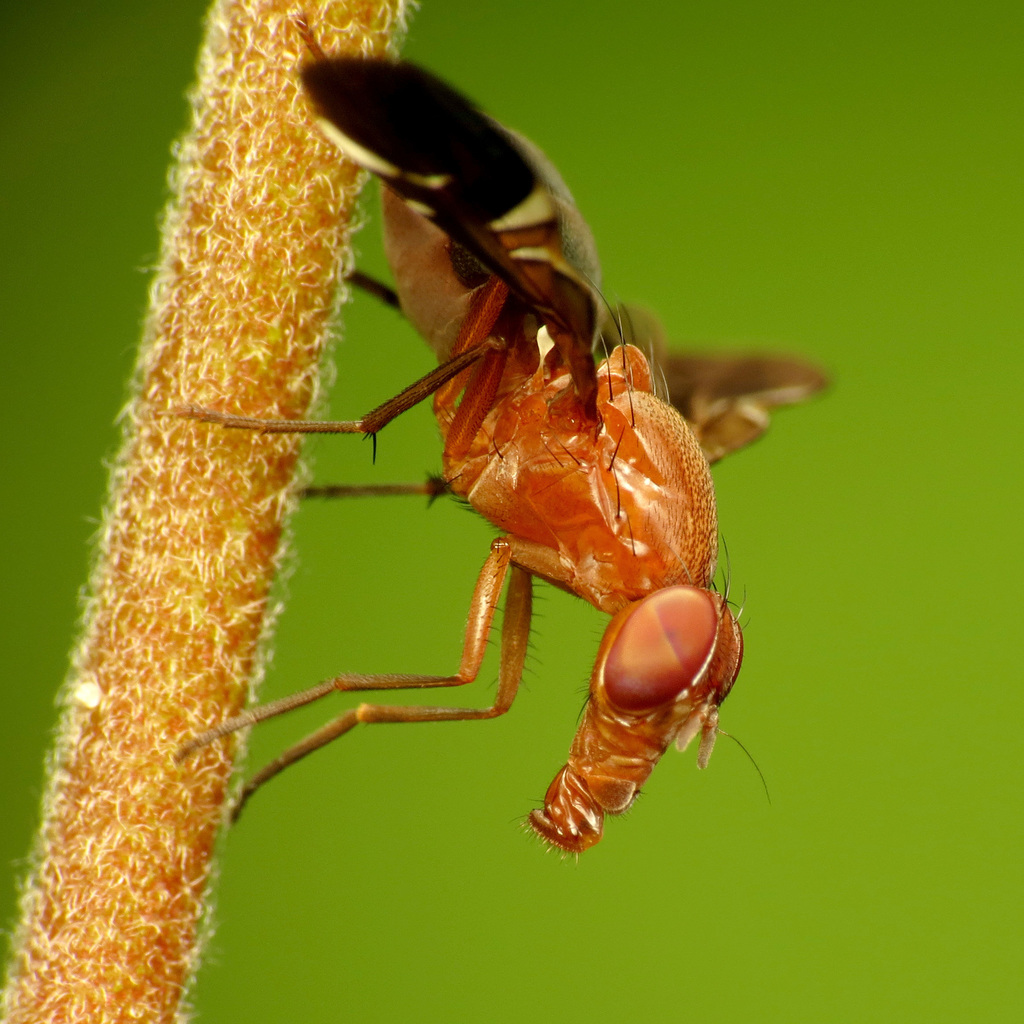
The common picture-winged fly is about 7 mm long, with a black abdomen and light-brown head, thorax and legs. It lives where dead plant material is present, such as landfills, forests, swamps and shaded fields, and feeds on decaying vegetation and fermenting insect frass.
Source: Wikipedia
How to recognize it
Its wings are shiny dark brown with clear (hyaline) spots that form a distinctive pattern.
Source: Wikipedia
Size
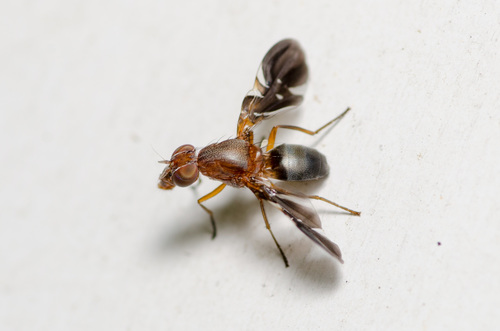
Body length is roughly 7 mm; the abdomen is black while the head, thorax and legs are light brown.
Source: Wikipedia
Where it lives
Found wherever decaying vegetation accumulates to landfills, temperate deciduous forests, swamps and shaded fields.
Source: Wikipedia
What it eats
It does not eat living plants; it consumes dead plant material as a detritivore. It has been seen feeding on fermenting frass of the black locust beetle Megacyllene robiniae.
Source: Wikipedia
Life cycle
In the lab adults live less than 40 days, sometimes up to 69 days. The species has two generations per year: one from May to July and another that overwinters as mature larvae, with development tied to daylight length.
Source: Wikipedia
When you see it
One generation appears May-July; the other overwinters as mature larvae, timing driven by daylight.
Source: Wikipedia
Where it comes from
Occurs on the U.S. East Coast and Midwest from Florida to Maine, extending west to Kansas and north to Minnesota, and also in Mexico and El Salvador.
Source: Wikipedia
Lookalikes
It is sometimes confused with fruit flies.
Source: Wikipedia
Where it is found in the US
Recorded in 42 of 51 states and DC. Most records: Texas, Virginia, New York, Ohio, Illinois, Maryland, Pennsylvania, North Carolina.
Darker = more records. Counts are museum and citizen-science records, not population size.
Source: GBIF
Status: native in North America; native in Canada; native in United States. Source: iNaturalist
Months it is reported in the US
Source: GBIF
More photos


Questions people ask
Where am I likely to see these flies?
Look for them in places with decaying vegetation such as landfills, forests, swamps or shaded fields.
Source: Wikipedia
What do they eat?
They feed on dead plant material and sometimes on fermenting insect frass.
Source: Wikipedia
Same family (Ulidiidae)


Sources
- Wikipedia: https://en.wikipedia.org/wiki/Delphinia_picta
Look it up elsewhere: GBIF · iNaturalist · BugGuide · ITIS · Wikipedia
Text written 2026-10-22 from the sources above and checked sentence by sentence against them. Data fetched 2026-10-22.