 Bug FAQ
Palm Leaf Skeletonizer Moth
Homaledra sabalella · Order: Lepidoptera · Family: Coleophoridae
Also called: Palm Leaf Skeletonizer
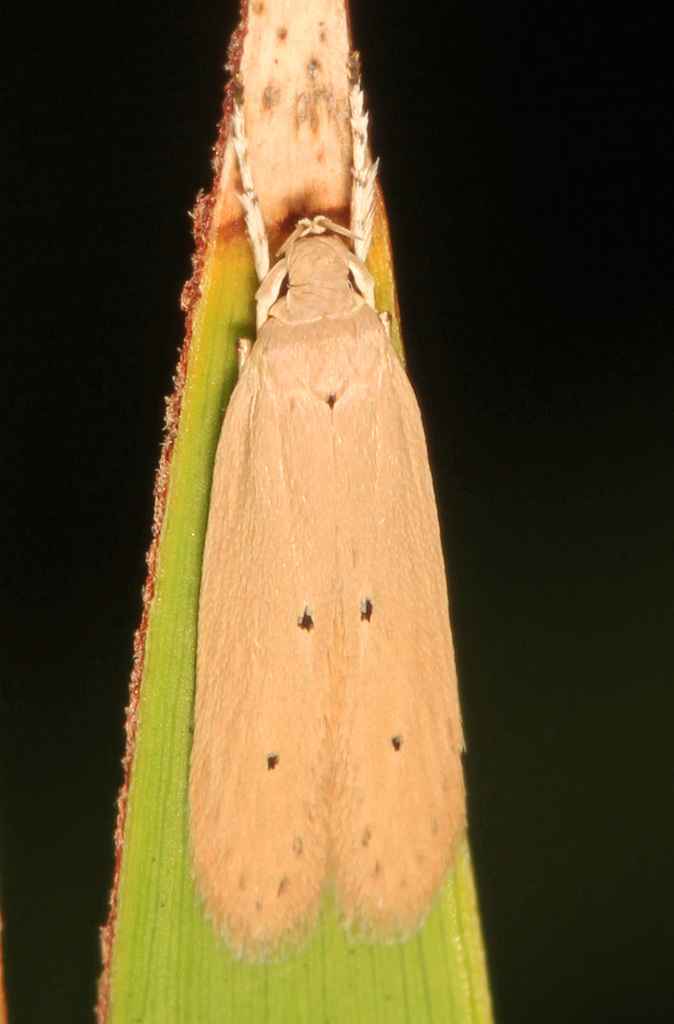
The palm leaf skeletonizer moth has a wingspan of about 18 mm. Its caterpillars feed on the fronds of Sabal palmetto, Sabal causiarum and coconut palms. Adults are found year-round in the southeastern United States and the Caribbean.
Source: Wikipedia
How to recognize it
Homaledra sabalella belongs to the family Pterolonchidae.
Source: Wikipedia
Size
The moth’s wingspan measures roughly 18 mm.
Source: Wikipedia
Where it lives
It occurs in several U.S. states including Alabama, Florida, Mississippi, South Carolina and Texas. It is also present on Caribbean islands such as Puerto Rico, Hispaniola and Cuba.
Source: Wikipedia
What it eats
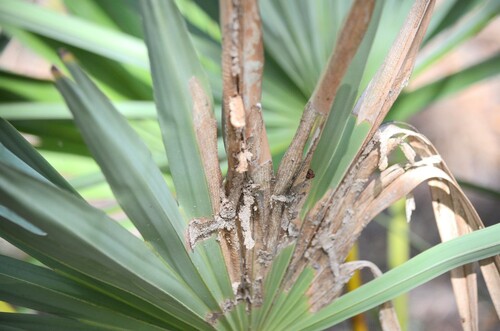
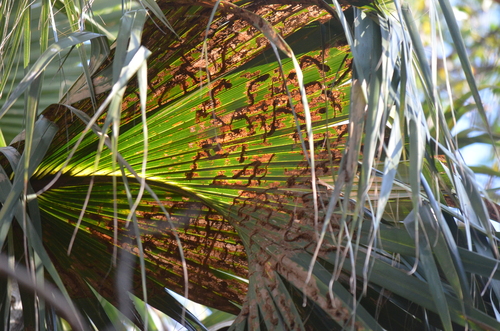
Larvae feed on the leaves of Sabal palmetto, Sabal causiarum and Cocos nucifera. They consume palm fronds.
Source: Wikipedia
Life cycle
Adults are active throughout the year.
Source: Wikipedia
When you see it
Moths can be seen in all seasons.
Source: Wikipedia
Where it comes from
Its range extends to Puerto Rico, Hispaniola and Cuba.
Source: Wikipedia
Where it is found in the US
Recorded in 6 of 51 states and DC. Most records: Florida, Texas, South Carolina, Louisiana, Georgia, Mississippi.
Darker = more records. Counts are museum and citizen-science records, not population size.
Source: GBIF
Status: native in United States. Source: iNaturalist
Months it is reported in the US
Source: GBIF
More photos

Questions people ask
What plants do the larvae eat?
The caterpillars feed on Sabal palmetto, Sabal causiarum and coconut palm fronds.
Source: Wikipedia
When are adult moths active?
Adults are active year-round, so you can find them in any season.
Source: Wikipedia
Same family (Coleophoridae)


Sources
- Wikipedia: https://en.wikipedia.org/wiki/Homaledra_sabalella
Look it up elsewhere: GBIF · iNaturalist · BugGuide · ITIS · Wikipedia
Text written 2026-10-28 from the sources above and checked sentence by sentence against them. Data fetched 2026-10-28.