 Bug FAQ
Pale Shoulder
Acontia lucida · Order: Lepidoptera · Family: Noctuidae
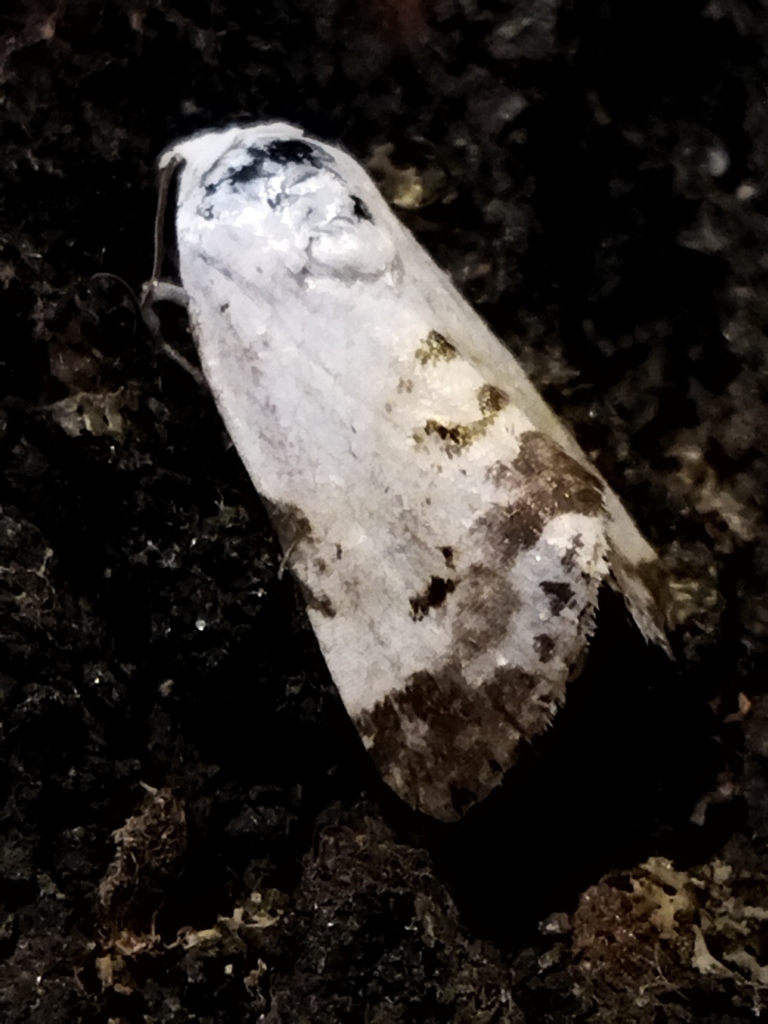
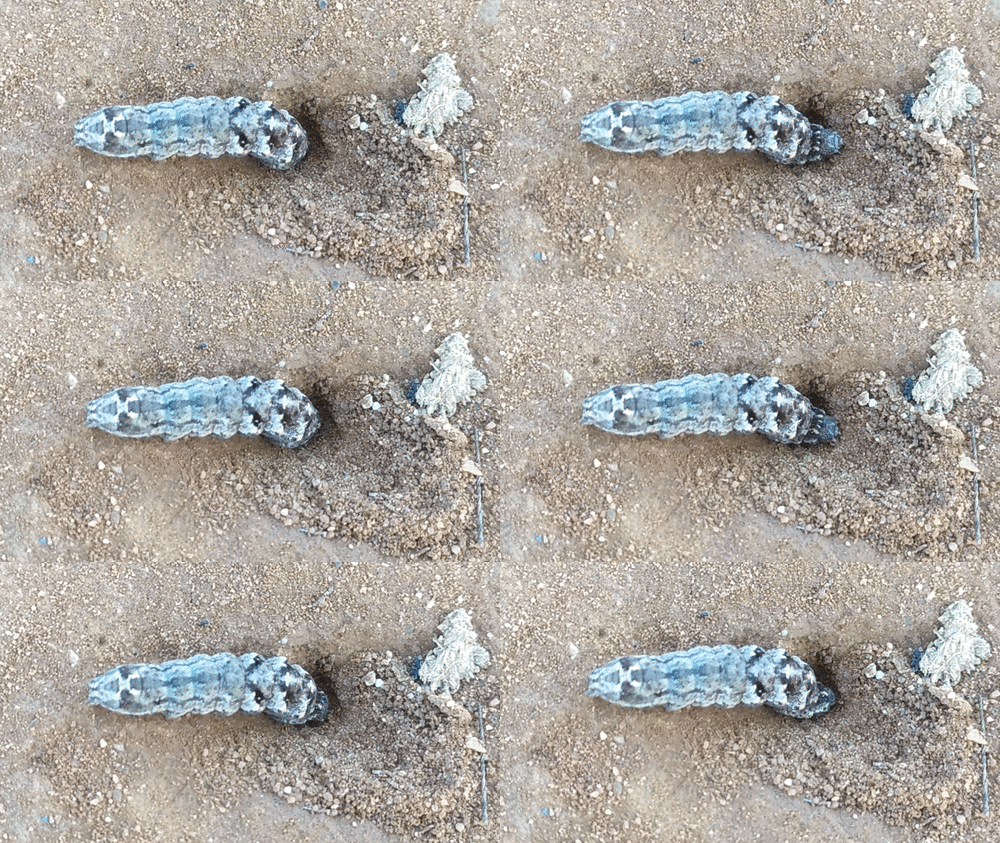
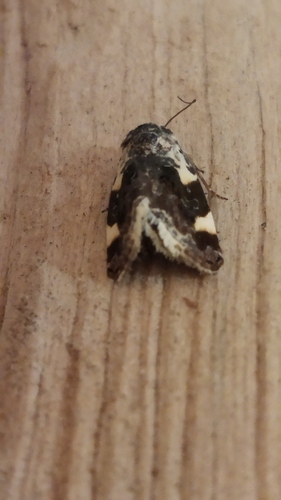
The pale shoulder moth has a wingspan of about 26 to 30 mm and is mostly white with distinct dark brown markings on its forewings and a brown band on the hindwings. The larvae are green or brown with white transverse bands and feed on a variety of herbaceous plants such as mallow, marshmallow, bindweed, goosefoot and dandelion.
Source: Wikipedia
How to recognize it
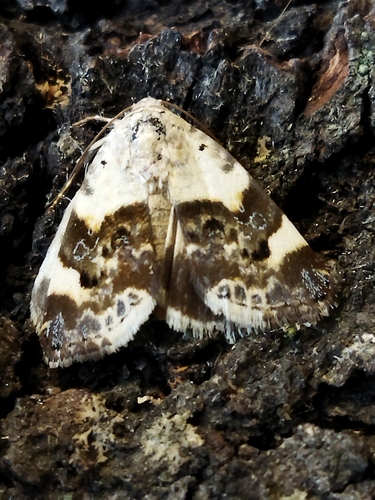
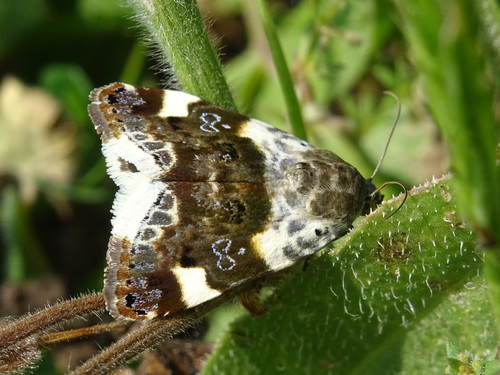
The head, thorax and abdomen are white. Forewings have a greyish-white front part, a wide dark brown median band that is mottled and larger in the centre, a white mark on the outer edge and a brown mark near the apex. Larvae are green or brown with transverse whitish bands.
Source: Wikipedia
Size
Wingspan ranges from 26 to 30 mm.
Source: Wikipedia
What it eats
Larvae feed on many herbaceous plants, especially mallow, common marshmallow, field bindweed, goosefoots and dandelion.
Source: Wikipedia
Life cycle
Overwinters as a pupa below ground. Adults fly on sunny days in May and August, producing two generations.
Source: Wikipedia
When you see it
Adults are on the wing in May and August.
Source: Wikipedia
Where it comes from
Occurs throughout most of Europe and eastward to Turkey, Iran and India. Also recorded from Algeria.
Source: Wikipedia
Lookalikes
Rarely migrates, so occasional sightings may be from outside its normal range.
Source: Wikipedia
More photos
Questions people ask
When can I see adult pale shoulder moths?
Adults are active on sunny days in May and again in August.
Source: Wikipedia
What plants do the larvae eat?
They feed on mallow, common marshmallow, field bindweed, goosefoots and dandelion.
Source: Wikipedia
Where does this moth live?
It inhabits grasslands, dry meadows, steppes, dunes and roadsides across most of Europe and into western Asia and North Africa.
Source: Wikipedia
Same family (Noctuidae)
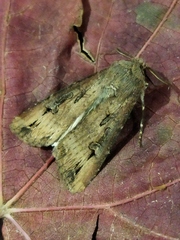 Ipsilon Dart MothAgrotis ipsilonDamages trees, gardens or crops
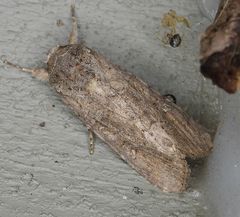 Fall Armyworm MothSpodoptera frugiperdaDamages trees, gardens or crops
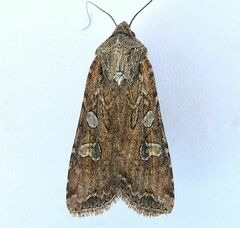 Army Cutworm MothEuxoa auxiliarisDamages trees, gardens or crops
 Large Yellow UnderwingNoctua pronubaDamages trees, gardens or crops
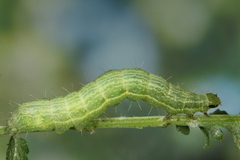 Silver ΥAutographa gamma
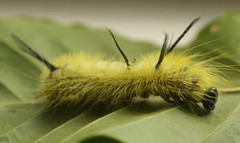 American DaggerAcronicta americanaCan irritate skin
Sources
- Wikipedia: https://en.wikipedia.org/wiki/Acontia_lucida
Look it up elsewhere: GBIF · iNaturalist · BugGuide · Wikipedia
Text written 2026-10-22 from the sources above and checked sentence by sentence against them. Data fetched 2026-10-22.