 Bug FAQ
Pale-saddled Leucozona
Leucozona glaucia · Order: Diptera · Family: Syrphidae
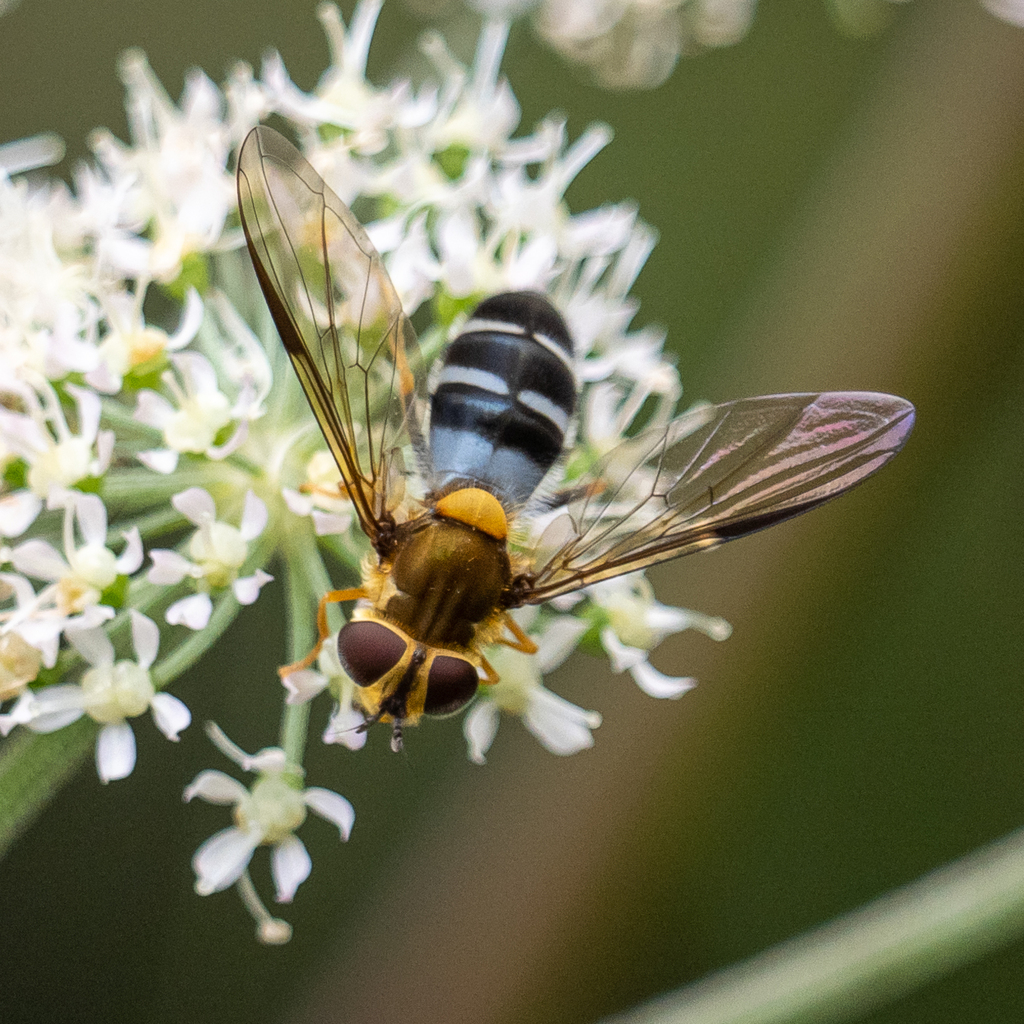
The pale-saddled Leucozona is a hoverfly with wing length about 8 to 11 mm and a yellow scutellum. Its abdomen shows large pale marks on segment 2 and little or no markings on segments 3 and 4. It lives in oak and beech forests, riverine woodlands and clearings near streams, and flies from May to September, peaking in July-August.
Source: Wikipedia
How to recognize it
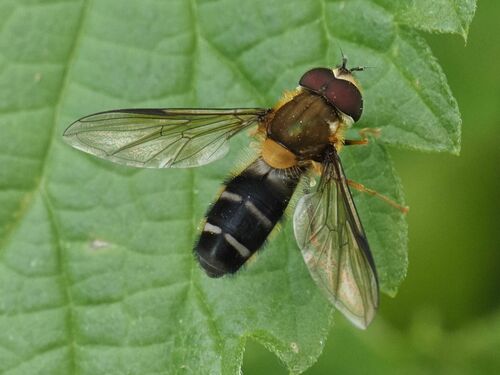
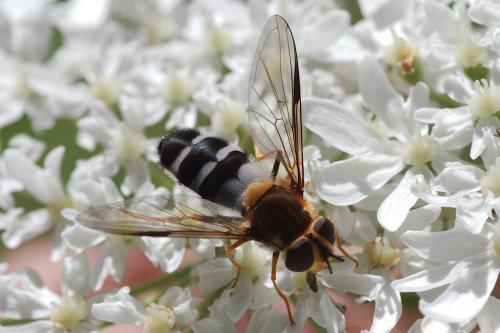
The scutellum is yellow. Abdomen segment 2 has large pale (silver-white to yellow-white) marks that often merge. Segments 3 and 4 have narrow or no pale markings.
Source: Wikipedia
Size
Wing length ranges from 8 to 11 mm.
Source: Wikipedia
Where it lives
Found in oak (Quercus) and beech (Fagus) forests, riverine gallery forests of ash and willow, beside streams, in clearings and along tracks.
Source: Wikipedia
What it eats
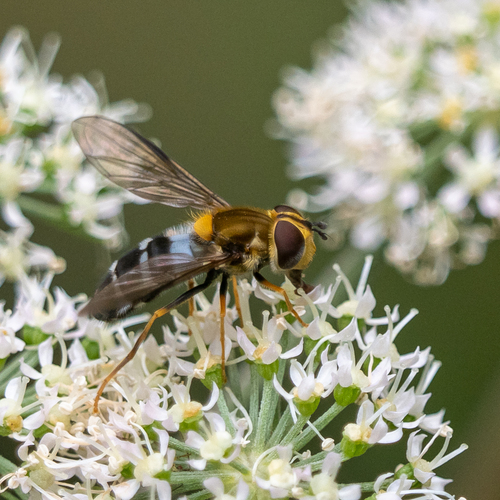
Larvae feed on aphids in the ground layer. Adults visit flowers such as white umbellifers, meadowsweet, elder and ragwort.
Source: Wikipedia
Life cycle
Adults are on the wing from May to September, with most sightings in July and August.
Source: Wikipedia
When you see it
Flight period spans May through September, peaking in midsummer.
Source: Wikipedia
Where it comes from
Distributed across the Palearctic from Fennoscandia to the Pyrenees, Ireland east through central Europe to Turkey, Russian Far East, Siberia and the Pacific coast.
Source: Wikipedia
More photos
Questions people ask
When can I expect to see pale-saddled Leucozona?
They are active from May to September, most commonly in July and August.
Source: Wikipedia
What plants do the adults visit?
They commonly visit white umbellifers, meadowsweet, elder and ragwort flowers.
Source: Wikipedia
Same family (Syrphidae)






Sources
- Wikipedia: https://en.wikipedia.org/wiki/Leucozona_glaucia
Look it up elsewhere: GBIF · iNaturalist · BugGuide · Wikipedia
Text written 2026-10-23 from the sources above and checked sentence by sentence against them. Data fetched 2026-10-22.